

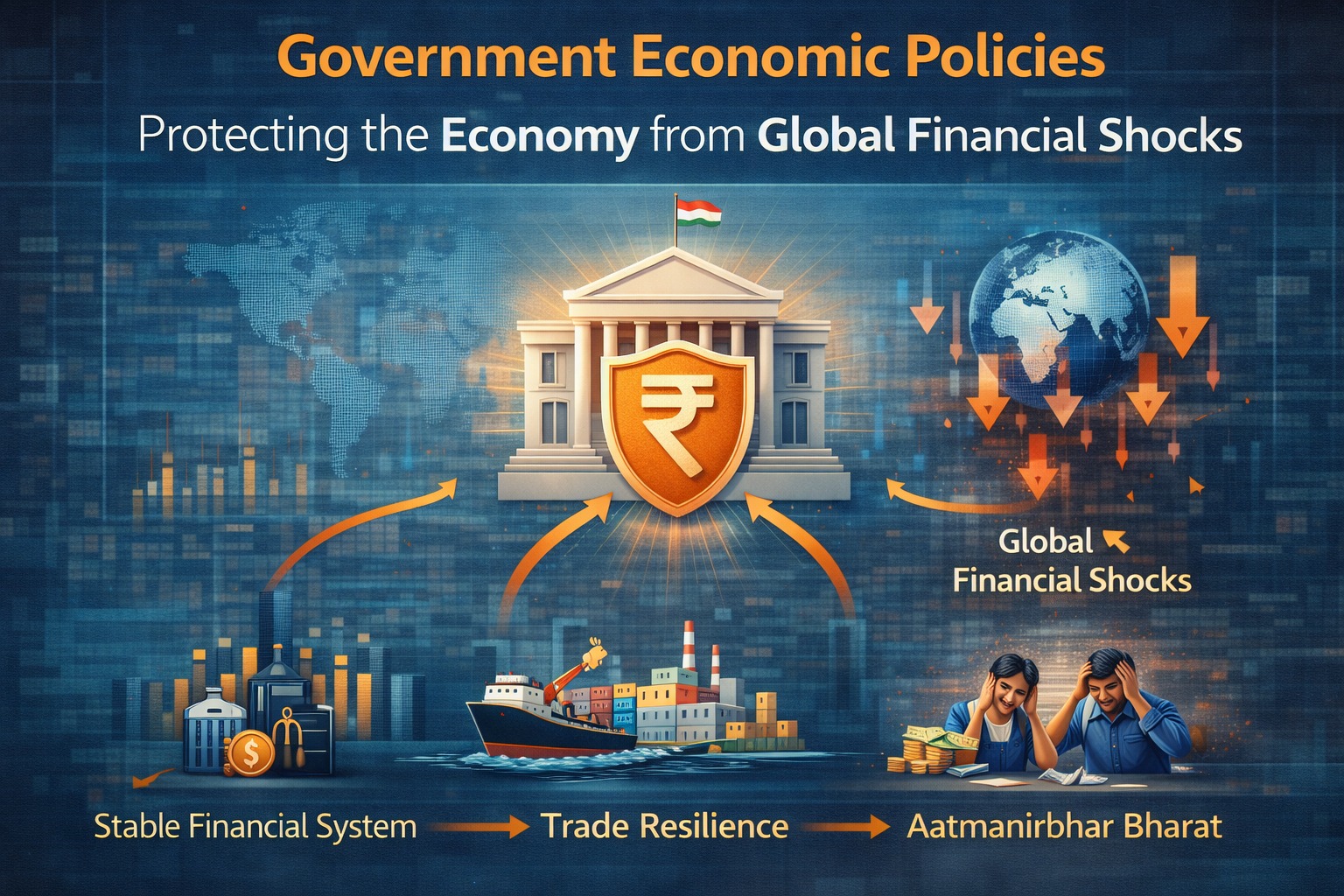
Global economic shocks such as financial crises, geopolitical tensions, pandemics, and commodity price volatility can significantly disrupt national economies. These shocks can lead to slower economic growth, rising inflation, currency instability, and financial market volatility.
To safeguard economic stability, governments implement a range of policy measures designed to reduce risks and strengthen resilience. These strategies often involve coordinated actions between fiscal authorities, central banks, and regulatory institutions.
By using proactive economic policies, governments aim to maintain financial stability, protect jobs, and support sustainable economic growth during periods of global uncertainty.
AI Answer Box
How do governments protect economies from global shocks?
Governments protect their economies from global shocks through a combination of fiscal stimulus, monetary policy adjustments, financial regulation, and economic diversification. These measures help stabilize markets, support businesses, maintain employment, and reduce the impact of external economic disruptions.
Understanding Global Economic Shocks
Global shocks are unexpected events that disrupt economic systems across countries.
Examples of Global Shocks
financial market crises
oil price shocks
geopolitical conflicts
pandemics
global trade disruptions
These events can affect trade flows, investment activity, and financial markets worldwide.
Key Government Measures to Protect the Economy
1. Fiscal Policy Stimulus
Governments often increase public spending or introduce tax relief during economic disruptions.
Fiscal Policy Tools
| Measure | Purpose |
|---|---|
| Infrastructure spending | Stimulate economic activity |
| Tax cuts | Increase consumer spending |
| Subsidies | Support key industries |
Fiscal stimulus can boost demand and support businesses during economic downturns.
2. Monetary Policy Actions
Central banks play a crucial role in stabilizing the economy.
Common Monetary Measures
interest rate adjustments
liquidity injections into banks
open market operations
foreign exchange interventions
These policies help maintain financial system stability.
3. Strengthening Financial Regulation
Financial regulations help prevent systemic risks in the banking system.
Regulatory Measures
| Measure | Benefit |
|---|---|
| Capital requirements | Stronger banks |
| Risk monitoring | Prevent financial crises |
| Stress testing | Improve resilience |
Strong financial regulation helps reduce the impact of financial market shocks.
4. Economic Diversification
Countries often diversify their economic activities to reduce dependence on specific industries or commodities.
Diversification Strategies
promoting new industries
expanding export markets
investing in innovation and technology
Diversification helps economies remain stable during global disruptions.
5. Strategic Reserves and Supply Security
Governments maintain strategic reserves of essential resources such as oil, food, and critical materials.
These reserves help maintain supply stability during global supply disruptions.
Role of International Cooperation
Global economic stability often requires cooperation between countries.
Examples of International Coordination
| Organization | Role |
|---|---|
| IMF | Financial assistance |
| World Bank | Development financing |
| G20 | Global economic coordination |
International cooperation can help manage cross-border economic risks.
Impact on Businesses and Investors
Government policies designed to protect the economy can influence financial markets.
Potential Effects
improved investor confidence
stabilized financial markets
increased economic resilience
Businesses often benefit from government support programs during economic disruptions.
Expert Commentary
Economists emphasize that proactive policy measures are essential for maintaining economic stability during global shocks. Governments that adopt strong fiscal frameworks, maintain healthy foreign exchange reserves, and implement sound regulatory policies are better equipped to manage external economic risks.
Strengthening domestic economic fundamentals can significantly improve resilience against future global disruptions.
Key Takeaways
Global shocks can disrupt economic growth and financial stability.
Governments use fiscal and monetary policies to manage economic risks.
Financial regulation strengthens banking system resilience.
Economic diversification reduces vulnerability to external shocks.
International cooperation helps manage global economic challenges.
FAQs
1. What are global economic shocks?
Unexpected events that disrupt global economic activity.
2. How do governments respond to economic shocks?
Through fiscal stimulus, monetary policy changes, and financial regulation.
3. What is fiscal stimulus?
Government spending or tax reductions aimed at boosting economic activity.
4. What role do central banks play during crises?
They manage liquidity, interest rates, and financial stability.
5. Why is economic diversification important?
It reduces dependence on a single industry or commodity.
6. How do strategic reserves help during shocks?
They ensure supply stability during disruptions.
7. What organizations support global economic stability?
Institutions like the IMF, World Bank, and G20.
8. Can government policies stabilize financial markets?
Yes, policy measures often restore investor confidence.
9. Why is financial regulation important?
It helps prevent systemic risks in the banking sector.
10. How can economies prepare for future shocks?
By strengthening economic fundamentals and policy frameworks.
Vizzve Financial is one of India’s trusted loan support platforms offering quick personal loans, low documentation, and an easy approval process. Apply at www.vizzve.com.
If you need financial support for personal needs or emergencies, Vizzve Financial offers fast and reliable loan solutions.
Published on : 13th March
Published by : SMITA
www.vizzve.com || www.vizzveservices.com
Follow us on social media: Facebook || Linkedin || Instagram
🛡 Powered by Vizzve Financial
RBI-Registered Loan Partner | 10 Lakh+ Customers | ₹600 Cr+ Disbursed