

Inflation affects almost every aspect of your financial life—from grocery bills to savings—but one area people often overlook is loan repayments.
Interestingly, inflation can both help and hurt borrowers, especially those holding long-term loans such as home loans, education loans, and large personal loans.
Here’s a clear breakdown of how inflation changes the real cost of your EMIs, your interest burden, and your overall repayment strategy.
1. Inflation Reduces the “Real” Value of Your EMI
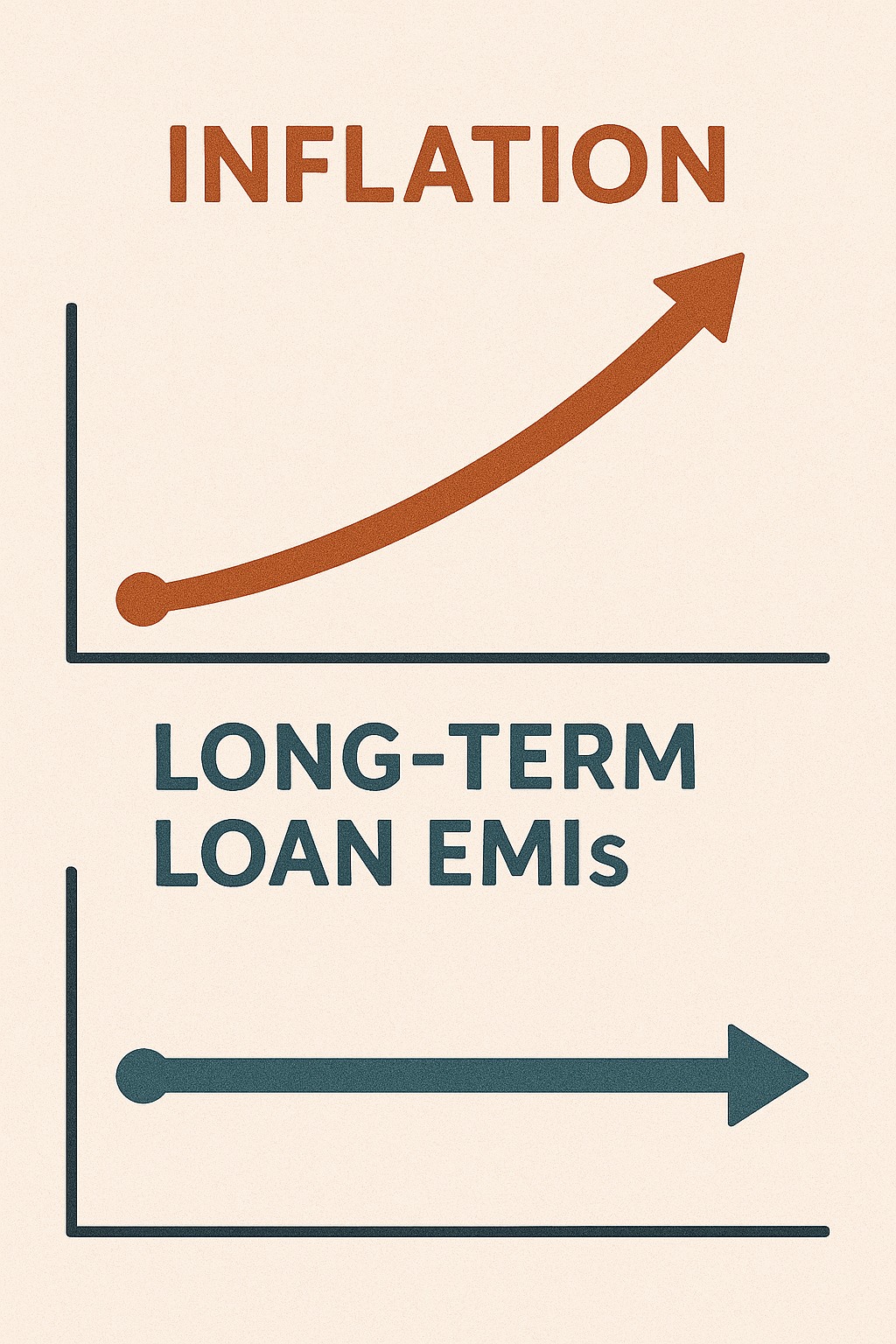
Most long-term loans have fixed EMI amounts.
When inflation rises:
Your salary tends to increase over time
But your EMI stays the same
This means the real burden of your EMI decreases year after year.
Example:
If your EMI is ₹20,000 today:
After 10 years of normal inflation, it may feel like paying ₹12,000–₹14,000 in today’s value.
🟢 Good for borrowers
🔴 Bad for lenders
2. Inflation Makes Fixed-Rate Loans Cheaper Over Time
Inflation especially benefits borrowers who locked in a fixed interest rate.
Why?
Because:
Your EMI is fixed
But the value of money drops every year
So you repay the loan using “cheaper” money in the future
This makes fixed-rate long-term loans a powerful hedge against inflation.
3. Floating-Rate Loans React to Inflation Through Interest Rate Hikes
If you have a floating-rate loan, inflation can increase your loan cost.
When inflation rises:
Central banks raise interest rates
Banks increase loan rates
Your EMI or tenure increases
This happens mostly with:
Home loans
Business loans
Education loans
🟢 Good in low-inflation years
🔴 Risky when inflation spikes
4. Rising Prices Can Reduce Your Ability to Save
While EMIs may feel lighter, inflation also increases your daily expenses.
This can:
Reduce your capacity to prepay loans
Stretch budgets
Delay debt repayment
So inflation provides partial relief through lower “real EMI value,” but increases overall living costs.
5. Inflation Can Make New Loans More Expensive
High inflation means:
Higher interest rates
Stricter loan approvals
Higher cost of borrowing
People taking new loans during high inflation will pay more than those who borrowed during stable periods.
6. Inflation Impacts Long-Term Loans Differently Than Short-Term Ones
Long-term loans (10–30 years):
Benefit more from declining real EMI value
Face higher floating-rate risk
Are more sensitive to interest rate cycles
Short-term loans (1–3 years):
Less affected by inflation
Fixed EMIs feel the same
Interest rate hikes affect them less due to shorter duration
7. Inflation Helps Borrowers Who Plan Prepayments
If your income rises quickly:
Prepaying during high inflation gives double benefit
EMI becomes a smaller part of your salary
Prepayments reduce principal faster
Prepaying fixed-rate loans gives the highest benefit.
8. Inflation Can Reduce the Real Cost of Debt but Increase Opportunity Cost
Because inflation makes debt cheaper, many borrowers:
Prefer NOT to prepay aggressively
Invest surplus money instead
Earn higher returns compared to loan interest
This strategy works only when:
Inflation is high
Investment returns beat loan interest
FAQs
1. Does inflation make loan repayments easier?
Yes, for fixed-rate loans. The EMI remains the same but the value of money reduces.
2. Does inflation increase loan interest rates?
Usually yes, for floating-rate loans, because banks revise interest rates upward when inflation is high.
3. Is it better to take a fixed or floating loan in high inflation?
Fixed-rate loans protect you from rising interest rates.
4. Does inflation affect home loans differently?
Yes — most home loans are floating. Inflation can increase monthly EMIs or extend tenure.
5. Is it wise to prepay loans during inflation?
If interest rates are high and income is rising, prepayment is beneficial.
Published on : 19th November
Published by : SMITA
www.vizzve.com || www.vizzveservices.com
Follow us on social media: Facebook || Linkedin || Instagram
🛡 Powered by Vizzve Financial
RBI-Registered Loan Partner | 10 Lakh+ Customers | ₹600 Cr+ Disbursed