

Content:
New Delhi, November 11, 2025 (Vizzve Finance Business Desk):
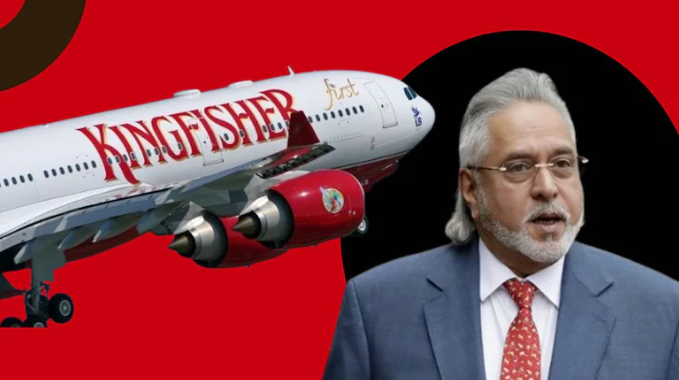
Once celebrated as India’s most luxurious airline, Kingfisher Airlines became a cautionary tale of ambition, mismanagement, and financial downfall. Founded by Vijay Mallya in 2003, the airline promised a “fly the good times” experience — but by 2012, it had accumulated ₹7,000 crore in debt and was grounded permanently.
The Rise: Kingfisher’s Luxury Promise
Kingfisher Airlines debuted in 2005, redefining the aviation experience in India. With plush seats, gourmet meals, personal entertainment systems, and smiling cabin crew, it set a new standard for hospitality in Indian skies.
Its tagline, “The King of Good Times,” symbolized opulence and confidence — both in branding and lifestyle.
Backed by the UB Group, Kingfisher quickly captured market share, becoming India’s second-largest private carrier by 2009. However, beneath the success lay growing financial stress.
The Fall: Expansion Without Stability
Kingfisher’s downfall began with its aggressive expansion strategy. The acquisition of Air Deccan in 2007 — aimed at entering the budget travel segment — proved to be a turning point.
The merger blurred the airline’s identity, combining luxury and low-cost models that couldn’t co-exist profitably.
Operational costs soared, while ticket prices remained low due to market competition. The airline continued flying even when losses mounted quarter after quarter.
“Kingfisher’s problem wasn’t competition — it was overconfidence,” says a former aviation industry expert interviewed by Vizzve Finance.
Debt Spiral and Grounding
By 2012, Kingfisher’s total debt had crossed ₹7,000 crore, owed to 13 banks, including State Bank of India (SBI), IDBI Bank, and Punjab National Bank (PNB).
Salaries went unpaid for months, aircraft were grounded, and fuel companies refused further supply due to non-payment.
The Directorate General of Civil Aviation (DGCA) finally suspended Kingfisher’s license after repeated safety and payment defaults.
Vijay Mallya left India in 2016, facing money laundering and bank fraud charges, while the Enforcement Directorate (ED) and CBI initiated investigations.
Key Reasons Behind Kingfisher’s Bankruptcy
Aggressive Expansion: The Air Deccan acquisition drained cash reserves.
Poor Financial Management: Over-reliance on loans without clear repayment strategy.
High Operating Costs: Premium services with budget pricing unsustainable in the long term.
Economic Slowdown: Rising fuel costs and falling rupee worsened financial strain.
Regulatory and Legal Troubles: License suspensions, tax disputes, and debt defaults.
The Aftermath: Lessons for Indian Businesses
Kingfisher’s collapse was not just an aviation failure — it was a corporate governance lesson for India.
It exposed how unchecked ambition and weak accountability can bring down even the most glamorous brands.
The episode reshaped the Indian banking system, prompting stricter lending norms for corporate houses and higher scrutiny for high-value borrowers.
Today, Vijay Mallya remains a symbol of corporate excess, while Kingfisher Airlines stands as a reminder that brand prestige cannot outfly financial discipline.
(FAQ)
1. What led to the downfall of Kingfisher Airlines?
Kingfisher collapsed due to high debts, poor financial planning, and an unsustainable expansion model after acquiring Air Deccan.
2. How much debt did Kingfisher Airlines owe?
Kingfisher owed around ₹7,000 crore to a consortium of banks and other creditors by 2012.
3. Who owned Kingfisher Airlines?
It was owned by Vijay Mallya’s UB Group, which also had interests in liquor and real estate businesses.
4. What happened to Vijay Mallya after Kingfisher’s bankruptcy?
Mallya fled India in 2016 and has been living in the UK, facing extradition and legal proceedings related to fraud and money laundering.
5. What lessons can companies learn from Kingfisher’s fall?
Avoid over-leveraging, maintain transparency with lenders, and ensure sustainable growth over aggressive expansion.
Source credit : Dristi Sharma
Published on : 11th November
Published by : Reddy kumar
www.vizzve.com || www.vizzveservices.com
Follow us on social media: Facebook || Linkedin || Instagram
🛡 Powered by Vizzve Financial
RBI-Registered Loan Partner | 10 Lakh+ Customers | ₹600 Cr+ Disbursed