

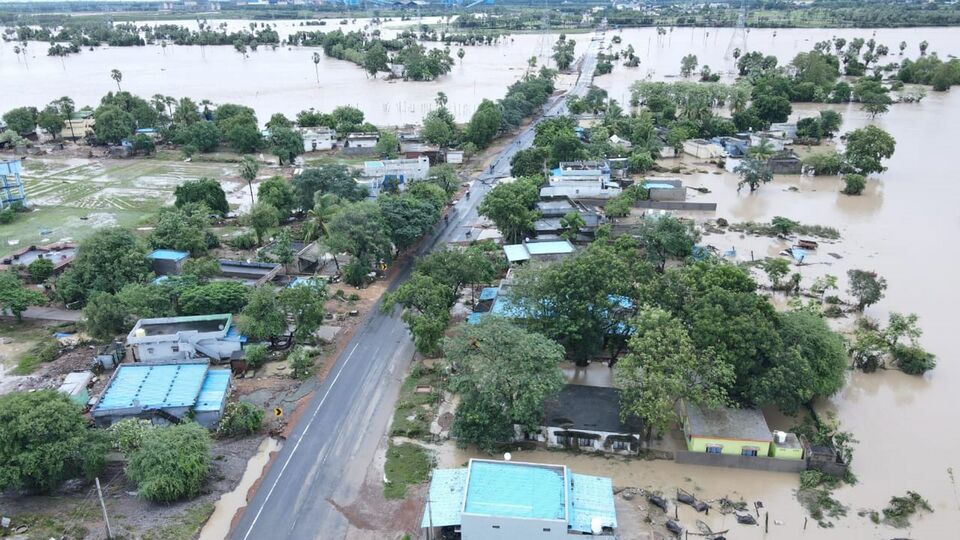
Telangana, once known for predictable Kharif rainfall, is now seeing climate-induced volatility that’s wreaking havoc on its agriculture and water planning. In 2025, parts of the state received 40% more rain than average, while others remained severely dry—a disturbing pattern that’s been worsening over the last five years.
What’s Changing in Telangana’s Rainfall Pattern?
1. Shorter but Intense Rainfall Bursts
Instead of steady rain over weeks, sudden downpours flood fields in hours.
This leads to runoff without percolation, hurting both agriculture and groundwater.
2. Long Dry Spells
After heavy rain, there are long gaps with no precipitation, disrupting sowing and germination cycles.
3. Regional Disparity
Northern Telangana (Adilabad, Nirmal) saw flooding this August.
Southern districts (Mahbubnagar, Jogulamba) faced 50% rainfall deficiency.
Impact on Agriculture
Crop damage: Cotton and red gram were washed out in the north, while crops wilted in the south.
Kharif delay: Many farmers postponed sowing due to timing uncertainty.
Increased input costs: Need for re-sowing, diesel pumps, and pesticides rose sharply.
Water Planning Woes
Irrigation Projects Misaligned: Many projects like Mission Kakatiya depend on traditional monsoon patterns which are no longer reliable.
Reservoir Management Fails: Sudden floods forced emergency discharge from reservoirs, while low inflows in others led to power and water shortages.
Groundwater Recharge Falters: Erratic rain doesn't allow aquifers to recharge, deepening the groundwater crisis.
Why This Matters for the Future
Food Security Threat: Telangana’s staple crops are at risk due to climate unpredictability.
Farmer Distress: With incomes tied to rain, more farmers fall into debt or abandon agriculture.
Urban Water Supply Impact: Hyderabad depends on upstream reservoirs that are now harder to manage.
What Can Telangana Do?
Adopt Climate-Resilient Crops: Switch to millets, pulses, and hardy varieties that can withstand erratic weather.
Invest in Micro-Irrigation: Drip and sprinkler systems need expansion, especially in dry zones.
Local Rainwater Harvesting: Decentralized storage at farm and village levels can stabilize water needs.
Strengthen Forecasting Systems: Hyperlocal, real-time alerts for farmers and water managers are essential.
Final Word
The rainfall crisis in Telangana isn’t just about too much or too little rain—it’s about the wrong rain at the wrong time. As the climate changes, Telangana must evolve its farming, irrigation, and planning strategies. If not, the cycle of crop failures, migration, and water wars could deepen dangerously in the years ahead.
Published on : 2nd August
Published by : SMITA
www.vizzve.com || www.vizzveservices.com
Follow us on social media: Facebook || Linkedin || Instagram
🛡 Powered by Vizzve Financial
RBI-Registered Loan Partner | 10 Lakh+ Customers | ₹600 Cr+ Disbursed