

Introduction
Small-ticket microfinance loans help eligible low-income households and underserved communities access formal credit for livelihood and other financial requirements. These loans can support small shop owners, self-employed individuals, micro-entrepreneurs, and households that may have limited access to traditional banking services.
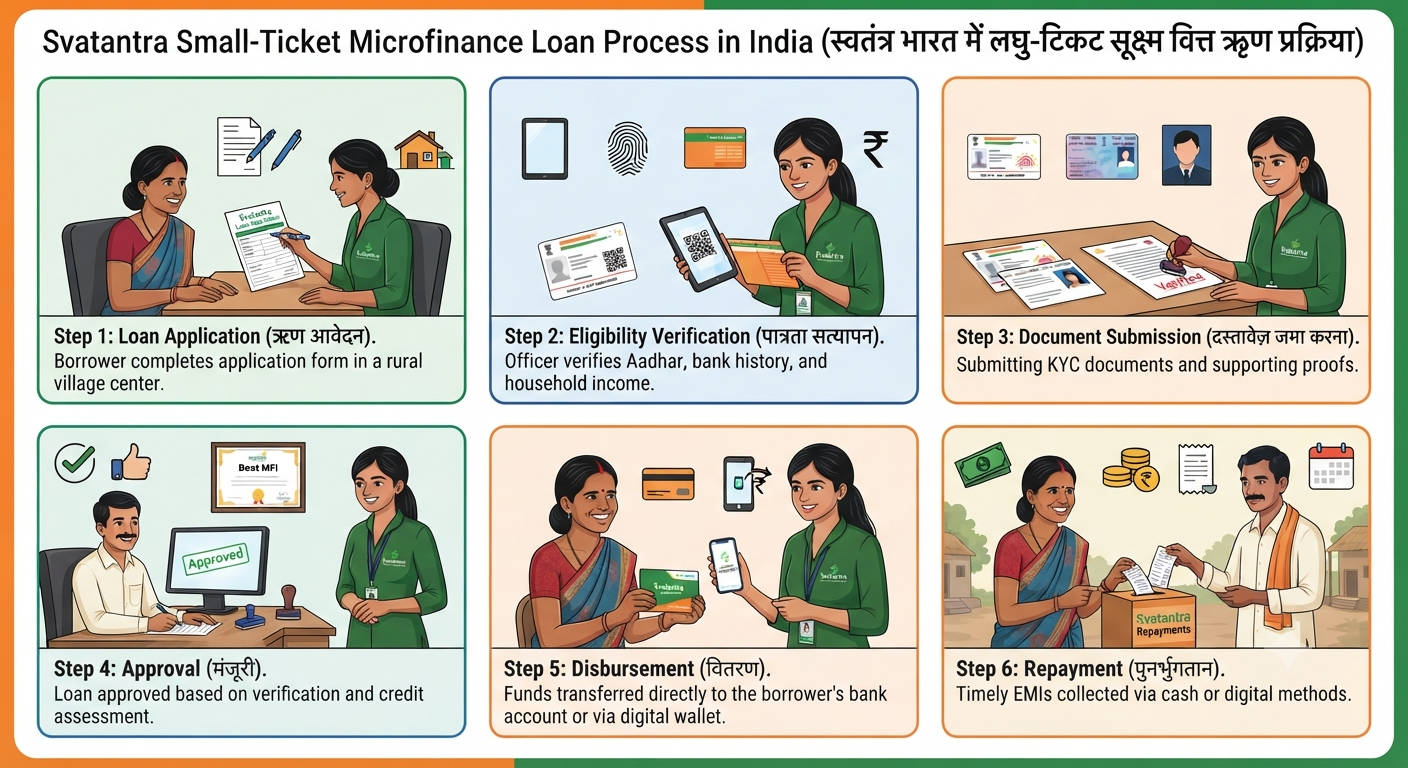
In India, microfinance lending is provided by regulated financial institutions such as banks, small finance banks, and eligible NBFC-MFIs. The process generally involves checking eligibility, submitting documents, verifying household income, reviewing loan terms, and completing repayment.
Understanding how a small-ticket microfinance loan works can help borrowers make informed decisions and avoid unnecessary financial risks.
1. Step 1: Understand Your Financial Requirement
The first step is identifying why you need a small-ticket loan. Having a clear purpose helps you decide the appropriate borrowing amount.
Common requirements may include:
-
Purchasing inventory for a small shop.
-
Buying tools or equipment for self-employment.
-
Supporting small business activities.
-
Managing eligible livelihood expenses.
-
Meeting certain household financial requirements.
Before applying, calculate the amount you actually need. Avoid borrowing more than your financial situation can comfortably support.
2. Step 2: Check Your Loan Eligibility
After identifying your requirement, check whether you meet the lender's eligibility conditions.
Under the RBI framework, a microfinance loan is a collateral-free loan to a household with annual household income of up to ₹3 lakh.
Lenders may consider:
-
Annual household income.
-
Existing household loans.
-
Current repayment obligations.
-
Financial stability and repayment capacity.
-
Identity and other required verification details.
Eligibility requirements can vary by lender. Meeting the basic criteria does not guarantee approval.
3. Step 3: Choose a Regulated Microfinance Lender
The next step is selecting a suitable financial institution.
Microfinance loans may be offered by banks, small finance banks, and eligible NBFC-MFIs.
Before applying, check:
-
The lender's legal name and regulatory status.
-
Official website and authorised application channels.
-
Customer support and grievance redressal details.
-
Interest rates and applicable fees.
-
Repayment terms and loan conditions.
Avoid unknown agents or unofficial applications that promise guaranteed loan approval.
4. Step 4: Prepare and Submit the Required Documents
Once you identify a suitable lender, prepare the required documents.
Commonly requested information may include:
-
Aadhaar or another accepted identity document.
-
PAN, where applicable.
-
Address proof, if required.
-
Household income details.
-
Bank account information.
-
Additional documents requested by the lender.
The exact requirements depend on the lender and applicable KYC rules. Submit documents only through verified and secure channels.
5. Step 5: Complete the Verification Process
After submitting the application, the lender reviews the information and verifies the applicant's details.
The process may include:
-
Identity verification.
-
Address verification.
-
Household income assessment.
-
Review of existing loan obligations.
-
Repayment capacity assessment.
-
Confirmation of application information.
The lender may request additional documents or clarification if the information provided is incomplete.
Accurate information can help prevent avoidable application delays.
6. Step 6: Review the Loan Amount, Interest Rate and Charges
If the application meets the lender's requirements, the borrower may receive a loan offer.
Before accepting it, carefully review the following:
| Loan detail | What to understand |
|---|---|
| Loan amount | Total amount approved |
| Interest rate | Rate charged on the loan |
| APR | Annualised borrowing cost, including applicable charges |
| Processing fees | Applicable loan processing charges |
| Loan tenure | Total repayment period |
| Instalment amount | Amount payable on each due date |
| Penal charges | Charges applicable under disclosed terms for repayment defaults |
For applicable regulated lending arrangements, borrowers should receive a Key Fact Statement (KFS) containing important loan information. Read it carefully before accepting the offer.
7. Step 7: Accept the Loan Offer and Receive Disbursement
Once you understand and agree to the loan terms, complete the required acceptance formalities.
The lender may then disburse the approved amount through its authorised process.
After disbursement:
-
Confirm the amount credited to your account.
-
Check for any disclosed deductions.
-
Save the loan agreement.
-
Keep the repayment schedule.
-
Retain transaction and payment records.
Never pay unofficial charges to an agent in exchange for loan approval or disbursement.
8. Step 8: Repay the Loan on Time
Repayment is an important part of the microfinance loan process.
Borrowers should follow the agreed repayment schedule and maintain sufficient funds for instalments.
Some useful repayment practices include:
-
Plan instalments according to your income cycle.
-
Keep track of repayment dates.
-
Maintain payment receipts.
-
Avoid unnecessary additional borrowing.
-
Contact the lender early if you anticipate repayment difficulties.
Timely repayment can support a healthy financial record and reduce the risk of additional charges or repayment stress.
9. Benefits of Small-Ticket Microfinance Loans
Small-ticket microfinance loans can offer several potential benefits when used responsibly.
Access to formal credit: They can help eligible households access regulated financial services.
Livelihood support: Borrowers may use funds for business supplies, equipment, or eligible income-generating activities.
Financial inclusion: Microfinance can connect underserved communities with formal lending institutions.
Structured repayment: A defined repayment schedule can help borrowers plan their financial commitments.
Small-value borrowing: The loan structure may suit borrowers who need a relatively modest amount rather than a larger loan.
Actual benefits depend on the lender's terms and the borrower's financial circumstances.
10. Common Mistakes to Avoid During the Loan Process
Borrowers should be careful about common mistakes that can create financial difficulties.
-
Applying without understanding the total loan cost.
-
Providing incorrect household income information.
-
Ignoring existing loan obligations.
-
Choosing an unverified lender.
-
Accepting terms without reading the KFS.
-
Borrowing more than necessary.
-
Missing repayment dates.
-
Sharing OTPs, PINs, or passwords with unknown individuals.
Understanding the process before applying can help borrowers make safer credit decisions.
Conclusion
A small-ticket microfinance loan generally works through a structured process that includes identifying a financial requirement, checking eligibility, selecting a regulated lender, submitting documents, completing verification, reviewing loan terms, receiving disbursement, and repaying instalments.
These loans can improve access to formal credit for eligible households and small entrepreneurs. However, borrowers should always compare borrowing costs, check repayment capacity, verify the lender, and understand the loan agreement before accepting an offer.
Vizzve encourages responsible borrowing and financial awareness to help individuals make informed financial decisions.
Published on : 26th November 2026
Published by : shibam nath
www.vizzve.com || www.vizzveservices.com
Follow us on social media: Facebook || Linkedin || Instagram
🛡 Powered by Vizzve Financial
RBI-Registered Loan Partner | 10 Lakh+ Customers | ₹600 Cr+ Disbursed