

Introduction
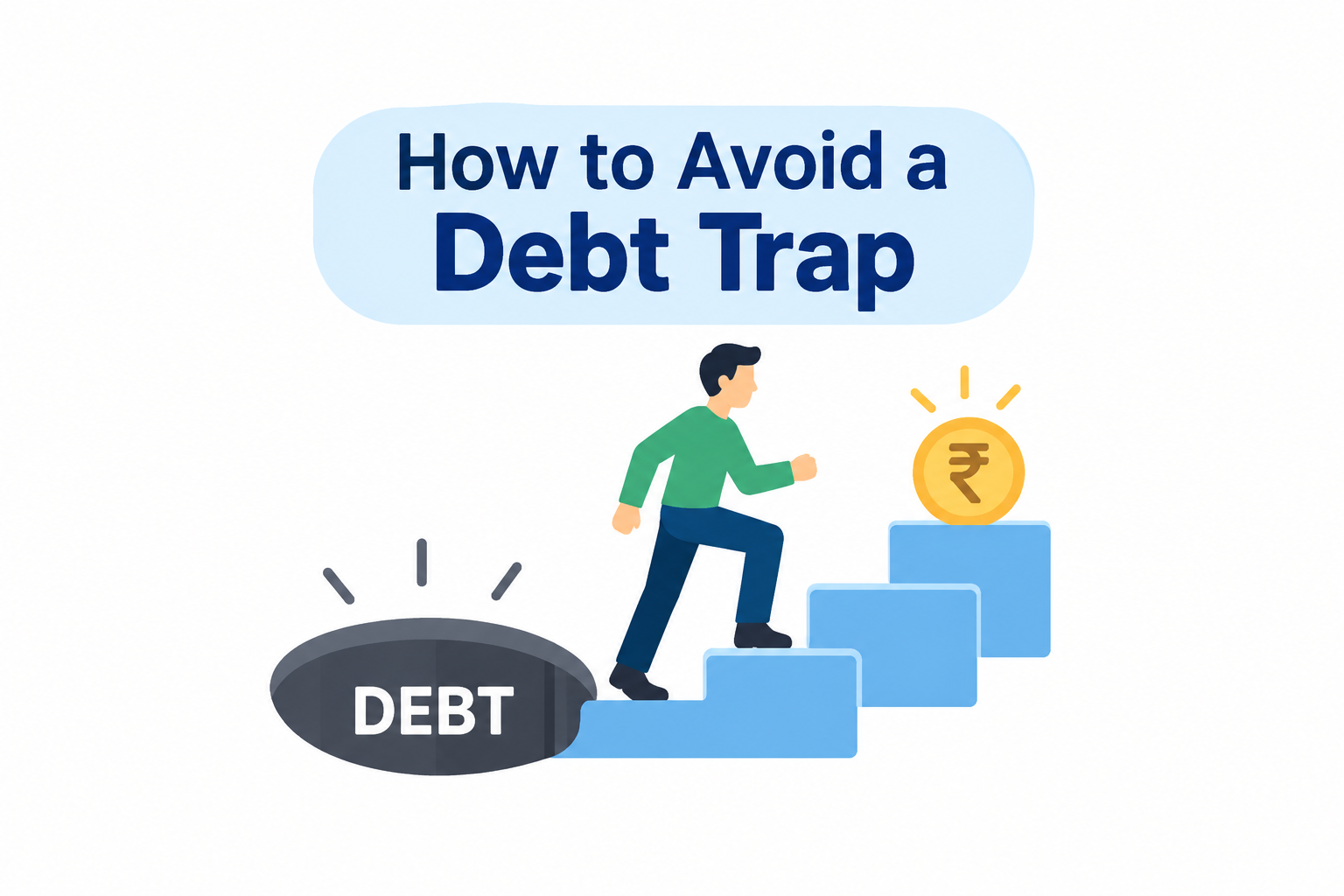
A debt trap occurs when a person struggles to repay existing loans and borrows more money to cover EMIs, interest, or other expenses. Over time, increasing interest rates, multiple loan payments, and poor financial planning can make repayment difficult.
Understanding how to avoid a debt trap is essential for maintaining financial stability. By borrowing responsibly, managing monthly expenses, building an emergency fund, and repaying loans on time, individuals can reduce financial stress and protect their future.
What Is a Debt Trap?
A debt trap is a financial situation in which a borrower repeatedly takes new loans to repay existing debts. As interest and repayment obligations increase, it becomes harder to clear the outstanding balance.
Example: If someone uses a new personal loan to pay the EMI of an existing loan every month, their total debt may continue to increase instead of decreasing.
Common Causes of a Debt Trap
-
Borrowing more than you can afford to repay.
-
Paying only the minimum amount due on credit cards.
-
Taking multiple loans simultaneously.
-
Missing EMI payments and accumulating penalties.
-
Using high-interest loan apps for regular expenses.
-
Not maintaining an emergency fund.
-
Spending beyond your monthly income.
10 Smart Tips to Avoid a Debt Trap
1. Borrow Only What You Need
Before applying for a loan, evaluate whether the expense is necessary. Avoid borrowing more than required, even if the lender offers a higher loan amount.
2. Calculate Your EMI Before Borrowing
Check whether your monthly income can comfortably cover your EMI along with rent, food, utilities, savings, and other essential expenses.
3. Create a Monthly Budget
Track your income, spending, savings, and debt repayments. A realistic budget helps identify unnecessary expenses and prevents excessive borrowing.
4. Pay EMIs on Time
Set reminders or automatic payments to avoid late fees and additional interest. Timely repayment can also help maintain a healthy credit history.
5. Avoid Multiple High-Interest Loans
Taking several short-term loans or borrowing from different loan apps can increase repayment pressure. Compare interest rates, fees, and repayment terms before choosing a loan.
6. Pay More Than the Minimum on Credit Cards
Whenever possible, pay the full credit card statement balance by the due date. Paying only the minimum amount can leave a balance that attracts interest and takes longer to repay.
7. Build an Emergency Fund
Save money regularly for unexpected expenses such as medical bills, repairs, or temporary income loss. Even a small emergency fund can reduce the need for new loans.
8. Avoid Using New Loans to Repay Old Loans
Repeatedly borrowing to cover existing EMIs can create a cycle of debt. If repayments become difficult, contact your lender early to discuss possible repayment options.
9. Review Your Credit Report
Check your credit report periodically for errors and review your outstanding loans. Understanding your existing obligations helps you make better borrowing decisions.
10. Seek Help When Debt Becomes Unmanageable
If you are struggling with multiple EMIs, list all outstanding debts, interest rates, and due dates. Consider speaking with your lender or a qualified financial counsellor about suitable repayment strategies.
Warning Signs of a Debt Trap
Watch for these signs before the situation becomes serious:
-
You borrow money to pay regular monthly expenses.
-
Most of your income goes towards loan repayments.
-
You frequently miss EMI or credit card payments.
-
Your total outstanding debt keeps increasing.
-
You receive repeated collection calls.
-
You have little or no money left for savings.
What Should You Do If You Are Already in a Debt Trap?
-
Stop taking unnecessary new loans.
-
List all debts, interest rates, minimum payments, and due dates.
-
Prioritise essential living expenses and required loan payments.
-
Consider the debt avalanche method, which focuses extra repayments on the highest-interest debt, or the debt snowball method, which clears the smallest balance first.
-
Contact lenders before missing payments to discuss available options.
-
Avoid debt-relief scams that promise guaranteed loan cancellation or demand suspicious upfront fees.
Benefits of Avoiding a Debt Trap
-
Better financial stability.
-
Lower interest costs over time.
-
Improved repayment discipline.
-
Greater potential for savings and investments.
-
Reduced financial stress.
-
Better preparation for emergencies and future goals.
Frequently Asked Questions (FAQs)
1. What is a debt trap?
A debt trap occurs when a borrower struggles to repay existing debts and takes additional loans to manage repayments or everyday expenses.
2. How can I avoid a debt trap?
Borrow only what you need, prepare a budget, compare borrowing costs, pay EMIs on time, and build emergency savings.
3. What is the biggest cause of a debt trap?
Common causes include excessive borrowing, high-interest debt, poor budgeting, and repeatedly using new loans to repay old ones.
4. Can credit cards lead to a debt trap?
Yes. Carrying unpaid balances and paying only the minimum due can lead to significant interest costs.
5. Is taking a new loan to repay an old loan a good idea?
It can increase financial risk. Debt consolidation may help in some cases, but only when the overall cost, fees, repayment period, and affordability are carefully evaluated.
6. How much of my income should go towards EMIs?
There is no single suitable limit for everyone. Consider your essential expenses, income stability, savings needs, and total debt obligations before deciding what you can afford.
7. Does missing an EMI affect my credit score?
Missed payments may be reported to credit bureaus and can negatively affect your credit history.
8. What should I do if I cannot pay my EMIs?
Contact your lender as early as possible, explain your financial situation, and ask about available repayment options.
9. How can I repay multiple loans faster?
Make required payments on all debts and direct extra funds towards either the highest-interest debt or the smallest outstanding balance.
10. Can an emergency fund prevent a debt trap?
An emergency fund can help cover unexpected expenses without relying entirely on credit cards or new loans.
Conclusion
Avoiding a debt trap starts with responsible borrowing, careful budgeting, timely repayments, and regular savings. Before accepting any loan, understand its interest rate, fees, repayment schedule, and total cost. If debt becomes difficult to manage, seek help early rather than relying on additional high-interest borrowing.
Published on : 17th October 2026
Published by : monisha
www.vizzve.com || www.vizzveservices.com
Follow us on social media: Facebook || Linkedin || Instagram
🛡 Powered by Vizzve Financial
RBI-Registered Loan Partner | 10 Lakh+ Customers | ₹600 Cr+ Disbursed