

2. Introduction
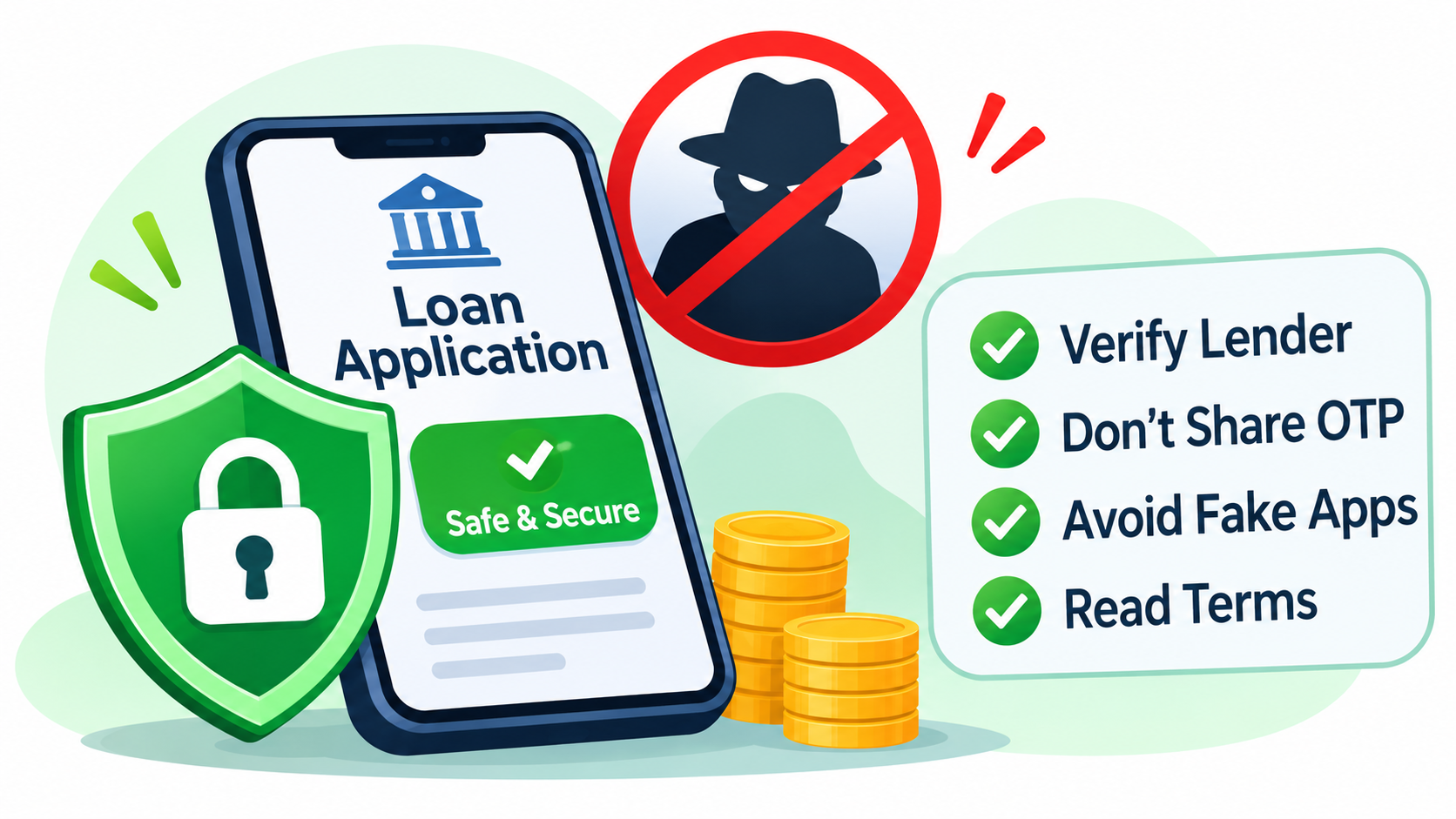
Applying for a personal loan has become easier with digital banking, mobile applications and online lending platforms. Borrowers can now explore loan options, submit documents and receive application updates without visiting a physical branch.
However, the growing popularity of digital lending has also created opportunities for fraudsters. Fake loan applications, misleading advertisements, unauthorised lenders and fraudulent agents can put borrowers at financial and personal risk.
Some scammers promise instant approval without proper verification. Others demand advance payments, misuse identity documents or threaten borrowers through calls and messages.
Understanding how to avoid loan fraud is important for anyone planning to borrow money online or offline.
The good news is that borrowers can reduce these risks by checking lender credentials, reading loan agreements, protecting personal information and using official reporting channels.
This guide explains the common types of loan fraud in India and practical steps to protect yourself.
3. AI Answer Box: How Can You Avoid Loan Fraud?
To avoid loan fraud in India, always verify the lender's identity and its association with an RBI-regulated bank or NBFC before applying. Download loan applications only from trusted sources, read the Key Facts Statement (KFS), check the interest rate and charges, and never share your OTP, PIN or banking password. Avoid suspicious advance-payment demands and unnecessary mobile permissions. If you suspect fraud, contact your bank immediately and report the incident through the National Cybercrime Helpline at 1930 or cybercrime.gov.in.
4. What Is Loan Fraud?
Loan fraud refers to dishonest activities in which criminals or unauthorised organisations deceive borrowers during the loan application, approval, disbursement or repayment process.
Fraudsters may pretend to represent banks, NBFCs or digital lending companies. They use fake websites, mobile applications, social media advertisements and phone calls to gain the trust of applicants.
Their objective may be to steal money, collect confidential information, misuse identity documents or force borrowers into unfair financial arrangements.
Common examples of loan fraud
-
Fake loan applications promising guaranteed approval.
-
Agents demanding advance fees to release loan amounts.
-
Fraudulent websites collecting PAN and Aadhaar details.
-
Loan apps requesting unnecessary access to contacts and photos.
-
Fake customer-care representatives asking for OTPs.
-
Unauthorised recovery agents threatening borrowers.
-
Misleading loan offers with hidden charges.
5. Why Is Loan Fraud Increasing in Digital Lending?
Digital lending has made borrowing more convenient, but not every application or website advertising loans is genuine.
Fraudsters take advantage of people who need urgent financial assistance. They often use attractive advertisements, quick approval promises and false claims of partnerships with established financial institutions.
Major reasons borrowers become victims
1. Urgent financial requirements
People facing medical expenses, education costs or unexpected emergencies may accept loan offers without checking the lender.
2. Lack of lender verification
Some applicants do not confirm whether the company is connected to a legitimate regulated financial institution.
3. Attractive advertisements
Scammers use phrases such as "100% guaranteed loan" and "no verification required" to attract applicants.
4. Limited awareness of digital security
Borrowers may unknowingly share OTPs, passwords, identity documents or banking information.
5. Fake customer support
Fraudsters impersonate loan officers and customer-care executives to gain access to sensitive information.
6. What Are the Common Types of Loan Fraud in India?
Understanding different loan scams can help borrowers identify suspicious activity before losing money.
6.1 Fake Loan App Fraud
Fake loan applications may advertise instant personal loans with minimal documentation. After installation, they may request access to contacts, photographs, messages and other information unrelated to the loan service.
Some fraudulent operators misuse this information to threaten or harass borrowers.
How to stay safe:
-
Verify the app's association with its claimed bank or NBFC.
-
Check the RBI's Digital Lending Apps directory where applicable.
-
Review app permissions carefully.
-
Avoid applications from suspicious links.
-
Do not upload KYC documents to unverified platforms.
6.2 Advance Fee Loan Fraud
In this scam, fraudsters promise loan approval after receiving an advance payment.
They may ask for money under names such as:
-
Processing charges
-
Security deposit
-
GST payment
-
Verification fees
-
File-opening charges
-
Loan release fees
Not every processing fee is fraudulent. Legitimate lenders may charge disclosed fees under their loan terms. The warning sign is an unverified person or agent demanding money through a personal UPI ID or bank account as a condition for releasing the loan.
Always verify charges directly with the lender through its official contact details.
6.3 Fake Loan Approval Messages
Borrowers may receive SMS messages, emails or WhatsApp messages claiming that a large loan has already been approved.
The message may contain a link asking the recipient to submit personal details or pay a fee.
Safety tip: Do not click suspicious links. Check the application status through the lender's official website or application.
6.4 Identity Theft and KYC Fraud
Identity theft happens when someone misuses another person's personal information to obtain financial services or conduct unauthorised transactions.
Fraudsters may collect:
-
PAN details
-
Aadhaar information
-
Bank account details
-
Salary slips
-
Photographs
-
Signature images
-
OTPs and authentication details
Never send sensitive documents to unidentified individuals or unverified applications.
6.5 Fake Loan Recovery Agents
Some fraudsters pretend to be recovery agents and demand immediate repayment.
They may threaten borrowers, use abusive language or claim that legal action will begin unless money is transferred immediately.
Always confirm the loan account, outstanding balance and repayment instructions directly with the actual lender.
6.6 Loan Modification and Debt Relief Scams
Fraudsters may promise to reduce an existing loan balance, remove late-payment charges or improve a credit score in exchange for advance payment.
Be careful with anyone guaranteeing these results. Verify every offer directly with your bank or NBFC.
7. Warning Signs of a Fake Loan App or Lender
Recognising warning signs early can prevent financial loss.
| Warning sign | Why it is risky | What you should do |
|---|---|---|
| Guaranteed loan approval | May be a misleading promise | Verify the lender |
| Advance payment to a personal account | Could be a payment scam | Confirm charges officially |
| No lender information | Identity is difficult to verify | Check the bank or NBFC |
| Unnecessary app permissions | May expose private information | Deny unnecessary access |
| No written loan terms | Costs and conditions may be unclear | Request the KFS |
| Pressure to apply immediately | Designed to prevent careful checks | Take time to verify |
| OTP requests over calls | Could enable unauthorised access | Never share OTPs |
| Threatening recovery calls | May involve impersonation or harassment | Contact the actual lender |
Genuine Lender vs Fake Loan Provider
| Feature | Genuine lending arrangement | Suspicious lending arrangement |
|---|---|---|
| Lender identity | Clearly disclosed | Hidden or misleading |
| Bank/NBFC association | Verifiable | Cannot be confirmed |
| Loan agreement | Written terms available | No proper agreement |
| Interest rate | Disclosed clearly | Hidden or frequently changed |
| Charges | Explained in advance | Unexpected demands |
| Customer support | Official contact channels | Personal numbers only |
| Data collection | Subject to applicable safeguards | Excessive information requests |
| Repayment | Official payment channels | Unverified personal accounts |
8. How to Verify a Loan Company Before Applying
Verification should be your first step before submitting any loan application.
Step 1: Check the bank or NBFC
Find out which regulated bank or NBFC is responsible for the loan.
A digital lending app may act as a Lending Service Provider (LSP), while the actual credit is provided by a regulated lender.
Visit the official website of the bank or NBFC and verify the claimed partnership.
Step 2: Check the RBI Digital Lending Apps Directory
The Reserve Bank of India operationalised a Digital Lending Apps directory from July 1, 2025.
The directory helps borrowers verify whether an application claims an association with an RBI-regulated entity.
Remember that appearing in a directory is not a guarantee of loan approval or a recommendation of the app. Verify the lender independently.
Step 3: Visit the official website
Check whether the company provides:
-
A proper business address.
-
Official customer-care details.
-
Clear loan information.
-
Privacy policy.
-
Terms and conditions.
-
Grievance redressal details.
Step 4: Read customer reviews carefully
Look for consistent complaints about hidden charges, harassment, suspicious permissions or payment demands.
Do not depend only on app-store ratings. Reviews can be manipulated.
Step 5: Confirm the loan agreement
Before accepting an offer, carefully read the loan agreement and Key Facts Statement.
Check the lender's identity, interest rate, repayment schedule, applicable charges and grievance contact information.
9. How to Apply for a Loan Safely: Step-by-Step Guide
Follow these steps whenever you apply for a personal loan online.
Step 1: Identify your financial requirement
Calculate how much money you actually need. Avoid borrowing more than necessary.
Step 2: Research legitimate lenders
Compare banks and RBI-regulated NBFCs. Verify any digital platform's relationship with the lender.
Step 3: Use official application channels
Download applications through trusted app stores or access the official website directly.
Step 4: Check the permissions
Review what the application wants to access. Be cautious about unnecessary permissions involving contacts, photographs and messages.
Step 5: Submit documents securely
Provide required KYC and income documents only through verified lender channels.
Step 6: Review the KFS
Check the Annual Percentage Rate (APR), repayment schedule, charges and other important loan conditions.
Step 7: Verify the disbursement details
Confirm the loan amount and the lender's disbursement process. Do not transfer money to unknown accounts to unlock a promised loan.
Step 8: Keep the documents
Save the loan agreement, KFS, sanction letter, payment receipts and customer-care details.
10. Important Safety Rules to Prevent Loan Fraud
Use this checklist before applying for any loan.
-
Verify the bank or NBFC behind the loan.
-
Check the digital lending app's claimed association.
-
Use official websites and trusted app stores.
-
Never share OTPs, UPI PINs or banking passwords.
-
Avoid advance-payment requests from unknown agents.
-
Read the loan agreement carefully.
-
Understand the APR and all applicable charges.
-
Review app permissions.
-
Avoid clicking suspicious loan advertisements.
-
Save all loan-related communications.
-
Use verified repayment channels.
-
Report suspicious activity immediately.
11. What Does the RBI Say About Digital Lending Safety?
The Reserve Bank of India has introduced regulatory safeguards to improve transparency and protect borrowers in digital lending.
The RBI's Digital Lending Directions, 2025, issued on May 8, 2025, address important areas such as lending arrangements, customer information, data privacy, recovery practices and grievance redressal.
Some important borrower protections and checks include:
11.1 Clear Disclosure of Loan Costs
Borrowers should receive a Key Facts Statement containing important information about the loan, including the Annual Percentage Rate and applicable charges.
11.2 Responsible Data Collection
Digital lending arrangements are subject to requirements governing the collection and use of borrower information.
Borrowers should still exercise caution when granting app permissions and sharing documents.
11.3 Grievance Redressal
Regulated lenders are required to provide grievance redressal arrangements for digital lending-related complaints.
Check the lender's official website and loan documents for the appropriate contact details.
11.4 Fair Recovery Practices
Loan recovery must follow applicable regulatory requirements. Borrowers should not ignore legitimate repayment obligations, but they also should not accept threats, harassment or unauthorised demands.
12. What Should You Do If You Become a Victim of Loan Fraud?
If you suspect a loan scam or notice an unauthorised transaction, act quickly.
Step 1: Contact Your Bank Immediately
Inform your bank about the suspected fraud. Ask it to take appropriate steps to secure your account and report unauthorised transactions.
Step 2: Call the National Cybercrime Helpline
Call 1930 to report suspected financial cyber fraud in India.
For financial cyber fraud, report the incident as quickly as possible.
Step 3: File a Complaint Online
Visit the National Cyber Crime Reporting Portal:
Provide accurate information and preserve the complaint acknowledgement.
Step 4: Save Evidence
Keep copies of:
-
Payment receipts
-
Bank transaction details
-
Phone numbers
-
WhatsApp conversations
-
SMS messages
-
Email communications
-
Screenshots of suspicious applications
-
Loan documents
Step 5: Secure Your Accounts
Change compromised passwords, block or secure affected payment instruments through your bank, and review recent account activity.
Step 6: Report Unauthorised Loan Apps
You can also use the RBI's SACHET portal for appropriate complaints involving unauthorised financial activities.
Website: https://sachet.rbi.org.in
If your complaint concerns a regulated bank or NBFC and remains unresolved through its grievance process, you may check whether it is eligible for escalation through the RBI Complaint Management System.
Website: https://cms.rbi.org.in
13. Pros and Cons of Digital Loan Applications
Digital loans can make borrowing convenient, but applicants should understand the risks.
| Advantages | Limitations and risks |
|---|---|
| Convenient online applications | Fake apps may imitate genuine services |
| Less paperwork in some cases | Digital data can be exposed |
| Application tracking | Misleading advertisements |
| Multiple loan options | Hidden charges from dishonest operators |
| Faster communication | Impersonation and phishing attempts |
| Accessible application process | Unfair recovery practices by unauthorised operators |
Important: Digital lending itself is not fraudulent. The key is to verify the actual lender and understand the loan terms before accepting an offer.
14. Real-World Examples: How Loan Scams Work
The following are illustrative situations based on common fraud patterns. They are not presented as verified individual cases.
Example 1: Advance Payment Scam
A borrower searches online for an instant personal loan. An unknown agent promises approval within an hour but asks for a processing payment to a personal UPI account.
The borrower transfers the money and then receives additional payment demands.
Lesson: Verify every fee with the actual lender. Never rely on an unknown agent's promise.
Example 2: Fake Loan Application
A borrower downloads an application through an advertisement. The app requests access to contacts and photographs before showing loan details.
Later, the borrower receives threatening messages.
Lesson: Check the application's identity and permissions before installing or submitting information.
Example 3: Fake Customer Support
A borrower receives a call from someone claiming to be a bank representative. The caller asks for an OTP to verify a loan application.
Lesson: Never share OTPs or banking authentication details with callers, even if they claim to represent a financial institution.
15. Expert Commentary: Building Safer Borrowing Habits
A safe loan application is not only about getting approval. It is about understanding the financial commitment and protecting personal information.
From a borrower-protection perspective, three checks are particularly important:
-
Identity verification: Know which regulated bank or NBFC is providing the loan.
-
Cost verification: Understand the APR, repayment schedule and applicable charges before accepting.
-
Data protection: Share only necessary information through verified channels.
Borrowers should avoid making financial decisions under pressure. A genuine lending decision should provide sufficient information for applicants to understand the terms and ask questions.
16. How to Protect Your Personal and Financial Information
Your personal information is valuable. Protect it carefully while using online financial services.
Essential digital safety practices
-
Never share your OTP, UPI PIN or banking password.
-
Do not install unknown APK files.
-
Avoid opening suspicious links received through SMS or messaging applications.
-
Use strong and unique passwords.
-
Keep your phone's operating system updated.
-
Enable available account security features.
-
Avoid sharing unmasked identity documents unless necessary.
-
Check your bank statements regularly.
-
Remove unnecessary app permissions.
-
Contact your bank through verified channels if anything seems suspicious.
17. How to Identify Safe Loan Offers Online
A safe loan offer should provide clear information about the lender, loan amount, interest rate, repayment period and applicable charges.
Before accepting an offer, ask:
-
Who is the actual lender?
-
Is the lender an RBI-regulated bank or NBFC?
-
Is the digital platform's association verifiable?
-
What is the APR?
-
What is the total repayment amount?
-
Are there processing or other charges?
-
Is there a written loan agreement?
-
How can I contact customer support?
-
What is the complaint procedure?
If these questions cannot be answered clearly, do not proceed until you have verified the offer.
19. Frequently Asked Questions (FAQs)
1. How can I avoid loan fraud in India?
Verify the lender's identity, check its association with an RBI-regulated bank or NBFC, read the loan agreement and avoid suspicious payment demands.
2. How do I identify a fake loan app?
Look for missing lender details, unclear loan terms, suspicious permissions, guaranteed approval claims and requests for advance payments to personal accounts.
3. Are all instant loan apps safe?
No. An instant loan advertisement does not establish that an app is genuine. Verify the actual lender and its relationship with the app before applying.
4. Can fake loan apps misuse my personal information?
Yes. Fraudulent applications may collect and misuse personal information, photographs, contacts or identity documents.
5. Should I pay an advance fee to get a loan?
Be cautious. Verify any requested fee directly with the actual lender using its official contact details. Never transfer money to an unknown agent or personal account based on a promise of approval.
6. How can I check whether a loan app is genuine?
Check the RBI Digital Lending Apps directory where applicable, verify the claimed bank or NBFC partnership through the lender's official website, and review the application's privacy policy and terms.
7. What is the RBI Digital Lending Apps directory?
It is a directory operationalised by the RBI to help customers verify the claimed association of digital lending apps with RBI-regulated entities.
8. What should I do if a fake loan app threatens me?
Preserve evidence, avoid further payments to unverified parties, inform your bank if financial details are compromised and report the incident through cybercrime.gov.in or 1930.
9. Where can I report online loan fraud in India?
You can call the National Cybercrime Helpline at 1930 or file a complaint at https://www.cybercrime.gov.in.
10. Is it safe to share Aadhaar and PAN details online?
Share identity documents only when necessary and only through verified lender channels. Avoid sending them to unknown agents or suspicious applications.
11. Can a genuine loan app ask for mobile permissions?
An application may request permissions necessary for its functions, subject to applicable rules. Be cautious about unnecessary access to contacts, call logs, photographs and other personal information.
12. What is a Key Facts Statement in a loan?
A Key Facts Statement (KFS) is a standardised document that provides important loan information, including the APR, repayment details and applicable charges.
13. What should I do if someone asks for my OTP for loan approval?
Do not share it. Contact the lender through its official customer-care channel to verify the request.
14. Can I complain about a fraudulent loan company?
Yes. Depending on the issue, you can report cyber fraud through the National Cyber Crime Reporting Portal, contact the relevant law enforcement agency or use the RBI's SACHET portal for appropriate complaints.
15. How can I choose a safe personal loan provider?
Verify the lender, compare loan costs, read the KFS and agreement, check customer support details and use official application and repayment channels.
20. Key Takeaways: How to Avoid Loan Fraud
-
Verify the actual lender before applying.
-
Check the RBI Digital Lending Apps directory where relevant.
-
Avoid suspicious instant loan offers.
-
Never share OTPs, PINs or passwords.
-
Do not pay unknown agents to guarantee loan approval.
-
Read the KFS and loan agreement.
-
Check app permissions and privacy policies.
-
Save all loan-related documents and receipts.
-
Report suspected financial cyber fraud immediately through 1930.
-
Borrow only after understanding the repayment commitment.
21. Conclusion
Digital lending has made personal loans more accessible, but borrowers must remain alert to fake loan apps, misleading advertisements and unauthorised agents.
The safest way to avoid loan fraud is to verify the lender, understand the loan terms, protect personal information and use official communication and payment channels.
Never let an urgent financial requirement push you into accepting an unverified loan offer. A few minutes of verification can help prevent financial loss and protect your identity.
Choose carefully, borrow responsibly and stay informed with Vizzve Financial. Visit https://www.vizzve.com to explore loan support options and make informed borrowing decisions.
Published on : 06th November
Published by : Bhargavi
www.vizzve.com || www.vizzveservices.com
Follow us on social media: Facebook || Linkedin || Instagram
🛡 Powered by Vizzve Financial
RBI-Registered Loan Partner | 10 Lakh+ Customers | ₹600 Cr+ Disbursed