

Introduction
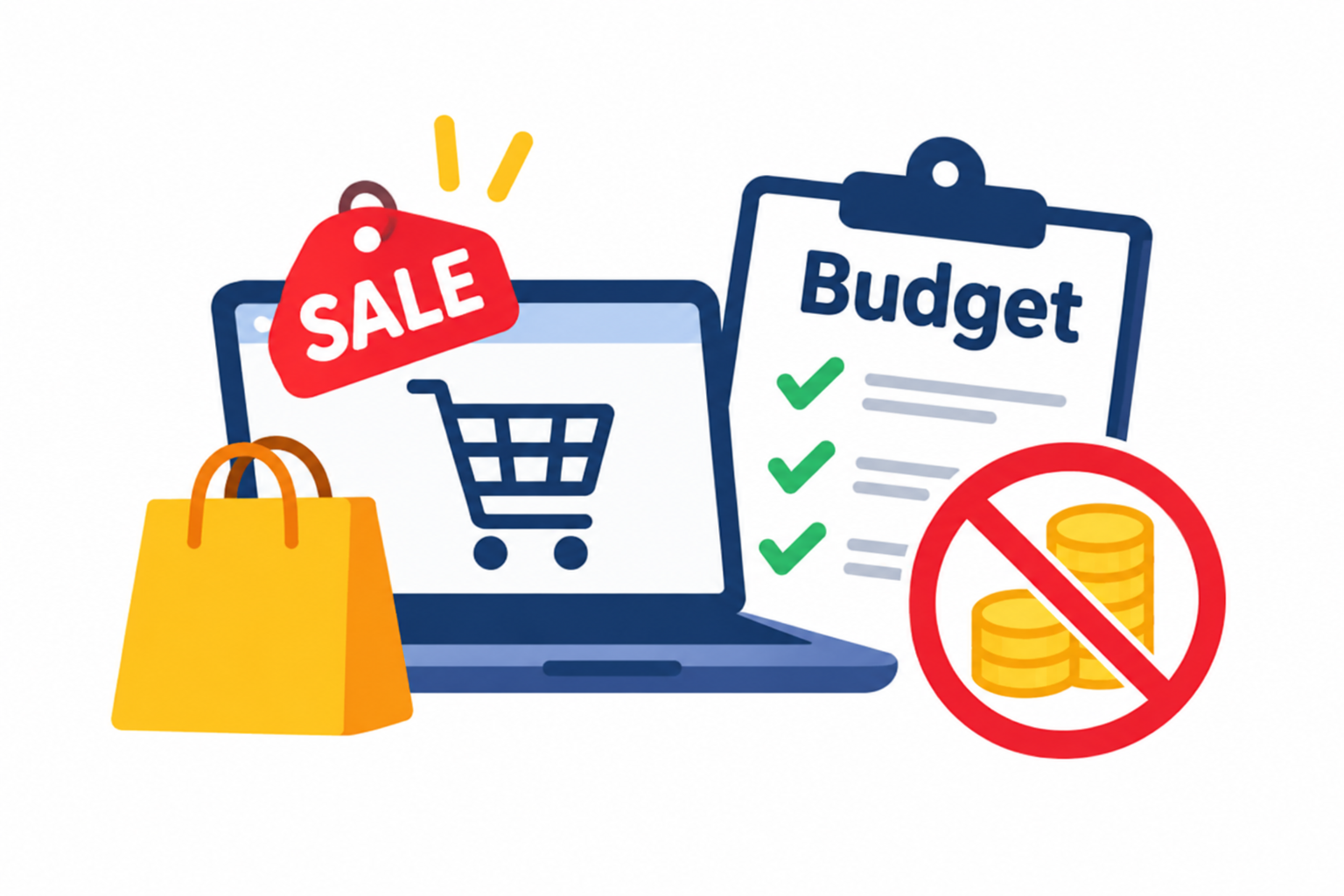
Online sales offer exciting discounts, cashback offers, coupon codes, and limited-time deals. Shopping platforms often promote special offers during festive seasons, clearance sales, and flash sales. While these discounts can help customers save money, they can also encourage unnecessary spending.
Many shoppers purchase products simply because they are available at a lower price, even when those products are not needed. This can affect monthly budgets, savings, and financial stability.
Learning how to avoid overspending during online sales helps you shop smarter, control expenses, and make better financial decisions. In this guide, we will explore practical tips to enjoy online discounts without affecting your budget.
What Is Overspending During Online Sales?
Overspending during online sales happens when shoppers spend more money than planned because of discounts, promotional offers, or marketing strategies.
Common examples include:
-
Buying products just because they are discounted.
-
Purchasing unnecessary items during flash sales.
-
Spending extra money to qualify for free delivery.
-
Using credit cards or EMIs for non-essential purchases.
-
Buying multiple products because of limited-time offers.
Why Do People Overspend During Online Sales?
Several marketing and shopping factors encourage people to spend more.
1. Attractive Discounts
Big discount percentages create excitement and make shoppers feel they are saving money.
2. Limited-Time Offers
Countdown timers and flash sales create pressure to purchase quickly.
3. Easy Online Payments
One-click payments, saved card details, and digital wallets make shopping convenient.
4. Free Delivery Offers
Some customers add unnecessary products to their carts to qualify for free shipping.
5. Social Media Promotions
Influencers and advertisements encourage shoppers to purchase trending products.
10 Smart Ways to Avoid Overspending During Online Sales
1. Prepare a Shopping List
Before the sale begins, write down the products you actually need. Stick to the list instead of browsing randomly.
2. Set a Shopping Budget
Decide how much you can comfortably spend without affecting your monthly expenses.
3. Compare Prices Before Buying
Check product prices across different shopping platforms. A discount does not always mean the lowest price.
4. Avoid Impulse Purchases
Do not purchase immediately after seeing an attractive offer. Take some time to decide whether the product is necessary.
5. Check the Final Product Cost
Look beyond the discount percentage. Consider delivery charges, taxes, platform fees, and additional costs.
6. Avoid Unnecessary EMIs
Do not choose EMI payments for products you cannot comfortably afford. Remember that EMIs create future financial commitments.
7. Use Cashback and Coupons Carefully
Cashback and coupons are useful only when they reduce the cost of something you already planned to purchase.
8. Unsubscribe from Shopping Notifications
Frequent promotional messages and app notifications can encourage unnecessary shopping.
9. Review Your Shopping Cart
Before making payment, remove products that are not essential or exceed your budget.
10. Track Your Spending
Maintain a record of your online purchases and check whether you are staying within your shopping budget.
Online Sales Shopping: Needs vs Wants
Understanding the difference between needs and wants helps prevent unnecessary purchases.
|
Needs |
Wants |
|---|---|
|
Essential groceries |
Extra snacks |
|
Required work equipment |
Latest gadgets |
|
Necessary clothing |
Trendy outfits |
|
Household essentials |
Decorative accessories |
|
Replacement appliances |
Unnecessary upgrades |
Example: How a Shopping Budget Prevents Overspending
Consider a shopper who plans to spend ₹5,000 during an online sale.
|
Shopping Details |
Amount |
|---|---|
|
Monthly shopping budget |
₹5,000 |
|
Essential purchases |
₹3,000 |
|
Unnecessary purchases avoided |
₹2,000 |
|
Actual spending |
₹3,000 |
|
Money saved |
₹2,000 |
By following a shopping budget, the customer avoids unnecessary expenses and keeps ₹2,000 available for savings or other financial needs.
Common Mistakes to Avoid During Online Sales
-
Buying products only because of high discounts.
-
Ignoring the original and current market prices.
-
Spending beyond the monthly budget.
-
Choosing EMIs without checking repayment capacity.
-
Ignoring delivery and convenience charges.
-
Purchasing duplicate products.
-
Shopping without checking previous expenses.
Benefits of Responsible Online Shopping
Responsible shopping provides several financial benefits:
-
Better control over monthly expenses.
-
Improved savings habits.
-
Reduced unnecessary purchases.
-
Lower dependence on credit cards and EMIs.
-
Better financial planning.
-
More disciplined spending habits.
Key Takeaways
-
Always prepare a shopping list before online sales.
-
Set a fixed spending limit.
-
Compare prices before purchasing.
-
Avoid buying products under time pressure.
-
Check the complete cost before payment.
-
Use EMIs carefully.
-
Track every online purchase.
-
Prioritise savings over unnecessary shopping.
Frequently Asked Questions (FAQs)
1. How can I avoid overspending during online sales?
Prepare a shopping list, set a fixed budget, compare prices, and avoid unnecessary purchases.
2. Why do people spend more during online sales?
Attractive discounts, flash sales, advertisements, and limited-time offers encourage impulse buying.
3. Should I buy everything during festive sales?
No. Purchase only essential products that fit your budget.
4. How do I create an online shopping budget?
Review your monthly income and expenses, then allocate a reasonable amount for shopping.
5. Are online discounts always genuine?
No. Some discounts may be based on inflated original prices. Compare prices before purchasing.
6. Is buying products on EMI during sales a good idea?
EMIs may be useful for planned and affordable purchases, but avoid unnecessary borrowing.
7. How can I control impulse shopping?
Wait before purchasing, review your shopping list, and avoid browsing shopping apps unnecessarily.
8. Why should I compare prices across platforms?
Different platforms may offer different prices, discounts, delivery charges, and return policies.
9. Can cashback offers help save money?
Yes, provided you purchase something you already need and understand the cashback conditions.
10. How can I avoid unnecessary purchases?
Identify your needs, follow a shopping budget, and remove unwanted products from your cart.
11. Is using a credit card during online sales safe?
It can be convenient, but pay attention to spending limits, repayment dates, and interest charges.
12. How can I save money during festive sales?
Plan purchases early, compare deals, use genuine coupons, and avoid impulse buying.
13. What should I check before placing an online order?
Check the final price, seller details, product reviews, delivery charges, and return policy.
14. How often should I review my shopping expenses?
Review your shopping expenses weekly or monthly to maintain control over spending.
15. What is the biggest mistake during online sales?
Buying unnecessary products simply because they appear cheaper than their original prices.
Conclusion
Online sales can provide genuine opportunities to save money, but uncontrolled shopping can increase unnecessary expenses. Setting a budget, comparing prices, avoiding impulse purchases, and tracking expenses are simple ways to shop responsibly.
Remember, a good deal is not about buying more products at lower prices. It is about purchasing what you need at the right price.
Vizzve encourages responsible spending, smarter financial decisions, and better money management habits.
Published on : 17th November
Published by : monisha
www.vizzve.com || www.vizzveservices.com
Follow us on social media: Facebook || Linkedin || Instagram
🛡 Powered by Vizzve Financial
RBI-Registered Loan Partner | 10 Lakh+ Customers | ₹600 Cr+ Disbursed