

Introduction
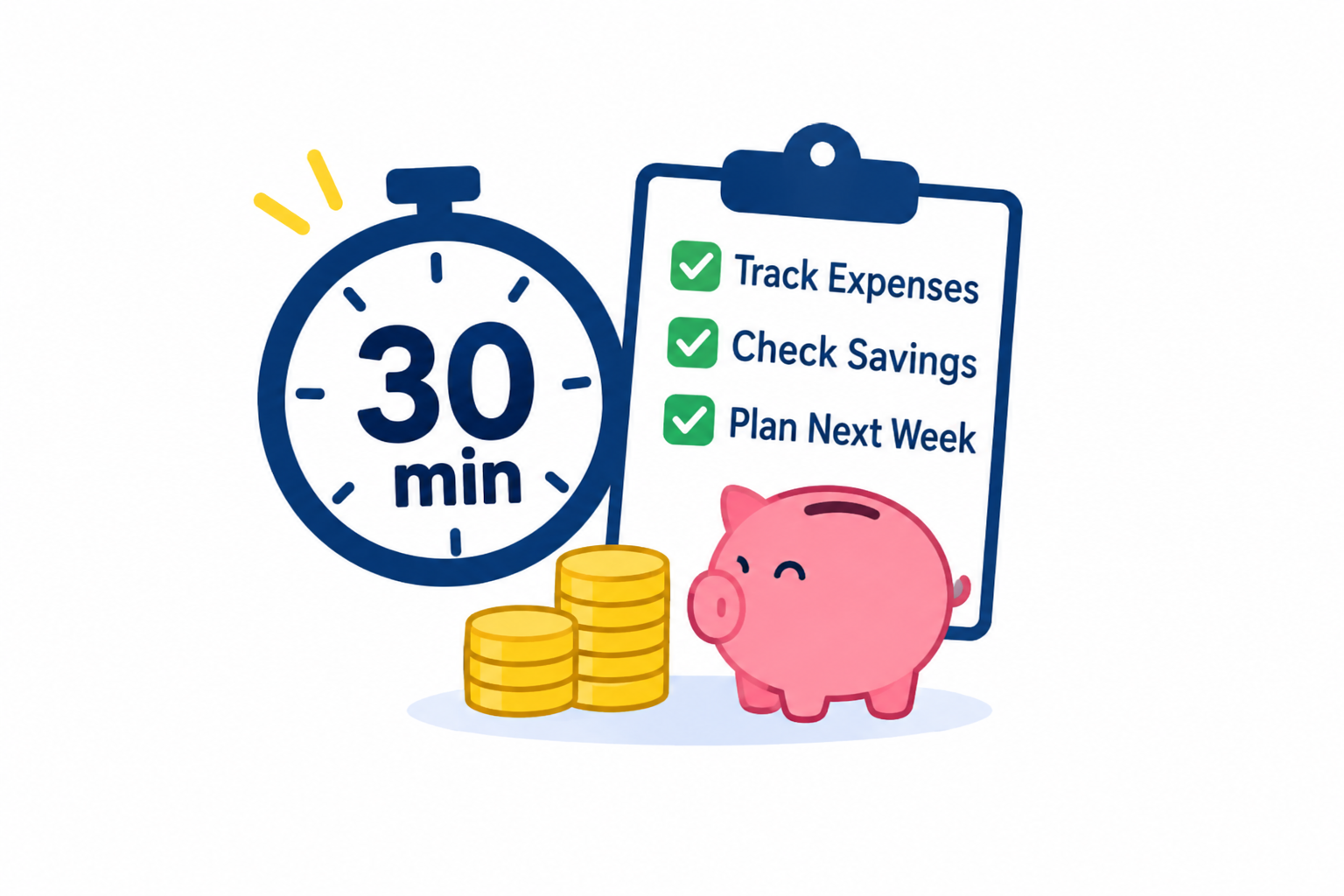
Managing personal finances does not always require hours of planning or complicated spreadsheets. With just 30 minutes every week, you can understand where your money goes, control unnecessary spending, track savings and prepare for upcoming expenses.
A simple personal finance routine helps you stay financially organised without making money management stressful.
Whether you are a salaried employee, freelancer, student or small business owner, spending a little time reviewing your finances every week can help you make better financial decisions.
In this guide, we will explain how to build a practical personal finance routine in just 30 minutes a week.
What Is a Personal Finance Routine?
A personal finance routine is a regular habit of reviewing and managing your income, expenses, savings, bills and financial goals.
It helps you:
-
Understand your spending habits.
-
Avoid unnecessary purchases.
-
Pay bills on time.
-
Build emergency savings.
-
Track financial progress.
-
Prepare for future expenses.
The goal is to make financial management a simple weekly habit.
How to Manage Your Money in 30 Minutes a Week
You can divide your weekly finance routine into five simple activities.
1. Review Your Income – 5 Minutes
Start by checking how much money you received during the week.
Include:
-
Monthly salary or weekly income.
-
Freelance payments.
-
Business income.
-
Additional earnings.
-
Other sources of income.
Keep track of the amount received and compare it with your expected income.
2. Track Your Expenses – 7 Minutes
Review your bank transactions, UPI payments, card statements and cash spending.
Separate expenses into categories:
|
Expense Category |
Examples |
|---|---|
|
Essentials |
Rent, groceries, electricity |
|
Transportation |
Fuel, bus, metro |
|
Personal |
Shopping, entertainment |
|
Financial |
EMIs, savings, insurance |
|
Other |
Unexpected expenses |
Identifying spending patterns helps you understand where you can save money.
3. Check Your Savings – 5 Minutes
Review your savings account and check whether you are regularly setting aside money.
Consider these savings goals:
-
Emergency fund.
-
Short-term purchases.
-
Education expenses.
-
Travel plans.
-
Long-term financial goals.
Even small, consistent savings can help build financial stability over time.
4. Review Upcoming Bills and EMIs – 7 Minutes
Check whether any payments are due during the coming week.
Review:
-
Loan EMIs.
-
Credit card bills.
-
Rent payments.
-
Utility bills.
-
Insurance premiums.
-
Subscription renewals.
Maintain a simple payment calendar to avoid missed due dates and late payment charges.
5. Plan Your Next Week – 6 Minutes
Use the remaining time to prepare a basic spending plan.
Decide:
-
How much you can spend.
-
How much you want to save.
-
Which expenses are necessary.
-
Whether any large payments are coming.
-
What financial goal you want to focus on.
A simple plan can help prevent impulsive spending.
Weekly Personal Finance Routine: 30-Minute Schedule
|
Activity |
Time |
|---|---|
|
Review income |
5 minutes |
|
Track expenses |
7 minutes |
|
Check savings |
5 minutes |
|
Review bills and EMIs |
7 minutes |
|
Plan next week |
6 minutes |
|
Total |
30 minutes |
Simple Tools to Manage Your Personal Finances
You do not need expensive financial software to manage your money.
Some useful options include:
1. Budgeting Spreadsheet
Use a simple spreadsheet to record income, expenses, savings and monthly commitments.
2. Mobile Banking Applications
Check account balances, transaction history and upcoming payments through your bank's official application.
3. Expense Tracking Applications
Use trusted expense tracking tools to categorise spending and understand your financial habits.
4. Calendar Reminders
Set reminders for EMI payments, credit card bills, rent and other important financial commitments.
Common Mistakes to Avoid in Personal Finance Management
Even a simple finance routine may not work properly if you make these mistakes.
-
Not recording small expenses.
-
Ignoring upcoming bill payments.
-
Spending before setting aside savings.
-
Making unnecessary online purchases.
-
Forgetting financial goals.
-
Not reviewing subscriptions.
-
Depending only on memory to track spending.
Consistency is more important than maintaining a complicated budget.
Benefits of Following a 30-Minute Weekly Finance Routine
|
Benefit |
How It Helps |
|---|---|
|
Better budgeting |
Controls unnecessary spending |
|
Improved savings |
Encourages regular saving |
|
Payment management |
Helps avoid missed bills |
|
Financial awareness |
Shows where money goes |
|
Better planning |
Prepares you for future expenses |
|
Reduced stress |
Makes money management organised |
Practical Example: A Simple Weekly Money Routine
Consider a salaried employee earning ₹30,000 per month.
They spend 30 minutes every Sunday reviewing their finances.
During the weekly review, they:
-
Check their bank balance.
-
Review UPI and card transactions.
-
Record grocery and transportation expenses.
-
Check upcoming EMI and bill payments.
-
Review their savings progress.
-
Set a spending limit for the next week.
By repeating this routine every week, they can identify unnecessary expenses and improve their money management habits.
Note: This is an illustrative example, not a recommended budget allocation.
Key Takeaways
-
Spend just 30 minutes every week reviewing your finances.
-
Track income and expenses regularly.
-
Check savings and upcoming financial commitments.
-
Plan weekly spending based on your needs.
-
Avoid unnecessary purchases.
-
Use simple digital tools to stay organised.
-
Make financial planning a consistent habit.
Frequently Asked Questions (FAQs)
1. What is a personal finance routine?
It is a regular habit of reviewing income, expenses, savings, bills and financial goals.
2. Can I manage my finances in 30 minutes a week?
Yes. A simple weekly review can help you monitor spending, savings and upcoming payments.
3. When should I review my personal finances?
You can choose a fixed day, such as Sunday, to review your finances every week.
4. What should I check during a weekly finance review?
Check your income, expenses, savings, EMIs, bills and upcoming financial commitments.
5. Do I need a budgeting application?
No. You can use a notebook, spreadsheet or trusted budgeting application.
6. How can I control unnecessary spending?
Track your expenses, set weekly spending limits and avoid impulsive purchases.
7. Should I check my bank account every week?
Yes. Regular reviews help you monitor transactions and identify unexpected payments.
8. How can I improve my savings habits?
Set a realistic savings target and contribute regularly according to your financial situation.
9. Should I include loan EMIs in my weekly finance routine?
Yes. Reviewing EMI due dates and payment amounts helps you manage repayment commitments.
10. How can I prepare for unexpected expenses?
Build an emergency fund gradually and keep it separate from your regular spending money.
11. Is weekly budgeting better than monthly budgeting?
Both are useful. Monthly budgeting sets the overall plan, while weekly reviews help you stay on track.
12. What is the biggest mistake in personal finance management?
Ignoring spending habits and failing to review financial commitments regularly.
13. Can students follow a weekly finance routine?
Yes. Students can track allowances, part-time income, food expenses and savings.
14. How long does it take to develop a finance routine?
It varies by individual. Following the same weekly schedule consistently can help establish the habit.
15. Can a simple finance routine improve financial discipline?
Yes. Regularly reviewing your money can encourage better spending, saving and planning decisions.
Conclusion
Building a personal finance routine does not have to be difficult or time-consuming. Just 30 minutes a week can help you understand your spending, monitor savings, manage bills and prepare for upcoming financial responsibilities.
The key is consistency. Choose one day every week, follow a simple checklist and make small improvements to your financial habits.
Start with 30 minutes today and take one step towards better financial management.
Published on : 18th November
Published by : monisha
www.vizzve.com || www.vizzveservices.com
Follow us on social media: Facebook || Linkedin || Instagram
🛡 Powered by Vizzve Financial
RBI-Registered Loan Partner | 10 Lakh+ Customers | ₹600 Cr+ Disbursed