

Introduction
Making mistakes while filing an Income Tax Return (ITR) is common. You may accidentally enter incorrect income details, miss deductions, or provide wrong bank information. Fortunately, the Income Tax Department allows eligible taxpayers to correct certain errors through revised returns or rectification requests. In this guide, learn how to identify mistakes and correct your income tax return easily.
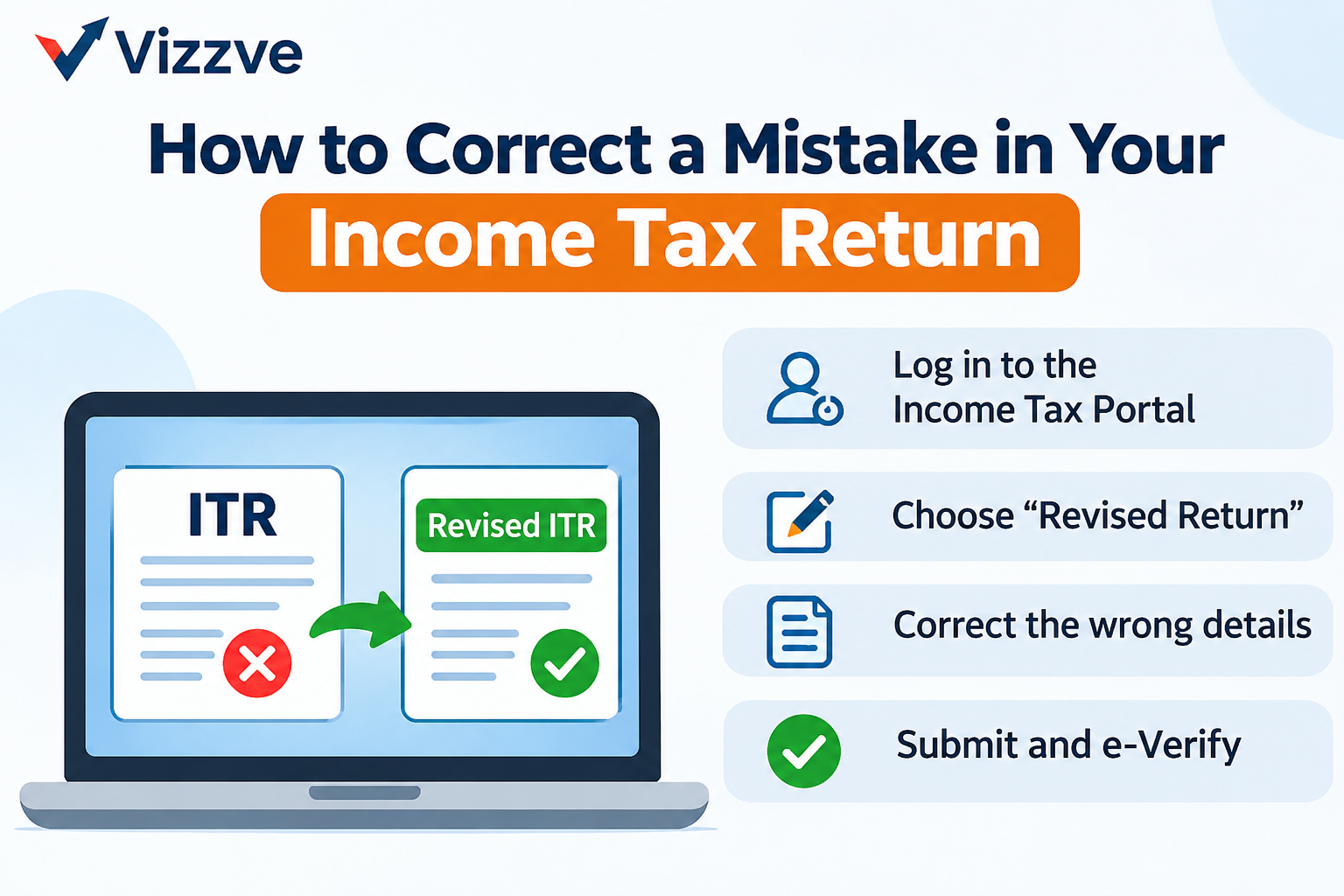
How to Correct a Mistake in Your Income Tax Return
Filing an Income Tax Return (ITR) is an important financial responsibility. However, sometimes taxpayers make mistakes while entering income details, claiming deductions, reporting bank information, or calculating taxes.
These mistakes can lead to incorrect tax calculations, refund delays, or additional tax payments.
The good news is that the Income Tax Department provides ways to correct certain mistakes in an already filed return.
In this guide, we will explain how to identify mistakes, file a revised income tax return, and correct errors through the online portal.
What Are Common Mistakes in Income Tax Returns?
Many taxpayers make simple mistakes while filing their income tax returns.
Some common mistakes include:
-
Entering incorrect personal information.
-
Reporting the wrong salary amount.
-
Missing bank interest income.
-
Forgetting to report additional income.
-
Claiming incorrect deductions.
-
Entering incorrect TDS details.
-
Providing the wrong bank account information.
-
Selecting the incorrect ITR form.
Checking these details before submitting your return can help prevent unnecessary problems.
Can You Correct a Mistake After Filing Your ITR?
Yes. You can correct certain mistakes after filing your Income Tax Return.
The correction method depends on the type of mistake and whether your return has already been processed.
The main options include:
-
Revised Return: Used to correct mistakes in an already filed return within the permitted time.
-
Rectification Request: Used to correct mistakes apparent from the records in an order passed by the Centralised Processing Centre (CPC).
-
Updated Return (ITR-U): Used to voluntarily report previously unreported or incorrectly reported income, subject to eligibility conditions and additional tax.
Choosing the correct option is important.
How to Correct a Mistake in Your Income Tax Return Online
Follow these simple steps to correct your ITR.
Step 1: Visit the Income Tax Portal
Visit the official Income Tax Department website:
Log in using your PAN and password.
Step 2: Select the Correct Assessment Year
Choose the assessment year for which you want to correct your income tax return.
Make sure you select the correct financial year and assessment year.
Step 3: Choose the Appropriate Correction Method
Check whether you need to file a revised return, submit a rectification request, or file an updated return.
Step 4: Correct the Incorrect Details
Review your original return and identify the incorrect information.
Update the relevant details, such as:
-
Salary and other income.
-
Bank interest.
-
TDS information.
-
Tax deductions.
-
Personal details.
-
Tax calculations.
Step 5: Review Your Return
Before submitting, carefully check all the information.
Compare your details with Form 16, Form 26AS, AIS, and other relevant financial documents.
Step 6: Submit and Verify Your Return
Submit the corrected return and complete the required e-verification process.
Keep the acknowledgement number for future reference.
What Is a Revised Income Tax Return?
A revised income tax return is a corrected version of an income tax return that has already been submitted.
Under Section 139(5) of the Income-tax Act, 1961, taxpayers can revise their returns to correct errors or omissions within the prescribed time limit.
For Assessment Year 2026-27, the revised return deadline has been extended up to 31 March 2027, or completion of assessment, whichever is earlier. An additional fee under Section 234I applies when filing after 31 December 2026 and up to 31 March 2027.
Always check the applicable rules for your assessment year.
What Is an Income Tax Rectification Request?
A rectification request is used when there is a mistake apparent from the records in an order passed by the CPC.
For example:
-
Incorrect tax calculation by CPC.
-
TDS credit mismatch.
-
Incorrect tax demand.
-
Certain processing errors.
You can submit a rectification request through the Income Tax portal under Services → Rectification.
Remember that rectification is not meant to replace a revised return when you need to correct your own income or deduction details.
Difference Between Revised Return, Rectification and Updated Return
| Feature | Revised Return | Rectification | Updated Return |
|---|---|---|---|
| Purpose | Correct filed return | Correct apparent processing errors | Report previously unreported income |
| Main provision | Section 139(5) | Section 154 | Section 139(8A) |
| Additional tax | Depends on correction | Depends on outcome | Additional tax applies |
| Eligibility | Within permitted deadline | Eligible CPC orders | Subject to legal conditions |
What Happens If You Do Not Correct Your ITR Mistakes?
Ignoring mistakes in your income tax return may create financial and compliance problems.
Possible consequences include:
-
Incorrect income tax calculations.
-
Delayed income tax refunds.
-
Tax demands from the department.
-
Interest on unpaid tax.
-
Notices requesting additional information.
-
Problems with future tax assessments.
Therefore, it is better to identify and correct mistakes as early as possible.
Tips to Avoid Mistakes While Filing Your ITR
Here are some simple tips to make your tax filing process easier.
-
Check your PAN and personal details carefully.
-
Verify your salary information using Form 16.
-
Review Form 26AS and AIS.
-
Report income from all relevant sources.
-
Check your deductions before claiming them.
-
Enter the correct bank account details.
-
Select the appropriate ITR form.
-
Review your tax calculation before submitting.
-
Complete e-verification after filing.
-
Keep copies of your tax documents safely.
How Vizzve Helps You Improve Your Financial Awareness
Managing money responsibly includes understanding taxes, income, savings, and financial planning.
At Vizzve, we believe financial awareness helps individuals make better financial decisions. Understanding income tax rules and filing returns correctly can help you manage your finances more confidently.
Explore Vizzve for useful financial information, personal finance guidance, and money management tips.
Key Takeaways
-
Mistakes in an income tax return can often be corrected.
-
A revised return helps correct errors in an already filed ITR.
-
Rectification is meant for eligible mistakes in CPC processing orders.
-
An updated return can help report previously unreported income, subject to conditions.
-
Always check the applicable correction deadlines.
-
Review all income and deduction details before submitting your return.
Correcting mistakes early can help you avoid unnecessary tax complications and maintain accurate financial records.
Frequently Asked Questions (FAQs)
1. Can I correct my income tax return after submitting it?
Yes. You can correct certain mistakes through a revised return, rectification request, or updated return, depending on the nature of the error.
2. What is a revised income tax return?
A revised income tax return is a corrected return filed to replace an earlier return within the permitted deadline.
3. How can I revise my ITR online?
Log in to the official Income Tax portal, select the relevant assessment year, choose the revised return option, correct your details, and submit the return.
4. Is there any fee for filing a revised ITR?
An additional fee under Section 234I applies to eligible revised returns filed after 31 December 2026 and up to 31 March 2027 for AY 2026-27.
5. Can I correct my bank account details in my ITR?
Yes. Eligible bank account details can be updated through a revised return within the applicable deadline.
6. What happens if I enter the wrong salary amount?
You should review your Form 16 and other income records and correct the salary details through the appropriate return correction process.
7. Can I correct my ITR after receiving a tax notice?
It depends on the type of notice and the stage of processing. Check the notice carefully and seek professional tax advice if necessary.
8. What is the difference between a revised return and rectification?
A revised return corrects errors or omissions in your filed return, whereas rectification addresses eligible mistakes apparent from records in a CPC order.
9. Can I file a revised ITR more than once?
Yes, multiple revised returns may be filed within the applicable deadline, subject to the relevant legal provisions.
10. What is an updated income tax return?
An updated return, also known as ITR-U, allows eligible taxpayers to voluntarily report previously unreported or incorrectly reported income within the permitted period.
11. Can I claim a new deduction through rectification?
Generally, no. Rectification is not intended for claiming new exemptions or deductions. A revised return may be appropriate if it is still permitted.
12. How do I check whether my revised ITR is processed?
Log in to the Income Tax portal and visit e-File → Income Tax Returns → View Filed Returns to check the filing and processing status.
13. Do I need to verify my revised ITR?
Yes. Complete the required e-verification process after submitting your revised return.
14. What documents should I check before correcting my ITR?
Review Form 16, Form 26AS, AIS, bank statements, interest certificates, and investment or deduction proofs.
15. Can I correct an old income tax return?
You may be able to file an updated return for an earlier assessment year, subject to the applicable time limits, additional tax, and eligibility conditions.
Conclusion
Correcting mistakes in your Income Tax Return helps you avoid unnecessary tax problems, refund delays, and incorrect tax calculations. Always review your income, deductions, TDS details, and bank information carefully before submitting your return. If you discover an error after filing, choose the appropriate correction method and complete the process within the applicable deadline. Proper tax filing helps you maintain accurate financial records and stay financially responsible.
Published on : 20th November
Published by : monisha
www.vizzve.com || www.vizzveservices.com
Follow us on social media: Facebook || Linkedin || Instagram
🛡 Powered by Vizzve Financial
RBI-Registered Loan Partner | 10 Lakh+ Customers | ₹600 Cr+ Disbursed