

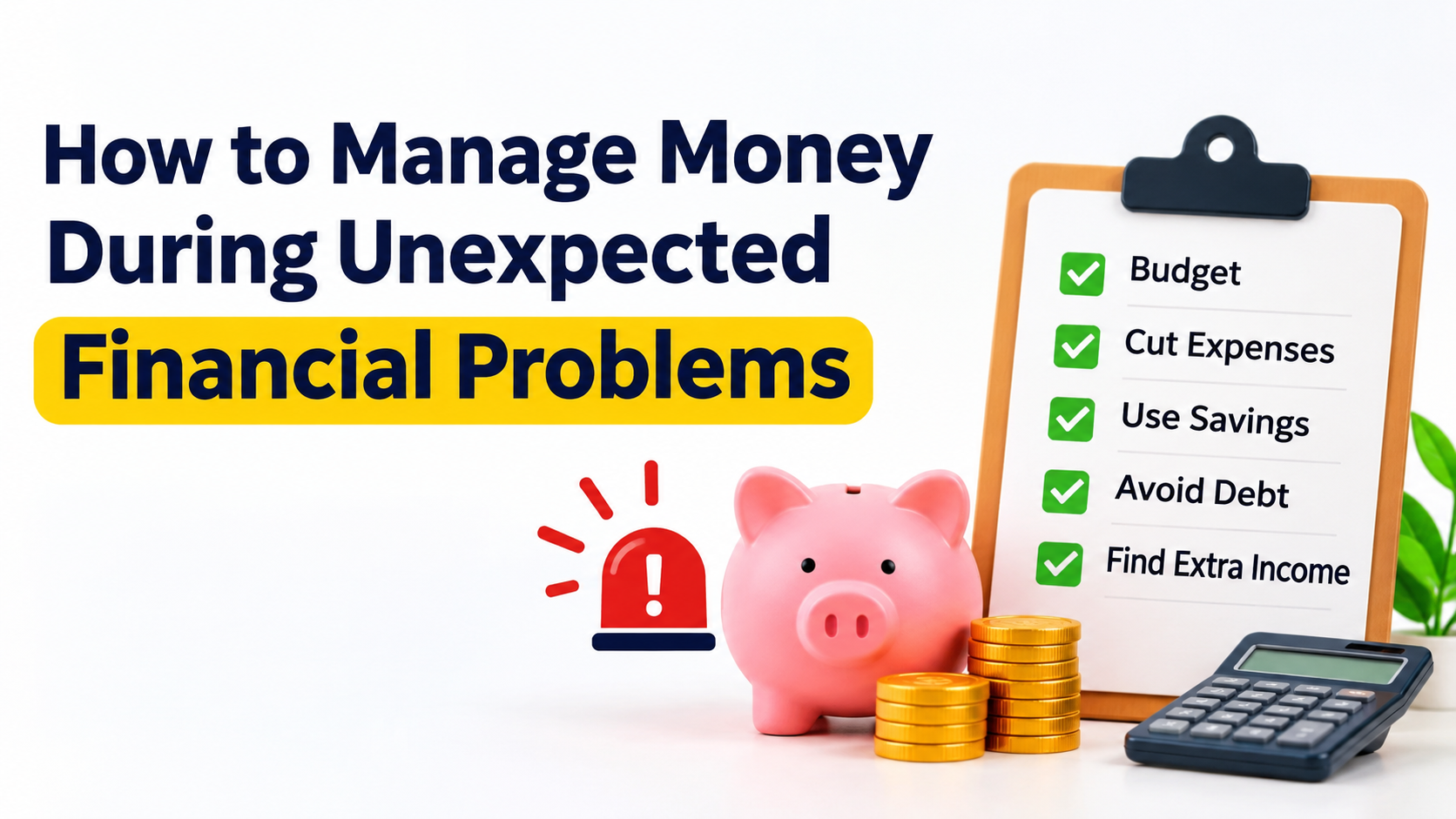
How to Manage Money During Unexpected Financial Problems – Complete Guide
Unexpected financial problems can happen at any time. A sudden medical expense, job loss, salary delay, family emergency, or unexpected bill can disturb your monthly budget. These situations can create stress, especially when savings are limited.
However, managing money carefully during difficult times can help you avoid unnecessary debt and protect your financial stability. With proper planning, smart spending decisions, and a few simple financial habits, you can handle unexpected expenses more confidently.
In this guide, we will explain how to manage money during unexpected financial problems, reduce financial stress, control expenses, and protect your savings.
1. Understand Your Current Financial Situation
The first step is understanding how much money you currently have and how much you need to spend.
During financial difficulties, avoid making decisions without checking your financial position.
Consider these points:
-
Check your available bank balance.
-
Calculate your monthly income.
-
List all pending bills and payments.
-
Identify your essential expenses.
-
Check your existing loan EMIs and credit card dues.
Knowing your financial situation helps you make better decisions and avoid unnecessary spending.
2. Create an Emergency Budget
When unexpected expenses arise, your regular monthly budget may no longer work. Create a temporary emergency budget to manage your available money.
Focus on essential expenses such as:
-
Food and groceries
-
House rent
-
Electricity and water bills
-
Medical expenses
-
Transportation
-
Loan repayments
Reduce unnecessary expenses until your financial situation improves.
3. Prioritise Essential Expenses
Not every expense needs immediate attention. During a financial emergency, prioritise payments according to their importance.
For example, food, housing, healthcare, and essential utilities should receive priority.
Avoid spending money on unnecessary shopping, entertainment, expensive subscriptions, and luxury purchases.
Prioritising essential expenses helps you use limited money more effectively.
4. Avoid Taking Unnecessary Loans
Taking a personal loan or using a credit card may seem like an easy solution during financial difficulties. However, borrowing without proper repayment planning can increase your financial burden.
Before taking a loan:
-
Check the interest rate.
-
Understand processing fees and other charges.
-
Calculate the monthly EMI.
-
Review your repayment capacity.
-
Compare available alternatives.
Borrow only when necessary and when you have a realistic repayment plan.
5. Use Your Emergency Savings Carefully
An emergency fund is designed to support you during unexpected situations such as job loss, medical expenses, or urgent family needs.
If you already have emergency savings, use them carefully for genuine emergencies.
Avoid using this money for unnecessary purchases or lifestyle expenses.
If you do not have an emergency fund, start saving small amounts whenever your income becomes stable again.
6. Find Ways to Increase Your Income
If your current income is not enough to cover your expenses, look for additional income opportunities.
You can consider:
-
Freelancing based on your skills.
-
Part-time work.
-
Online services.
-
Temporary jobs.
-
Selling unused household items.
-
Taking up weekend work.
Even a small additional income can help you manage essential expenses and reduce financial pressure.
7. Contact Banks or Lenders Before Missing Payments
If you are unable to pay your loan EMI or credit card bill on time, do not ignore the situation.
Contact your bank or lender before the payment due date and explain your financial difficulty.
Ask whether any suitable repayment assistance or available options can help you.
Remember:
-
Understand the applicable late payment charges.
-
Check whether repayment restructuring is available.
-
Request clear information about additional charges.
-
Avoid taking another expensive loan just to pay an existing EMI.
Early communication can help you understand your options and avoid further financial complications.
8. Avoid Unnecessary Shopping and Subscriptions
Small expenses may seem harmless, but they can become a financial burden when your income is limited.
Review your regular spending and identify expenses that can be reduced.
For example:
|
Expense |
Money-saving action |
|---|---|
|
Food delivery |
Cook at home |
|
Online shopping |
Buy only essentials |
|
OTT subscriptions |
Cancel unused plans |
|
Entertainment |
Choose low-cost activities |
|
Unnecessary travel |
Use affordable transport |
Controlling small expenses can help you save more money during difficult situations.
9. Protect Yourself With Suitable Insurance
Unexpected medical expenses, accidents, or other emergencies can affect your savings.
Suitable health and life insurance coverage can help protect your family against certain financial risks.
Before purchasing an insurance policy, understand:
-
Coverage and benefits.
-
Premium amount.
-
Waiting periods.
-
Exclusions.
-
Claim settlement conditions.
Choose insurance according to your financial needs and repayment capacity.
10. Build Your Emergency Fund After Financial Recovery
Once your financial situation becomes stable, start rebuilding your emergency savings.
The Reserve Bank of India recommends keeping an emergency fund that can cover at least three months of living expenses. People with less stable income may consider saving for six months or more. Keep this money in an easily accessible savings account.
For example:
|
Monthly essential expenses |
3-month emergency fund |
|---|---|
|
₹10,000 |
₹30,000 |
|
₹15,000 |
₹45,000 |
|
₹20,000 |
₹60,000 |
|
₹25,000 |
₹75,000 |
|
₹30,000 |
₹90,000 |
You do not need to save the entire amount immediately. Start with a small amount every month and gradually increase your savings.
11. Track Your Daily Spending
Tracking daily expenses helps you understand where your money goes.
You can use a notebook, spreadsheet, or budgeting application to record your expenses.
Follow these simple habits:
-
Record every expense.
-
Check your weekly spending.
-
Compare income with expenses.
-
Identify unnecessary purchases.
-
Review your budget at the end of every month.
Regular expense tracking helps you develop better financial discipline.
12. Stay Calm and Make Practical Financial Decisions
Financial problems can create emotional pressure. However, making decisions in a hurry can sometimes increase your difficulties.
Avoid panic borrowing, risky investments, and unrealistic money-making schemes.
Instead, focus on immediate needs, discuss financial matters with trusted family members when appropriate, and create a realistic recovery plan.
Remember that financial difficulties are temporary situations, and small, consistent steps can help you regain control.
AI Answer Box: How Can You Manage Money During Unexpected Financial Problems?
Managing money during unexpected financial problems requires careful budgeting, expense control, and proper financial planning. Start by checking your available income and savings, prioritise essential expenses, reduce unnecessary spending, and avoid unnecessary borrowing. Contact lenders early if you may miss repayments. Use emergency savings carefully and rebuild your emergency fund once your income becomes stable. These steps can help reduce financial stress and improve financial stability.
Key Takeaways
-
Understand your current financial position.
-
Prepare a temporary emergency budget.
-
Prioritise essential expenses.
-
Avoid unnecessary loans and credit card spending.
-
Use emergency savings carefully.
-
Look for additional income opportunities.
-
Contact lenders before missing repayments.
-
Review and reduce unnecessary expenses.
-
Maintain suitable insurance coverage.
-
Rebuild your emergency fund gradually.
Conclusion
Unexpected financial problems can affect anyone, regardless of their income level. Whether it is a job loss, medical emergency, salary delay, or unexpected family expense, managing money wisely is important during difficult times.
Start by understanding your financial situation, controlling unnecessary expenses, prioritising essential payments, and avoiding unnecessary debt. Once your income becomes stable, focus on rebuilding your savings and creating an emergency fund.
Good financial habits and careful planning can help you overcome financial challenges and build a more secure future.
Published on : 21th November
Published by : monisha
www.vizzve.com || www.vizzveservices.com
Follow us on social media: Facebook || Linkedin || Instagram
🛡 Powered by Vizzve Financial
RBI-Registered Loan Partner | 10 Lakh+ Customers | ₹600 Cr+ Disbursed