

Introduction
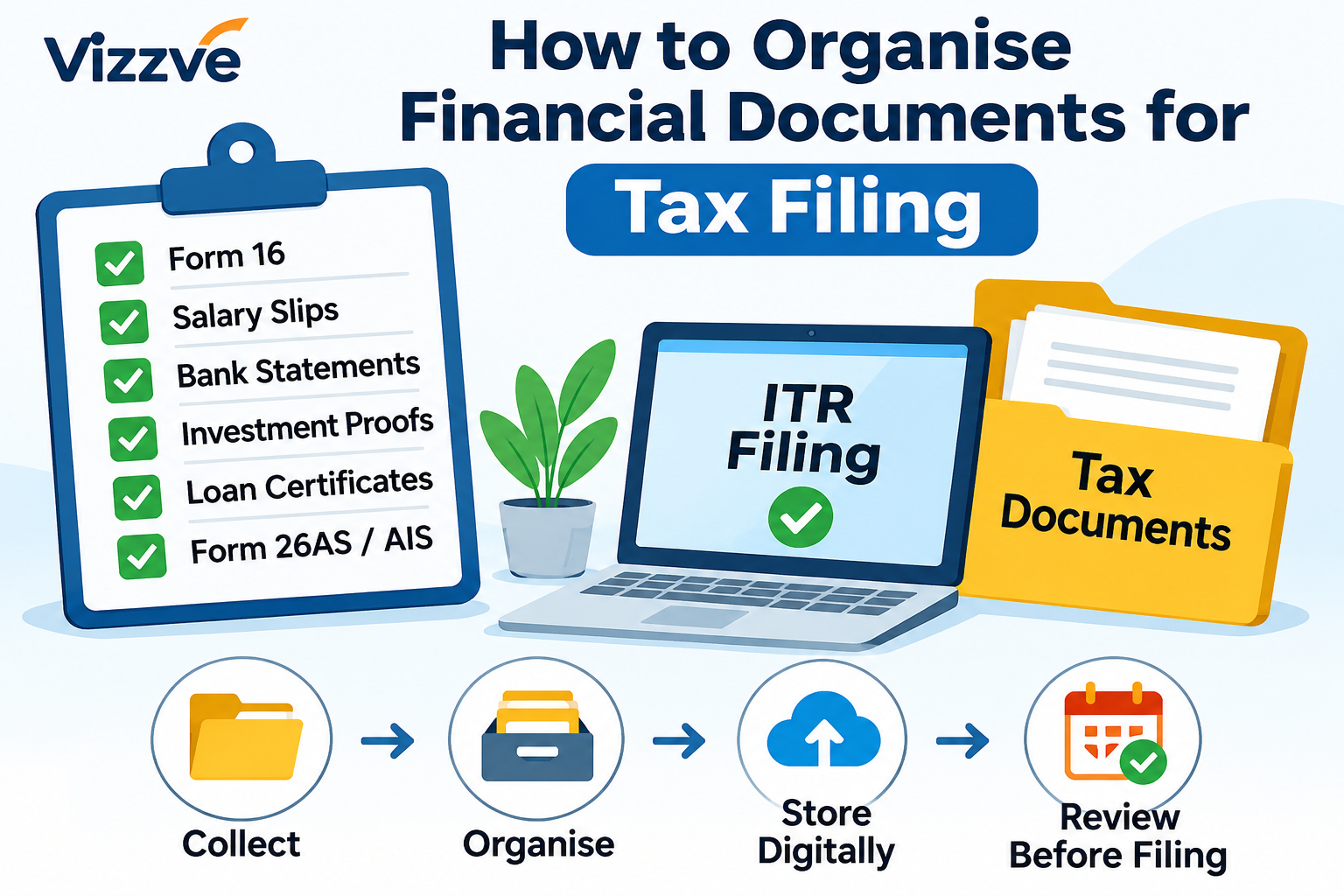
Tax filing becomes difficult when important financial documents are missing or scattered across emails, folders, and mobile phones. Many taxpayers wait until the last minute to collect their documents, which can lead to confusion and filing errors.
The best solution is to maintain a proper financial document management system throughout the year.
By organising your documents into categories, keeping digital copies, and reviewing your financial records regularly, you can make the ITR filing process faster and easier.
Let's understand how to organise your financial documents effectively.
1. Collect All Your Income Documents
The first step is to collect documents that show your income during the financial year.
These documents help you calculate your total taxable income accurately.
Important income documents include:
-
Form 16 from your employer.
-
Monthly salary slips.
-
Bank account statements.
-
Form 16A for applicable TDS deductions.
-
Pension income statements, if applicable.
-
Rental income records.
-
Freelance or business income statements.
-
Interest income certificates from banks.
Tip: Keep all income-related documents in one folder so you can easily access them while filing your income tax return.
2. Organise Your Bank Statements
Bank statements provide a record of your financial transactions throughout the year.
Download statements from all your savings accounts, current accounts, and other relevant bank accounts.
Check the following details:
-
Salary credits.
-
Interest received.
-
Rental income.
-
Investment transactions.
-
Major financial transfers.
-
Loan-related payments.
Reviewing bank statements helps you identify income that may need to be reported in your tax return.
3. Keep Investment and Tax-Saving Proofs
Investment documents are important when claiming eligible tax deductions.
Under the old tax regime, eligible investments and expenses may qualify for deductions under applicable provisions.
Common documents include:
-
Life insurance premium receipts.
-
Public Provident Fund (PPF) statements.
-
Employee Provident Fund (EPF) contributions.
-
ELSS mutual fund statements.
-
National Savings Certificate (NSC) certificates.
-
Eligible health insurance premium receipts.
-
Eligible education loan interest certificates.
Remember that deductions depend on the applicable tax regime and current income tax rules. The new tax regime generally does not allow many deductions available under the old regime.
4. Maintain Your Form 16 and Form 26AS
Form 16 and Form 26AS are important documents for checking your income and tax deductions.
Form 16: Provided by your employer, it contains salary details and TDS information.
Form 26AS: Provides a consolidated view of tax credits, including TDS and other reported tax-related information.
You should also review the Annual Information Statement (AIS) and Taxpayer Information Summary (TIS) available through the income tax portal.
Compare these records with your salary slips, bank statements, and other income documents before filing your return.
5. Create Separate Folders for Financial Documents
One of the simplest ways to organise financial records is to create separate folders for different document categories.
For example:
|
Folder Name |
Documents to Store |
|---|---|
|
Income |
Salary slips, Form 16 |
|
Banking |
Bank statements |
|
Investments |
PPF, ELSS, insurance |
|
Tax Records |
Form 26AS, AIS |
|
Loans |
Interest certificates |
|
Expenses |
Eligible expense receipts |
|
ITR Records |
Filed returns and acknowledgements |
You can maintain these folders on your computer, cloud storage, or in physical files.
6. Store Documents Digitally
Digital document storage makes financial record management easier.
Instead of depending only on paper documents, scan important receipts and certificates and save them in organised digital folders.
Useful practices include:
-
Save documents in PDF format.
-
Use clear file names.
-
Organise files by financial year.
-
Keep backup copies.
-
Use secure cloud storage.
-
Protect confidential financial information.
Example file name: Form16_FY2025-26.pdf
Digital storage helps you find documents quickly whenever you need them.
7. Keep Loan and Interest Certificates
If you have taken a home loan or education loan, keep the relevant loan documents.
Important records may include:
-
Home loan interest certificates.
-
Principal repayment statements.
-
Education loan interest certificates.
-
Loan account statements.
-
Bank-issued repayment summaries.
Some loan-related payments may qualify for tax benefits depending on the applicable tax provisions and tax regime.
Always verify eligibility before claiming deductions.
8. Track Your Expenses Throughout the Year
Maintaining expense records helps you identify eligible deductions and understand your financial situation.
You can maintain a monthly expense tracker using a spreadsheet or personal finance application.
Track expenses such as:
-
Health insurance premiums.
-
Eligible medical expenses.
-
Education-related payments.
-
Donations to eligible organisations.
-
Home loan repayments.
-
Other eligible tax-saving expenses.
Not every expense qualifies for a tax deduction, so check the relevant income tax provisions before claiming it.
9. Review Your Documents Before Filing ITR
Before submitting your income tax return, review all your financial documents carefully.
Check the following:
-
Your personal details are correct.
-
Total income matches your records.
-
TDS details are accurate.
-
Bank account information is correct.
-
Eligible deductions are supported by documents.
-
AIS and Form 26AS information is reviewed.
-
The correct ITR form and tax regime are selected.
A final review can help reduce errors and avoid unnecessary complications.
10. Maintain Tax Records for Future Reference
Do not delete or discard financial documents immediately after filing your income tax return.
Keep copies of:
-
Filed income tax returns.
-
ITR acknowledgements.
-
Tax payment challans.
-
Form 16 and TDS certificates.
-
Investment proofs.
-
Bank statements.
-
Supporting documents for deductions.
Keep records for the applicable statutory period, considering assessment, reassessment, and other relevant tax requirements.
Financial Documents Checklist for Tax Filing
Use this simple checklist to prepare for your next tax filing.
Common Mistakes to Avoid While Organising Tax Documents
Many taxpayers make simple mistakes that create problems during tax filing.
Avoid these common mistakes:
-
Collecting documents at the last minute: Start organising documents throughout the year.
-
Ignoring bank interest: Remember to review interest income from savings accounts and deposits.
-
Missing investment proofs: Keep eligible investment receipts safely.
-
Not checking Form 26AS: Verify TDS information before filing.
-
Ignoring AIS: Review reported financial transactions for accuracy.
-
Keeping only physical copies: Maintain secure digital backups.
-
Claiming incorrect deductions: Check eligibility under the selected tax regime.
How Vizzve Encourages Better Financial Management
At Vizzve, we believe financial awareness and proper money management are important for building a secure financial future.
Organising financial documents, tracking income, monitoring expenses, and planning savings can help individuals make better financial decisions.
Developing these habits can also improve financial discipline and make important financial responsibilities easier to manage.
Key Takeaways
-
Start collecting financial documents early.
-
Keep income and investment records organised.
-
Maintain separate folders for different financial categories.
-
Store digital copies securely.
-
Review Form 16, Form 26AS, and AIS.
-
Check tax deductions before claiming them.
-
Keep previous ITR records for future reference.
The key to stress-free tax filing is simple: stay organised throughout the financial year instead of waiting until the last minute.
Frequently Asked Questions (FAQs)
1. What documents are required for income tax filing in India?
Common documents include PAN, Aadhaar, Form 16, bank statements, Form 26AS, AIS, investment proofs, and other income-related records.
2. Is Form 16 mandatory for filing ITR?
No. Form 16 is useful for salaried taxpayers, but it is not mandatory in every situation. You can use other income and TDS records to prepare your return.
3. How should I organise financial documents for tax filing?
Create separate folders for income, banking, investments, expenses, loans, and tax records.
4. Can I use digital copies of tax documents?
Yes. Digital copies are useful for record management. Keep documents secure and retain original documents wherever required.
5. What is the difference between Form 16 and Form 26AS?
Form 16 is an employer-issued salary and TDS certificate. Form 26AS provides consolidated tax credit information.
6. Should I keep bank statements for tax filing?
Yes. Bank statements help verify income, interest, and other financial transactions.
7. Why is AIS important for ITR filing?
AIS provides information about financial transactions reported to the Income Tax Department and helps taxpayers cross-check their income details.
8. Do I need investment proofs for tax filing?
Investment proofs are useful when claiming eligible deductions, particularly under the old tax regime.
9. How long should I keep income tax documents?
Keep documents for the applicable statutory retention period and longer if they relate to ongoing tax proceedings.
10. Can I organise tax documents using Excel?
Yes. Excel or Google Sheets can help track income, expenses, investments, and document availability.
11. What happens if I lose my Form 16?
You can request another copy from your employer. You can also use salary slips, Form 26AS, AIS, and other available records to prepare your tax return.
12. Is it necessary to organise tax documents every month?
It is not compulsory, but monthly organisation makes annual tax filing easier and reduces the chances of missing important documents.
13. Should I keep previous income tax returns?
Yes. Previous ITR acknowledgements and supporting records can be useful for future reference and verification.
14. Can I claim deductions under the new tax regime?
The new tax regime restricts many deductions available under the old regime, although certain specified deductions and exemptions remain available.
15. What is the easiest way to prepare for tax filing?
Maintain a digital folder, collect income documents, track eligible expenses, and review your tax information regularly.
Conclusion
Organising financial documents for tax filing does not have to be complicated. With proper planning, digital storage, and regular record keeping, you can make the entire process simple and manageable.
Start by collecting your income records, organising investment proofs, reviewing bank statements, and maintaining separate folders for important financial documents.
Remember, good financial organisation is not just about filing taxes correctly. It is also an important step towards better financial planning and long-term financial stability.
Published on : 20th November
Published by : monisha
www.vizzve.com || www.vizzveservices.com
Follow us on social media: Facebook || Linkedin || Instagram
🛡 Powered by Vizzve Financial
RBI-Registered Loan Partner | 10 Lakh+ Customers | ₹600 Cr+ Disbursed