

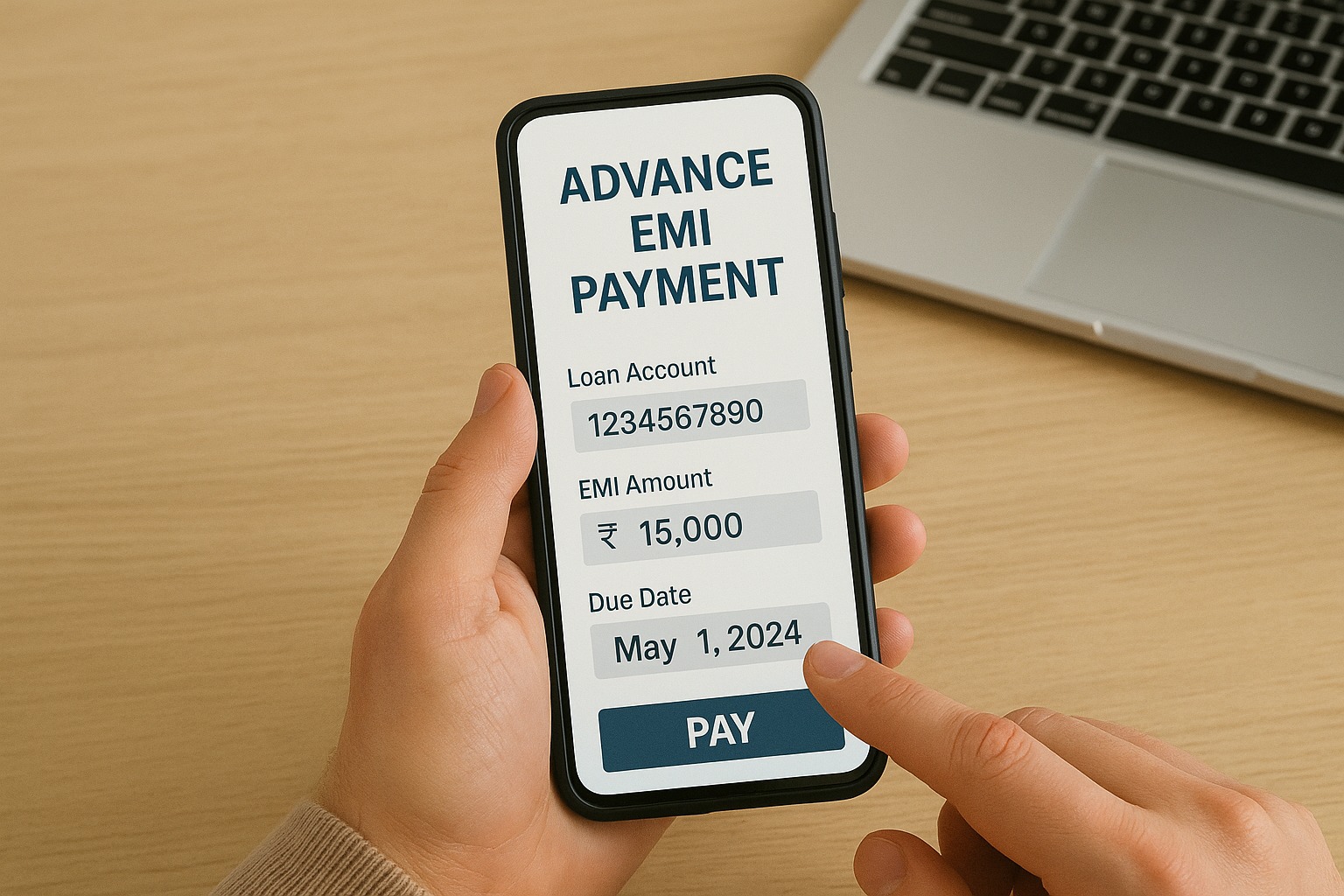
In today’s fast-moving financial environment, managing debt efficiently can make a big difference to your long-term financial health. One increasingly popular strategy among borrowers is paying EMIs in advance — either partially or fully — to save on interest and improve credit discipline.
But before making this move, it’s essential to understand how advance EMI payments work, the advantages they bring, and what to consider before paying ahead of schedule.
What Does Paying EMI in Advance Mean?
When you take a loan, your Equated Monthly Instalment (EMI) typically includes both principal and interest, spread evenly across your repayment tenure.
Paying an EMI in advance means settling your upcoming instalments before their scheduled due date. This can be done in two ways:
Advance EMI Payment: Paying one or more EMIs early while keeping the loan active.
Full or Partial Prepayment: Paying off a significant portion (or the entire balance) of the loan before the tenure ends.
Both methods reduce your outstanding balance and, in some cases, can lower your interest burden.
How to Pay EMI in Advance
Check Your Loan Agreement:
Review the terms in your loan contract or app dashboard to confirm whether advance EMI payment or prepayment is allowed and if any charges apply.
Log In to Your Lender’s Portal:
Most banks and NBFCs now provide online options for early payments through their website or mobile app.
Select the Loan and Choose ‘Pay in Advance’:
Choose the number of EMIs you wish to pay in advance or the total amount you want to prepay.
Confirm Payment Details:
The system will show the total payable amount, including any applicable processing fees or GST. Confirm the transaction and make the payment through your preferred mode — debit card, UPI, or net banking.
Get a Payment Acknowledgment:
Always save your payment confirmation or receipt for future reference. Your next EMI cycle will adjust accordingly.
Key Benefits of Paying EMI in Advance
1. Interest Savings
The biggest benefit of paying in advance is reduced overall interest cost. Since EMIs are calculated on the outstanding principal, prepaying reduces the principal earlier than planned — thereby saving you money over time.
2. Faster Loan Closure
Advance payments help shorten your loan tenure, allowing you to become debt-free sooner than originally scheduled.
3. Improved Credit Score
Consistently paying EMIs on time — or even early — signals strong repayment discipline to credit bureaus, which can improve your credit score and strengthen your profile for future loans.
4. Reduced Mental & Financial Stress
Clearing a few EMIs ahead can relieve the pressure of upcoming payment cycles, offering flexibility during months with irregular income or expenses.
5. Potential for Better Loan Offers
Borrowers who prepay or pay in advance often qualify for better loan offers in the future, as lenders see them as low-risk customers.
Important Things to Consider
Prepayment Charges:
Some lenders may charge a small fee (typically 2–4% of the prepaid amount) for partial or full prepayment. Always check this before paying early.
Minimum Prepayment Amount:
Lenders often specify a minimum amount or a certain number of EMIs that must be paid before allowing prepayment.
Impact on Tenure vs EMI:
Depending on your preference, advance payments can either reduce your tenure (faster closure) or lower your monthly EMI (same tenure, reduced burden). Discuss this with your lender beforehand.
Fixed vs Floating Interest Rate Loans:
Borrowers with floating-rate loans benefit more from advance payments, as interest savings tend to be higher than in fixed-rate structures.
Keep Emergency Funds Separate:
Avoid using all your savings for prepayment. Always maintain an emergency fund for unexpected expenses.
When Paying EMI in Advance Makes Sense
Paying EMIs ahead of schedule can be a smart move if:
You’ve received a bonus, incentive, or lump-sum income.
You want to close your loan before applying for another.
You’re nearing retirement and prefer to reduce liabilities.
You’re aiming to improve your credit utilization and score.
However, it may not be ideal if you have other higher-interest debts or investments offering better returns than the interest saved from prepayment.
Example: How You Benefit
Let’s say you have a ₹5 lakh personal loan for 3 years at 12% interest. If you prepay ₹50,000 after six months, your total interest burden could drop by nearly ₹10,000–₹12,000, and your loan could close a few months early — depending on how your lender adjusts the payment.
Conclusion
Paying your EMI in advance is not just a sign of financial discipline — it’s a practical strategy to save interest, reduce stress, and strengthen your credit profile.
Before proceeding, ensure you understand your lender’s policies and maintain enough liquidity for emergencies. With smart planning, even small advance payments can help you achieve long-term financial freedom faster.
FAQs
Q1. Can I pay multiple EMIs in advance?
A: Yes, most lenders allow borrowers to pay one or more EMIs ahead of schedule, but it depends on your loan agreement.
Q2. Will I be charged for paying EMIs early?
A: Some lenders impose a nominal prepayment or processing fee. Always confirm the exact charge before making the payment.
Q3. Will advance EMI payments reduce my loan tenure?
A: It depends on your choice. You can either reduce your loan tenure or keep it the same and lower your monthly EMI amount.
Q4. Does paying EMIs early improve my credit score?
A: Yes, it reflects financial discipline and can positively impact your credit profile.
Q5. Is it better to pay EMI in advance or invest the money?
A: It depends on your financial goals. If your loan interest rate is higher than your investment return, paying EMIs in advance is wiser.
Published on : 12th November
Published by : SMITA
www.vizzve.com || www.vizzveservices.com
Follow us on social media: Facebook || Linkedin || Instagram
🛡 Powered by Vizzve Financial
RBI-Registered Loan Partner | 10 Lakh+ Customers | ₹600 Cr+ Disbursed