

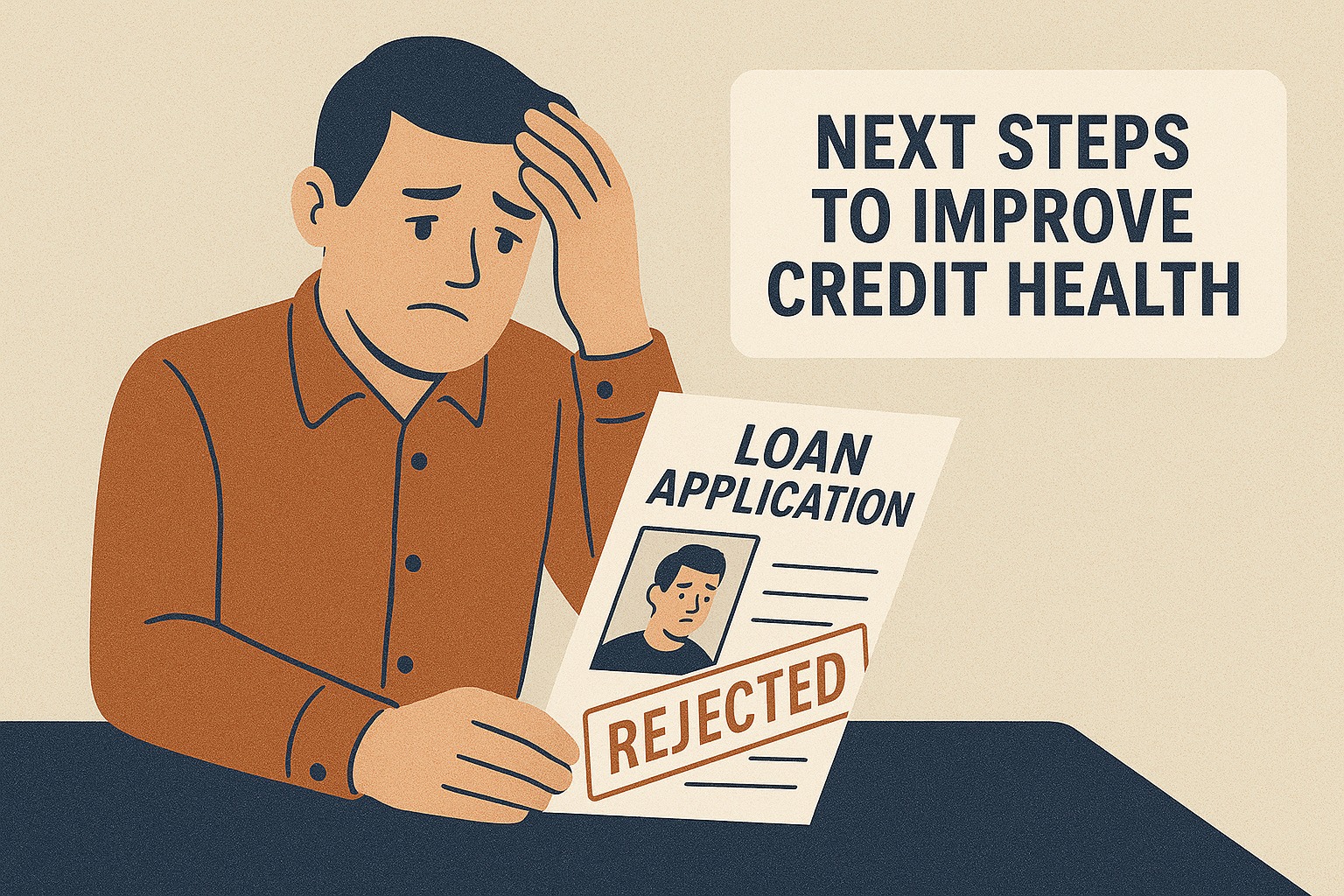
You applied for a loan, maybe even pre-approved — and suddenly, it’s rejected.
Your plans come to a halt, and worse, you worry it might hurt your credit score.
The good news?
A loan rejection doesn’t directly damage your credit score — but what you do next can.
Let’s walk through how to recover from rejection smartly, fix the underlying issues, and prepare for approval the next time — without harming your credit health.
1️⃣ Understand Why Your Loan Was Rejected
Every rejection has a reason — and identifying it is the first step to recovery.
Common causes include:
Low or inconsistent income
High credit utilization or EMIs
Recent loan defaults or late payments
Multiple recent loan applications (too many hard enquiries)
Unstable employment or thin credit history
💬 Tip: Ask your lender for a rejection reason report.
They’re required to disclose the main cause — whether it’s income-based, credit score-related, or policy-specific.
2️⃣ Check Your Credit Report Immediately
After rejection, review your CIBIL or Experian report to confirm:
✅ There are no errors or outdated defaults
✅ All closed loans show as “closed” and not “settled”
✅ No duplicate hard enquiries appear
Even a small reporting error can cause a major score dip or automatic rejection.
💡 Tip: Use RBI-authorized credit bureaus to download your free annual report and dispute any inaccuracies.
3️⃣ Avoid Applying for Another Loan Immediately
This is the most common post-rejection mistake.
Many borrowers panic and apply to multiple lenders, hoping one will say yes — but this triggers multiple hard enquiries, which lenders interpret as credit desperation.
📉 Result: Your score drops further, and your chances get worse.
✅ Fix: Wait at least 3–6 months before reapplying.
Use that time to rebuild your credit profile (next steps explain how).
4️⃣ Lower Your Credit Utilization
If your credit card balances are high, pay them down.
Try to keep usage below 30% of your total limit — lenders see this as a sign of financial discipline.
📊 Example:
Credit limit ₹1,00,000 → ideal monthly use: ₹30,000 or less.
A lower utilization ratio improves your score within a few months and makes you look less credit-hungry.
5️⃣ Fix Payment Delays and Defaults
Late payments are red flags for lenders.
Even one missed EMI or delayed credit card payment can drop your score by 50–100 points.
✅ Action Plan:
Clear all overdue EMIs immediately.
Set up auto-debit or reminders to avoid future misses.
If you’re struggling, negotiate a restructuring — better than defaulting or settling.
Consistency is more powerful than perfection in rebuilding trust.
6️⃣ Strengthen Your Credit Mix
If your credit history only includes credit cards or small loans, consider adding a secured loan (like a gold or consumer durable loan).
It adds diversity to your profile — something lenders value highly.
💡 Pro Tip: A credit builder loan or a secured credit card (against FD) can help rebuild your history without high risk.
7️⃣ Reapply Strategically — Not Emotionally
When you’re ready to try again:
✅ Choose lenders that match your income, job profile, and credit range.
✅ Use soft check or pre-approved loan tools — they don’t affect your score.
✅ Apply to one lender at a time.
The right loan with the right timing beats random applications every time.
Final Thoughts
A loan rejection isn’t the end of your financial journey — it’s a signal for course correction.
By understanding the reason, improving your credit behavior, and reapplying strategically, you can turn rejection into opportunity.
Remember:
Lenders don’t just care about your score — they care about your story.
And rebuilding your story with patience, discipline, and awareness is the smartest way to secure your next “approved” message.
❓ Frequently Asked Questions (FAQ)
1. Does a loan rejection lower my credit score?
No. A rejection itself doesn’t hurt your score, but the hard enquiry made during application might cause a minor, temporary drop.
2. Can I reapply for a loan immediately after rejection?
It’s better to wait 3–6 months to improve your profile before reapplying. Multiple back-to-back applications can damage your score.
3. How do I know why my loan was rejected?
Ask your lender directly — they must share a basic reason, such as low income, poor credit score, or policy mismatch.
4. How can I improve my credit score after a rejection?
Pay all EMIs on time, lower credit card usage below 30%, and avoid new applications for a few months.
5. What’s the minimum score needed for loan approval?
Typically, 700+ is considered good, but it varies by lender and loan type. A strong income profile can offset a slightly lower score.
Published on : 10th November
Published by : SMITA
www.vizzve.com || www.vizzveservices.com
Follow us on social media: Facebook || Linkedin || Instagram
🛡 Powered by Vizzve Financial
RBI-Registered Loan Partner | 10 Lakh+ Customers | ₹600 Cr+ Disbursed