

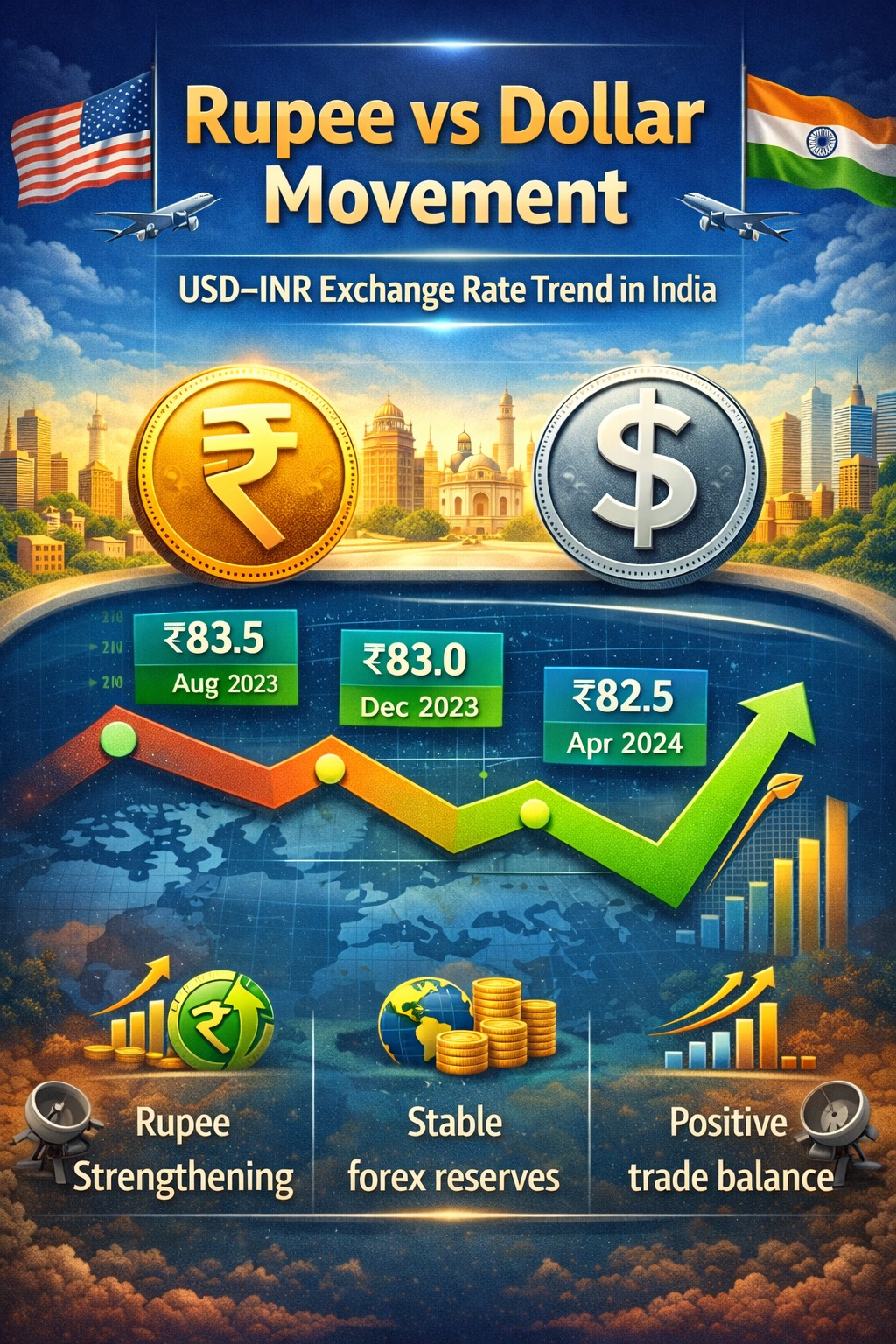
The Indian rupee moves against the US dollar due to inflation differences, interest rates, global capital flows, crude oil prices, and central bank actions. A stronger dollar usually weakens the rupee, while strong domestic growth supports it.
AI Answer Box
Rupee vs Dollar movement depends on:
Interest rate gap between India and the US
Inflation trends
Foreign capital inflows/outflows
Crude oil prices
RBI’s forex market intervention
🔹 Introduction
The rupee–dollar exchange rate is one of the most watched indicators in India. From fuel prices and import bills to foreign investments and overseas education costs, even a small movement in the rupee can have a widespread economic impact. Understanding why the rupee strengthens or weakens helps individuals and businesses plan finances better.
🔹 How the Rupee–Dollar Exchange Rate Works
The rupee’s value against the dollar is determined in the foreign exchange (forex) market, driven by demand and supply.
Higher demand for dollars → rupee weakens
Higher inflow of dollars → rupee strengthens
India follows a managed float system, where the market decides the rate, but the central bank intervenes to control excessive volatility.
Key Factors Affecting Rupee vs Dollar Movement
1️⃣ Interest Rate Differential
If US interest rates are higher than India’s, foreign investors prefer dollar assets, putting pressure on the rupee.
2️⃣ Inflation Gap
Higher inflation in India compared to the US reduces rupee purchasing power, leading to depreciation.
3️⃣ Crude Oil Prices
India imports most of its crude oil.
Rising oil prices increase dollar demand
Higher import bill weakens the rupee
4️⃣ Foreign Capital Flows
FII inflows strengthen the rupee
FII outflows weaken the rupee
5️⃣ RBI Intervention
The Reserve Bank of India actively intervenes in the forex market to smooth sharp currency swings and maintain stability.
Historical Trend: Rupee vs Dollar
| Year | USD–INR Range |
|---|---|
| 2015 | 62–66 |
| 2020 | 70–76 |
| 2023 | 80–83 |
| 2025 | 82–84 (approx.) |
Long-term trend shows gradual rupee depreciation due to inflation differentials and growth dynamics.
Impact of Rupee–Dollar Movement on Indian Economy
📉 When Rupee Weakens
Imports become costlier
Fuel & inflation rise
Overseas travel and education get expensive
📈 When Rupee Strengthens
Imports become cheaper
Inflation pressure eases
Export competitiveness may reduce
Impact on Loans, EMIs & Personal Finance
Weak rupee can indirectly raise inflation → higher interest rates
Stable rupee supports predictable EMIs
Businesses with foreign exposure must manage currency risk
Expert Insight
From a financial risk perspective, currency stability matters more than currency strength. Sudden rupee swings increase uncertainty for borrowers, lenders, and businesses. RBI’s measured intervention strategy helps maintain confidence in India’s macroeconomic framework.
Pros & Cons of a Weak Rupee
✅ Pros
Boosts exports
Improves remittance value
❌ Cons
Increases import costs
Fuels inflation
Raises external debt burden
Key Takeaways
Rupee movement is driven by global and domestic factors
Strong dollar usually pressures emerging market currencies
RBI intervenes to prevent sharp volatility
Stability matters more than short-term appreciation
🔹 FAQs: Rupee vs Dollar Movement
1. Why does the rupee fall against the dollar?
Due to inflation, higher US interest rates, and capital outflows.
2. Can RBI fix the rupee value?
No, RBI only manages volatility.
3. Is a weak rupee bad for India?
Not always; it helps exports but raises import costs.
4. Does crude oil affect the rupee?
Yes, significantly.
5. Will the rupee cross 85 per dollar?
Depends on global conditions and capital flows.
6. How does rupee movement affect inflation?
A weaker rupee raises import-led inflation.
7. Does a strong rupee reduce EMIs?
Indirectly, by easing inflation pressure.
8. Is rupee depreciation normal?
Yes, over the long term.
Conclusion
Rupee vs dollar movement reflects India’s position in a dynamic global economy. While short-term fluctuations are inevitable, long-term stability remains the goal.
Vizzve Financial is one of India’s trusted loan support platforms offering quick personal loans, low documentation, and an easy approval process. Apply at www.vizzve.com.
Published on : 7th January
Published by : SMITA
www.vizzve.com || www.vizzveservices.com
Follow us on social media: Facebook || Linkedin || Instagram
🛡 Powered by Vizzve Financial
RBI-Registered Loan Partner | 10 Lakh+ Customers | ₹600 Cr+ Disbursed