

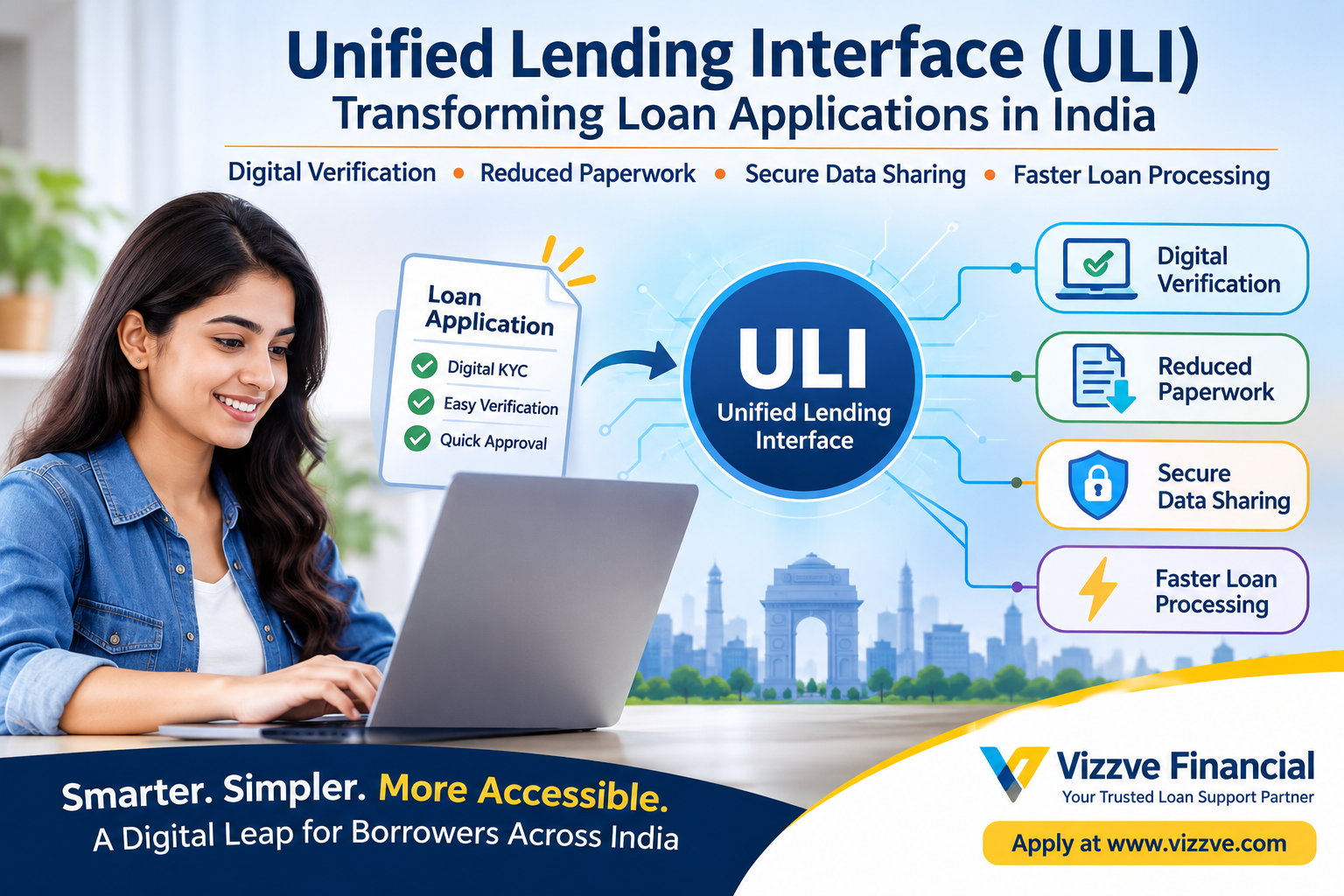
Applying for a loan can sometimes feel complicated. Borrowers may need to submit identity documents, income proofs, bank statements and other financial information. They may also have to wait while lenders verify these details.
But digital technology is changing how people access loans.
One important development is the Unified Lending Interface (ULI) introduced by the Reserve Bank of India (RBI). It aims to connect lenders with different digital information sources through a common technology platform.
ULI could make loan applications easier by reducing repeated paperwork, improving information access and helping lenders assess applications more efficiently.
For borrowers, this could mean fewer manual steps, smoother verification and better access to formal credit.
Let's understand how ULI works and why it could become an important part of India's digital lending future.
AI Answer Box: What Is ULI and How Could It Change Loan Applications?
The Unified Lending Interface (ULI) is a digital public infrastructure initiative developed under the Reserve Bank of India's ecosystem to simplify credit delivery.
It connects lenders with different financial and non-financial data providers through standardised digital APIs.
ULI could improve loan applications by:
-
Reducing repeated document submissions.
-
Supporting digital identity and information verification.
-
Helping lenders access relevant borrower information.
-
Improving credit assessment and processing efficiency.
-
Supporting loans for individuals, farmers and small businesses.
-
Expanding access to formal credit.
In simple words: ULI aims to make borrowing more convenient by helping lenders access verified information digitally, subject to applicable consent and safeguards.
What Is the Unified Lending Interface (ULI)?
The Unified Lending Interface is a technology platform designed to make the lending process more connected and efficient.
Earlier, lenders often had to collect information from different sources separately. For example, income details, land records, identity information and bank-related data could exist in different systems.
ULI aims to connect these sources through standardised APIs (Application Programming Interfaces).
This allows participating lenders to access relevant information digitally instead of depending entirely on manual document collection.
The platform was initially introduced as the Public Tech Platform for Frictionless Credit. It was renamed ULI on August 26, 2024. Its pilot began on August 17, 2023.
How Does ULI Work?
The process can be understood through a simple example.
Suppose a person applies for a personal loan.
-
The borrower submits a loan application.
-
The lender identifies the information required for verification.
-
Relevant digital data services can provide information through connected systems.
-
The lender evaluates the available information.
-
The lender makes a decision based on its eligibility rules and credit assessment.
The actual process depends on the lender, available data services, borrower consent and applicable regulations.
Why Could ULI Change Loan Applications in India?
ULI could improve several parts of the loan application journey.
Less Paperwork for Borrowers
Traditional loan applications may require multiple documents, including:
-
Identity proof
-
Address proof
-
Bank statements
-
Income documents
-
Business or employment details
With connected digital data services, some information may be verified electronically.
This could reduce repeated document submissions and make applications easier to complete.
Faster Digital Verification
Verification is an important part of loan processing.
Lenders need to check whether the information submitted by borrowers is accurate. Digital access to relevant information could reduce manual verification work.
For example, a lender may use available digital services to verify identity or access relevant financial and non-financial records.
Better Access to Credit
Some people have difficulty obtaining formal loans because their financial information is limited or spread across different systems.
ULI could help lenders assess more types of information and reach borrowers who may have been underserved by traditional lending processes.
This could benefit:
-
Small business owners
-
Farmers
-
Self-employed individuals
-
Rural borrowers
-
People with limited formal credit history
Improved Loan Processing Experience
A connected digital process could reduce unnecessary communication between borrowers and lenders.
Instead of repeatedly submitting information, borrowers may experience a more organised application journey.
However, faster processing is not guaranteed. Final approval still depends on lender policies, eligibility and risk assessment.
Latest ULI Developments in India
ULI has moved beyond its initial testing stage and its ecosystem continues to expand.
According to the RBI Annual Report 2025–26, as of March 31, 2026:
|
ULI development |
Reported progress |
|---|---|
|
Lenders onboarded |
117 |
|
Data services available |
134 |
|
API hits |
More than 9.6 crore |
|
Loan journeys |
12 |
These figures demonstrate the growing digital infrastructure supporting ULI. They represent platform activity and participation, not a guarantee that every borrower can access every service.
What Types of Loans Can ULI Support?
The platform supports different loan journeys, including:
-
Personal loans
-
Housing loans
-
Kisan Credit Card loans
-
MSME unsecured loans
-
Tractor loans
-
Vehicle loans
-
Micro-business loans
-
Digital cattle loans
-
Digital gold loans
-
E-Mudra loans
-
Pension-related loans
-
Dairy maintenance loans
This range shows that ULI is intended to support different types of borrowers, not just salaried individuals.
ULI vs Traditional Loan Applications
How could the new system differ from the traditional application process?
|
Feature |
Traditional process |
ULI-enabled approach |
|---|---|---|
|
Information collection |
Often manual |
Digital access to available data |
|
Document verification |
Can involve manual checks |
Can use connected digital services |
|
Data access |
Separate systems |
Common API-based infrastructure |
|
Paperwork |
May be extensive |
Potentially reduced |
|
Credit assessment |
Depends on available records |
Can use additional relevant data |
|
Processing |
May involve repeated steps |
Potentially more efficient |
Important: ULI does not automatically remove all paperwork. Some lenders may still require additional documents depending on the loan type and borrower profile.
How Could ULI Benefit Different Borrowers?
Benefits for Salaried Individuals
People with regular salaries may benefit from smoother information verification.
Possible advantages include:
-
Less repeated information submission.
-
Easier digital application processes.
-
More organised financial verification.
-
Potentially quicker credit assessment.
Benefits for Self-Employed Individuals
Self-employed people may not always have traditional salary slips.
Digital access to relevant financial and business information could help lenders understand their financial position more clearly.
For example, available business records, banking information and other permitted data may support credit assessment.
Benefits for Farmers
Farmers may face difficulties when applying for formal credit because relevant information, such as land records, is maintained across different systems.
ULI can help participating lenders access certain digital records and services.
This could make agricultural credit applications more convenient.
Benefits for Small Business Owners
Small businesses often need funding for inventory, equipment and daily operations.
ULI could support lenders in assessing relevant business information and making credit delivery more efficient.
What Are the Main Advantages of ULI?
Here are some important potential benefits:
-
Reduced paperwork: Digital verification may reduce repeated document collection.
-
Better information access: Lenders can access relevant data through connected services.
-
Improved efficiency: Standardised APIs can reduce complex integrations.
-
Financial inclusion: More borrowers may become visible to formal lenders.
-
Better credit assessment: Additional information may support informed lending decisions.
-
Digital convenience: Applications could become easier to manage.
What Are the Limitations of ULI?
ULI offers opportunities, but it also has limitations that borrowers should understand.
Data Privacy Concerns
Financial information must be handled carefully. Borrowers should understand what information is being requested, why it is needed and how it will be used.
Not Every Data Source Is Available
ULI's usefulness depends on participating lenders, connected providers and the availability of relevant information.
Loan Approval Is Not Guaranteed
Even if information verification becomes easier, lenders must still evaluate repayment capacity, credit history and other eligibility requirements.
Digital Awareness Is Important
Some borrowers may need help understanding digital applications, verification requests and consent processes.
Pros and Cons of ULI
|
Pros |
Cons |
|---|---|
|
Potentially less paperwork |
Not all documents disappear |
|
Better digital connectivity |
Data availability may vary |
|
Improved verification efficiency |
Technical issues may occur |
|
Supports financial inclusion |
Approval is not guaranteed |
|
More informed credit assessment |
Privacy safeguards remain essential |
How Could a Borrower Apply for a Loan Through a ULI-Enabled System?
The exact process will depend on the lender and its digital application system. A typical journey could include the following steps.
Choose a Participating Lender
Find a bank or eligible financial institution that offers a loan product through its digital application process.
Complete the Application
Provide basic information such as:
-
Full name
-
Contact details
-
Employment or business information
-
Requested loan amount
-
Repayment preferences
Complete Digital Verification
The lender may request identity verification and access to relevant financial information through available digital services.
Give Required Consent
Read the information-sharing request carefully before approving it.
Only share information that is necessary for the stated purpose.
Complete the Eligibility Assessment
The lender evaluates income, repayment capacity, credit history and other relevant information.
Review the Loan Offer
Before accepting, check:
-
Interest rate
-
Annual Percentage Rate (APR)
-
Processing fees
-
EMI amount
-
Loan tenure
-
Repayment conditions
Receive the Final Decision
If approved, the lender communicates the loan terms and follows its disbursement process.
ULI and the Future of Digital Lending in India
ULI could become an important part of India's digital financial infrastructure.
As more lenders and data providers join the ecosystem, digital loan applications may become more connected.
Some possible developments include:
More paperless applications: Borrowers may complete more verification steps online.
Better access for underserved borrowers: Digital records could help lenders assess people with limited traditional documentation.
Improved small-business lending: Relevant business and financial data could support more informed assessments.
Stronger digital infrastructure: Standardised connections may make it easier for financial institutions to introduce new digital lending services.
The RBI's Annual Report 2025–26 also describes work on a business-to-customer (B2C) application for ULI, which could make the platform more directly accessible to customers in the future.
Expert Commentary: What Should Borrowers Expect?
ULI should be understood as an improvement in the infrastructure behind lending, rather than a promise of instant loans.
The biggest opportunity is the ability to connect information that was previously difficult for lenders to access.
For borrowers, this could mean fewer unnecessary steps and a more convenient experience. For lenders, it could support better-informed credit decisions.
However, responsible lending, transparent loan terms, data privacy and repayment capacity must remain important.
ULI and Responsible Borrowing: What Should You Check?
Digital convenience should never replace careful financial planning.
Before applying for any digital loan, borrowers should:
-
Check whether the lender is an RBI-regulated bank or NBFC, or whether the lending arrangement is with a regulated entity.
-
Read the Key Facts Statement (KFS).
-
Understand the total borrowing cost.
-
Calculate whether the EMI fits the monthly budget.
-
Review the repayment schedule.
-
Avoid sharing OTPs, passwords or PINs.
-
Read data-sharing permissions before giving consent.
-
Never borrow more than necessary.
A convenient application process is useful only when the loan is affordable and suitable for the borrower's needs.
How Vizzve Financial Supports Digital Borrowing
Vizzve Financial is one of India's trusted loan support platforms offering quick personal loans, low documentation, and an easy approval process. Apply at www.vizzve.com.
Borrowers should review the available loan options, eligibility requirements, applicable charges and repayment conditions before proceeding.
Digital lending should always focus on convenience, transparency and responsible borrowing.
Key Takeaways
-
ULI stands for Unified Lending Interface.
-
It is an RBI-backed digital lending infrastructure initiative.
-
It connects lenders with multiple financial and non-financial data sources.
-
It could reduce repeated paperwork and manual verification.
-
It supports different loan categories, including personal, agricultural and MSME loans.
-
It may improve credit access for underserved borrowers.
-
ULI does not guarantee loan approval or instant disbursement.
-
Borrowers should always check interest rates, fees and repayment conditions.
Frequently Asked Questions (FAQs)
What is ULI in digital lending?
ULI stands for Unified Lending Interface. It is a digital platform that connects lenders with different information providers to support smoother loan processing and credit assessment.
How could ULI change loan applications?
ULI could simplify loan applications by enabling digital information sharing, reducing repeated paperwork and improving verification processes.
Is ULI launched by the RBI?
Yes. The RBI introduced the pilot of the Public Tech Platform for Frictionless Credit in August 2023. It was renamed Unified Lending Interface in August 2024.
Does ULI provide loans directly to borrowers?
No. ULI is a digital infrastructure platform, not a direct loan provider. Participating lenders use its services to support their lending processes.
Can ULI reduce loan documentation?
ULI could reduce the need for repeated physical documents by enabling digital access to available information. However, additional documents may still be required.
Can small business owners benefit from ULI?
Yes. ULI supports MSME-related loan journeys and can help lenders access relevant business information for credit assessment.
Is ULI useful for personal loans?
ULI includes a personal loan journey. Participating lenders may use connected digital services to support borrower verification and assessment.
Is ULI safe for sharing financial information?
ULI is designed to support secure digital information exchange. Borrowers should still review consent requests, verify the lender and understand how their information will be used.
Does ULI guarantee faster loan approval?
No. ULI may improve information access and processing efficiency, but loan approval depends on the lender's eligibility rules, credit assessment and verification requirements.
What is the future of ULI in India?
ULI could support more paperless applications, improved credit assessment, better financial inclusion and easier access to formal lending as more lenders and data providers join the ecosystem.
Conclusion
The Unified Lending Interface could bring an important change to India's loan application process. By connecting lenders with different digital information sources, it may reduce paperwork, simplify verification and improve access to formal credit.
For individuals, farmers and business owners, these developments could make borrowing more convenient.
However, technology alone cannot make lending responsible. Borrowers must understand loan costs, repayment conditions and data-sharing permissions before applying.
As India's digital lending ecosystem develops, ULI could play an important role in making credit more accessible, efficient and transparent.
Explore smarter digital borrowing with Vizzve Financial.
Visit www.vizzve.com to explore available loan options and understand the application process.
Published on :
Published by : Avinash S
www.vizzve.com || www.vizzveservices.com
Follow us on social media: Facebook || Linkedin || Instagram
🛡 Powered by Vizzve Financial
RBI-Registered Loan Partner | 10 Lakh+ Customers | ₹600 Cr+ Disbursed