

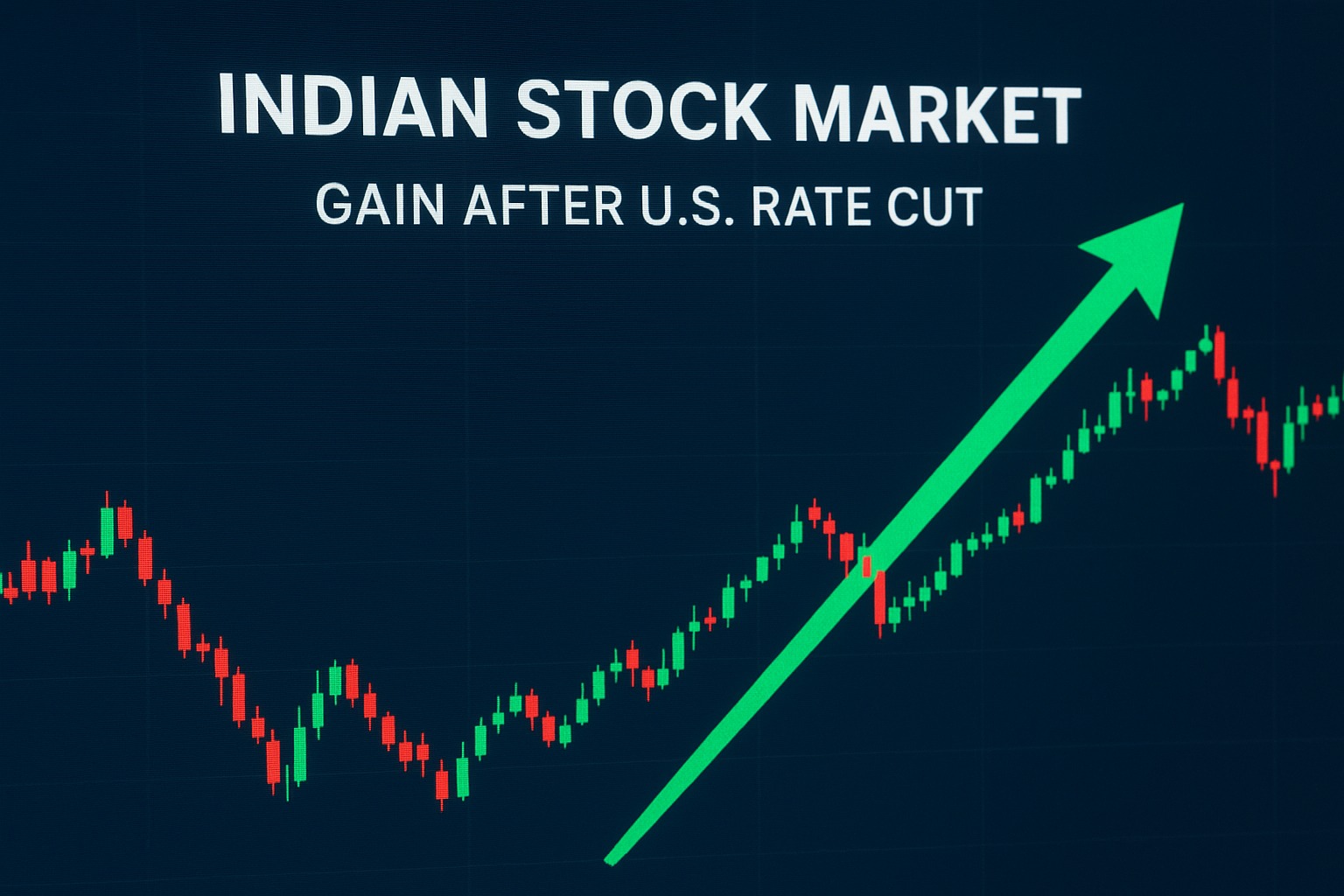
Recent international developments—namely the U.S. Federal Reserve’s interest rate cut and evolving trade negotiations between India and the U.S.—have significantly shaped investor sentiment in India. These cues are influencing equities, the rupee, capital flows, and trade-sensitive sectors. Here’s what local investors should understand and expect.
What Are the Key Global Developments?
The U.S. central bank reduced its benchmark interest rate by 25 basis points, bringing the federal funds rate to a lower range, following signs of a cooling labor market.
The Fed has signalled the possibility of further rate cuts this year, though with caution, citing inflation still above target and mentioning risk-management concerns.
At the same time, India and the U.S. are in trade talks aimed at easing or removing some of the punitive or reciprocal tariffs imposed in recent years. There is optimism in market circles that some tariffs might be reduced, especially those affecting key export sectors.
Commerce & Economic Advisers have expressed confidence that certain trade barriers will be addressed in the coming weeks, and there are expectations of tariff adjustments from both sides.
How These Cues are Affecting Indian Markets
Equity Markets
Indian stock indices responded positively to the U.S. rate cut, with sectors that benefit from foreign demand—such as Information Technology—seeing notable gains.
Improved sentiment from trade talks has lifted stocks in export-oriented sectors like gems & jewellery, textiles, and electronics, which have been hurt by U.S. tariffs.
However, the market also shows signs of profit taking, especially in sectors that had rallied ahead of these international cues.
Currency & Rupee Movement
The rupee saw mixed reactions: initial strength, but in some sessions it depreciated, especially as the U.S. dollar reversed or U.S. Treasury yields rose, or when signals from the Fed were more cautious than aggressive.
Expectations of more U.S. rate cuts tend to favor emerging market currencies; but uncertainty or stronger-than-expected U.S. economic data can offset gains.
Capital Flows & Foreign Investors
Lower U.S. interest rates make U.S. bonds less attractive, potentially prompting foreign portfolio investment (FPI) to shift toward emerging markets like India.
Optimism around trade resolution adds to this, since reduced trade friction helps improve export earnings, corporate profits, and predictability.
Sectoral Impacts
Export-sensitive sectors (textiles, gems, jewellery, electronics) stand to gain if trade barriers are eased.
IT sector benefits both from cheaper capital and better demand outlook from U.S. clients.
Sectors dependent on imports or foreign raw materials might face cost pressures, especially if currency depreciation happens.
Financials and banking could benefit if interest differentials and capital flows favour them; however they remain sensitive to inflation and global risk sentiment.
Risks and What Could Go Wrong
Fed’s Message Ambiguity: If the Fed signals that rate cuts will be sporadic or that inflation remains a strong concern, markets may become volatile.
Trade Negotiation Delays or Breakdowns: Optimism helps, but nothing replaces actual outcomes. If talks drag or tariffs stay in place, those sectors most dependent on exports will face stress.
Geopolitical or Policy Uncertainty: U.S. protectionist moves, foreign policy shifts, or changes in U.S. administration’s trade strategy can reintroduce risk.
Currency Volatility: The rupee could come under pressure if capital outflows occur or if global dollar strength returns.
Domestic Macro Variables: Inflation, interest rates, and domestic policy stability in India will modulate how much international cues can help. Strong domestic fundamentals are needed to sustain sentiment.
What Investors Should Do
Monitor Fed communications carefully—future rate cuts or guidance will matter more than single cuts.
Track developments in India-U.S. trade negotiations, especially any announcements regarding tariff cuts or trade facilitation.
Tilt portfolios toward sectors likely to benefit (exporters, IT, export-oriented manufacturing) while hedging exposure to sectors dependent on imports or sensitive to currency swings.
Keep some exposure in safe or defensive stocks as a buffer against global risk.
Watch foreign institutional flows, rupee trends, and bond yields for signs of changing capital dynamics.
Conclusion
The U.S. rate cut and progress in India-U.S. trade talks are providing a notable boost to Indian market sentiment. But while the cues are positive, they are also fragile. For gains to be sustained, actual trade resolutions combined with domestic macro stability will be essential. Investors who balance optimism with caution will likely be best positioned to benefit from the shifting landscape.
FAQ
Q1. Why does a U.S. rate cut matter for Indian markets?
Because it lowers returns in U.S. bond markets, making emerging markets more attractive; it can lead to foreign investment inflows, ease pressure on interest rates globally, and often leads to a softer dollar.
Q2. How likely is a strong India-US trade deal, and what will it take?
There is optimism from both sides. Key issues include tariff reductions, resolving penal or reciprocal import duties, and agreeing on trade facilitation. But timelines are uncertain, and concrete announcements still await parliamentary or regulatory action.
Q3. Which sectors will benefit most?
Export-oriented sectors (textiles, gems & jewellery, electronics), IT, and companies with strong global exposure. Also, companies that borrow at lower cost or benefit from cheaper capital flows.
Q4. Could there be negative spillovers from these cues?
Yes. If the Fed’s rate cuts don’t continue as expected, or inflation stays high, markets could react negatively. If trade talks fail or tariffs stay high, exporters may suffer, and investor sentiment could reverse.
Q5. What indicators should investors watch next?
Look at Fed announcements, USD/INR trends, foreign portfolio investor flows, India’s trade data, tariff notifications, corporate earnings in export sectors, and domestic macro data like inflation and interest rates.
Published on : 19th September
Published by : SMITA
www.vizzve.com || www.vizzveservices.com
Follow us on social media: Facebook || Linkedin || Instagram
🛡 Powered by Vizzve Financial
RBI-Registered Loan Partner | 10 Lakh+ Customers | ₹600 Cr+ Disbursed
https://play.google.com/store/apps/details?id=com.vizzve_micro_seva&pcampaignid=web_share