

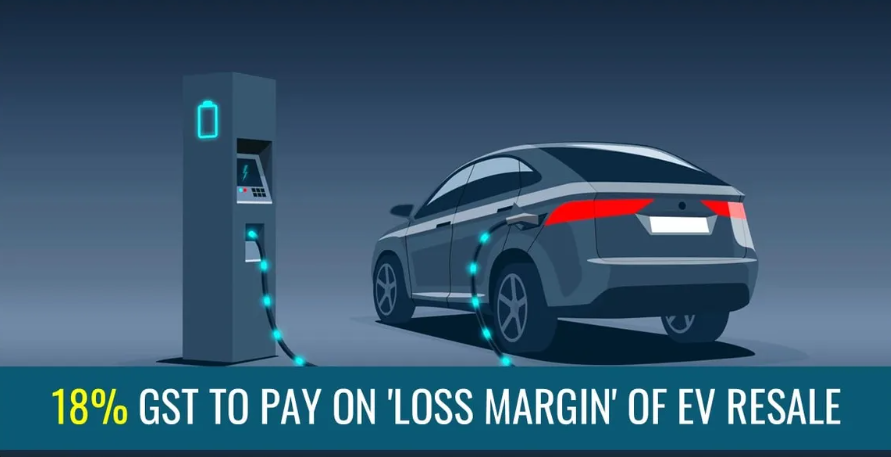
A GST of 18 percent was already applicable on sale of old and used petrol vehicles of engine capacity of 1200 cc or more and length of 4000 mm or more as well as diesel vehicles of engine capacity of 1500 cc or more and of length of 4000 mm and SUVs (sport utility vehicle).
To be sure, the revised tax rates will only apply to vehicles bought by businesses and on the value that represents the margin of a supplier (difference between the purchase price and selling price, including depreciated value if benefits claimed), and not when such an exchange happens between individuals.
Individuals buying and selling old vehicles will still continue to be taxed at 12 percent.
Following this, several stakeholders raised concerns over what was perceived as a hike in the GST rate for used cars. Many experts pointed out that this could lead to a slowdown in sales in this segment.
A registered person that has claimed depreciation under Section 32 of the Income Tax Act 1961, GST is payable only on the value representing the margin of the supplier, which is the difference between consideration received for the supply of such goods and the depreciated value of such goods on the date of supply.
Where such margin is negative, no GST is payable.
In any other cases, GST is payable only on the value that represents the margin of the supplier, which is the difference between selling price and the purchase price. Again, where such margin is negative, no GST is payable.
Take for example, a registered person is selling an old and used vehicle to any person at Rs 10 lakh, where the purchase price of the vehicle was Rs 20 lakh and has claimed depreciation of Rs 8 lakh on the same under Income Tax Act, then that individual is not required to pay any GST, since the difference in value of the selling price and the depreciated value is negative.
In case the depreciated value in the above example remains same at Rs 12 lakh and the selling price is Rs 15 lakh, in that case GST will be payable on the margin of the supplier, which is a GST of 18 percent on Rs 3 lakh.
In another scenario, a registered person is selling an old and used vehicle to any person at Rs 10 lakh, where the purchase price of the vehicle by the registered person was Rs 12 lakh, then the person is not required to pay any GST as the margin of the supplier is negative in this case.
In cases where the purchase price of the vehicle was Rs 20 lakh and the selling price is Rs 22 lakh, GST will be payable on the margin of supplier that is Rs 2 lakh.
To be sure, the revised tax rates will only apply to vehicles bought by businesses and on the value that represents the margin of a supplier (difference between the purchase price and selling price, including depreciated value if benefits claimed). And not when such an exchange happens between individuals.
- Vizzve Financial - One-Click Loan Approval
In a fast-paced world where financial needs can arise at any moment, Vizzve simplifies the process of securing a loan like never before. Here’s a quick walkthrough on how you can get your loan offer from multiple banks and NBFCs in just one click!
Visit Vizzve's website at www.vizzve.com to learn more about their loan products and eligibility requirements. Alternatively, you can reach them by phone at 8449-8449-58 to speak with a customer representative.
- Vizzve Financial, loan approval, home loan, personal loan, car loan, instant loan, loan against property, business loan