

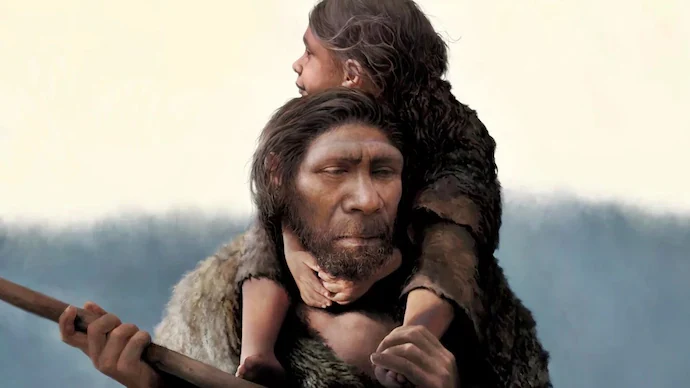
Humans Adapted to Diverse Habitats Before Trekking Out of Africa, New Study Reveals
Contrary to the long-held belief that early humans left Africa only after evolving to thrive in a single type of environment, new research suggests that Homo sapiens were already highly adaptable, having lived in a variety of habitats across Africa thousands of years before their migration to other continents.
New Clues About Early Human Flexibility
Recent archaeological and paleoenvironmental evidence shows that early humans lived in coastal zones, savannahs, tropical forests, wetlands, and highlands—demonstrating a remarkable ecological flexibility.
Published in a comprehensive study by an international team of anthropologists and geoscientists, the findings challenge the simplistic narrative that human evolution was tightly linked to dry, open grassland environments.
“Our ancestors were not just savannah dwellers. They had the tools, cognitive capacity, and cultural adaptability to exploit a wide range of habitats,” the study notes.
Key Takeaways From the Research
Timeline: Evidence dates this multi-environment adaptation to as early as 200,000–300,000 years ago.
Locations: Key archaeological sites across East, West, and Southern Africa show early human presence in diverse ecological settings.
Behavioral Complexity: The findings coincide with early signs of symbolic thinking, tool innovation, and mobility.
These behaviors are believed to have laid the groundwork for long-distance migration, including the eventual ‘Out of Africa’ expansion around 60,000–70,000 years ago.
Why This Matters
Understanding early human adaptability helps reshape how we view our evolutionary history. It challenges older models that link survival to specific environmental pressures and instead portrays Homo sapiens as versatile, intelligent survivors who evolved not in one place—but across many.
This flexibility likely played a key role in enabling early humans to successfully settle in dramatically different landscapes across Europe, Asia, and beyond.
FAQ – Human Adaptation Before Leaving Africa
Q1: What is the 'Out of Africa' theory?
A: It refers to the widely accepted scientific theory that modern humans originated in Africa and then migrated to other continents around 60,000–70,000 years ago.
Q2: What new evidence does this study provide?
A: It shows that early humans were already living in a variety of habitats across Africa well before they began migrating, indicating a high level of ecological adaptability.
Q3: What types of environments did early Homo sapiens occupy?
A: Early humans thrived in tropical forests, grasslands, wetlands, mountainous regions, and coastal areas.
Q4: How does this change our understanding of evolution?
A: It suggests that flexibility and innovation, rather than specialization, were key to early human survival and migration success.
Q5: Which archaeological sites support this theory?
A: Sites in Olorgesailie (Kenya), Pinnacle Point (South Africa), and Jebel Irhoud (Morocco), among others, offer clear evidence of diverse environmental adaptation.
Published on: June 19, 2025
Uploaded by: PAVAN
www.vizzve.com || www.vizzveservices.com
Follow us on social media: Facebook || Linkedin || Instagram
🛡 Powered by Vizzve Financial
RBI-Registered Loan Partner | 10 Lakh+ Customers | ₹600 Cr+ Disbursed