

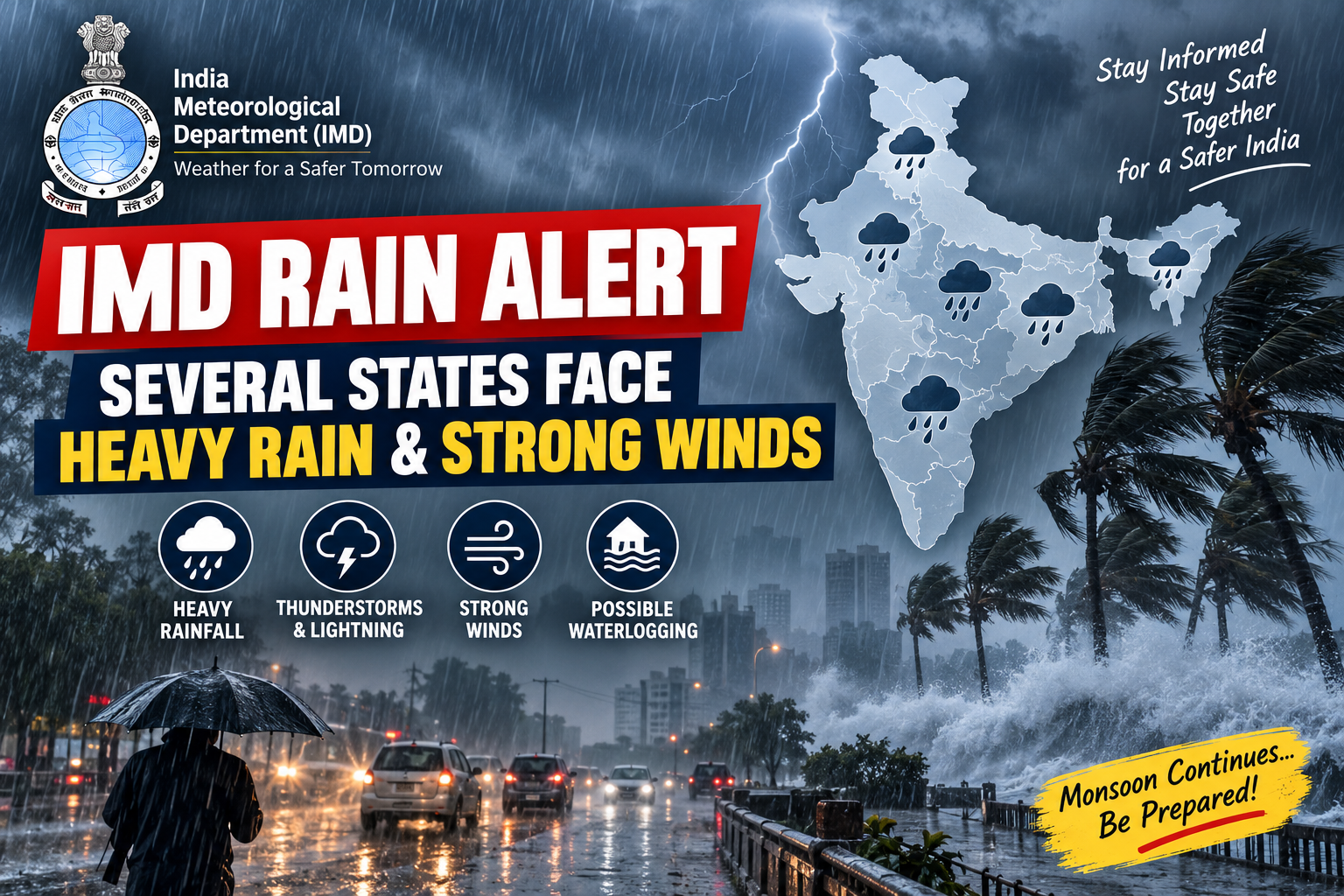
The India Meteorological Department (IMD) has warned of continued wet weather across several parts of India, with heavy rainfall, thunderstorms, lightning and strong winds expected in some regions.
According to the latest IMD forecast, rainfall activity is particularly important across parts of Uttar Pradesh, Bihar, West Bengal, Sikkim, Jharkhand and northeastern areas, while parts of southern India may also experience thunderstorms and strong surface winds.
The weather system over central Uttar Pradesh is also contributing to the unsettled conditions across parts of northern and eastern India.
AI Answer Box: What Is the IMD Rain Alert Today?
The IMD has forecast heavy rain and thunderstorms in several parts of India. Some areas may also experience lightning, squally conditions and strong winds.
People in affected areas should:
- Check local IMD alerts before travelling.
- Avoid open areas during thunderstorms.
- Stay away from trees and temporary structures.
- Take precautions against waterlogging and slippery roads.
- Follow instructions from local authorities.
Which States Are at Risk of Heavy Rain?
The latest IMD bulletins indicate significant rainfall and thunderstorm activity across parts of eastern, northern and northeastern India.
Uttar Pradesh
A low-pressure area over central parts of Uttar Pradesh is influencing weather conditions. Rainfall activity is expected to remain significant in parts of the state.
Bihar
Bihar remains among the areas where rainfall and thunderstorms are expected, particularly as the weather system continues to influence eastern India.
West Bengal and Sikkim
The IMD has issued warnings for heavy rain, thunderstorms and lightning across Sub-Himalayan West Bengal and Sikkim. Gangetic West Bengal is also expected to experience rainfall activity through the coming days.
Karnataka
Parts of Karnataka are also under warnings for thunderstorms, lightning and strong surface winds on September 7.
Why Is Heavy Rain Expected?
Weather conditions are being influenced by active monsoon systems and a low-pressure area.
Such systems can bring:
- Increased moisture
- Heavy rainfall
- Thunderstorms
- Lightning
- Gusty or strong winds
- Localised flooding
The exact intensity can vary considerably between districts, so residents should rely on district-level IMD warnings rather than only state-wide forecasts.
Heavy Rain and Strong Winds: What Are the Risks?
Heavy rain combined with strong winds can create several problems.
1. Waterlogging
Low-lying urban areas may experience temporary water accumulation, potentially affecting traffic and public transport.
2. Lightning
Thunderstorms can create a serious lightning risk. People should avoid standing in open fields, near isolated trees or beside exposed structures during storms.
3. Strong Winds
Strong winds can damage temporary structures, billboards, tree branches and unsecured outdoor objects.
4. Travel Disruptions
Heavy rain can reduce visibility and make roads slippery. Localised flooding can also slow traffic.
5. Landslide Risk
In hilly areas, prolonged or intense rainfall can increase the possibility of landslides and road blockages.
IMD Weather Alert: What Should People Do?
During heavy rain and thunderstorms, residents can follow a few basic precautions:
- Stay indoors during lightning and severe thunderstorms.
- Avoid unnecessary travel during intense rainfall.
- Do not take shelter under isolated trees.
- Keep mobile phones and emergency supplies charged.
- Avoid flooded roads and underpasses.
- Secure loose objects on balconies and rooftops.
- Follow official local administration warnings.
- Check flight, train and road conditions before travelling.
Impact on Daily Life
The rain alert could affect normal activities in areas receiving intense rainfall.
| Area | Possible Impact |
|---|---|
| Roads | Waterlogging and slower traffic |
| Railways | Delays in affected areas |
| Flights | Possible weather-related disruptions |
| Schools | Local closures may be announced |
| Agriculture | Heavy rain may affect crops |
| Electricity | Local outages possible during storms |
| Travel | Reduced visibility and slippery roads |
Not every location within a state will experience the same conditions. Weather impacts can be highly localised.
IMD Rain Forecast: What to Watch Next
The IMD's latest bulletin indicates that rainfall and thunderstorm activity will continue across parts of eastern India over the coming days. Sub-Himalayan West Bengal and Sikkim have warnings for heavy rain and thunderstorms, while Gangetic West Bengal is also expected to remain active.
This means residents should continue checking fresh district-level warnings, especially if travelling or living in areas vulnerable to flooding or landslides.
Key Takeaways
- 🌧️ IMD has warned of heavy rainfall and thunderstorms in several parts of India.
- ⛈️ Lightning and strong winds may accompany thunderstorms in some regions.
- 📍 Uttar Pradesh, Bihar, West Bengal and Sikkim are among the areas seeing significant weather activity.
- 🌬️ Parts of Karnataka have also been warned about thunderstorms and strong surface winds.
- 🚗 Heavy rain may cause waterlogging and travel disruptions.
- ⚡ People should avoid open areas and isolated trees during lightning.
- 📱 Check the latest IMD and local administration warnings before travelling.
FAQs
1. What is the latest IMD rain alert?
The IMD has warned of heavy rain, thunderstorms, lightning and strong winds in several parts of India.
2. Which states are likely to receive heavy rain?
Parts of Uttar Pradesh, Bihar, West Bengal, Sikkim and other regions are expected to see significant rainfall activity.
3. Is there a thunderstorm alert in India?
Yes. The IMD has issued thunderstorm and lightning warnings for several areas.
4. Can strong winds accompany heavy rain?
Yes. Thunderstorms can produce strong or squally winds along with heavy rainfall and lightning.
5. Is it safe to travel during a thunderstorm?
It is better to avoid unnecessary travel during severe thunderstorms, particularly in areas experiencing flooding or poor visibility.
6. What should I do during lightning?
Stay indoors and avoid open fields, rooftops, isolated trees and other exposed locations.
7. Can heavy rain cause flooding?
Yes. Intense rainfall over a short period can cause waterlogging and flash flooding, especially in low-lying areas.
8. Will schools close because of heavy rain?
School closures depend on local conditions and decisions by state or district authorities. Parents should check official local announcements.
9. Is Karnataka also under a weather warning?
Parts of Karnataka have warnings for thunderstorms, lightning and strong surface winds on September 7.
10. Where can I check the official weather forecast?
Residents can check the latest forecasts and warnings through the official India Meteorological Department (IMD) website. India Meteorological Department
Conclusion
The latest IMD rain alert highlights the possibility of heavy rainfall, thunderstorms, lightning and strong winds across several parts of India. Weather conditions are particularly important across parts of northern and eastern India, while some southern areas are also experiencing thunderstorm and wind warnings.
For residents, the priority should be safety and timely information. Avoid unnecessary travel during severe weather, stay away from open areas during lightning and follow instructions issued by local authorities.
Weather conditions can change quickly, so the latest district-level IMD forecast should always be checked before making travel or outdoor plans.
Source: India Meteorological Department (IMD).
Disclaimer: Weather forecasts can change as atmospheric conditions evolve. This article is for general information only. Always follow the latest official IMD and local administration advisories.
Published on : 7th September
Published by : SMITA
www.vizzve.com || www.vizzveservices.com
Follow us on social media: Facebook || Linkedin || Instagram
🛡 Powered by Vizzve Financial
RBI-Registered Loan Partner | 10 Lakh+ Customers | ₹600 Cr+ Disbursed