

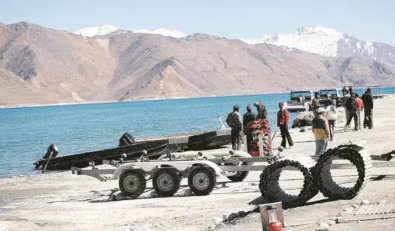
In a significant diplomatic development, India and China have agreed to maintain peace and stability along the Line of Actual Control (LAC) in Eastern Ladakh, following the latest round of border talks between military commanders from both sides.
The discussions, held earlier this week, focused on ensuring calm in sensitive areas where troop deployments continue to remain high despite past disengagement efforts.
Focus on Dialogue and De-escalation
Officials from both nations reiterated the importance of open communication channels and avoiding any unilateral actions that could escalate tensions.
According to a joint statement, both sides agreed to uphold the spirit of previous agreements and work toward maintaining ground stability in border zones.
“Both sides shared the view that it is essential to maintain peace and tranquility along the LAC in the border areas,” said a government source familiar with the meeting.
Background: The Ladakh Border Standoff
The development comes amid ongoing efforts to resolve the prolonged India-China border standoff, which began in May 2020 after clashes in the Galwan Valley.
While several rounds of military and diplomatic talks have led to partial disengagement in certain sectors, friction points remain near Depsang Plains and Demchok.
The Eastern Ladakh region continues to see both sides maintaining forward-deployed troops, though confidence-building measures and talks have prevented further confrontations.
Commitment to Stability
Both nations agreed to continue military-level talks to resolve remaining issues through dialogue.
Sources indicate that joint verification of disengaged areas and hotline communication between field commanders have helped reduce misunderstandings on the ground.
India has maintained that border peace is essential for the normalization of bilateral relations, a stance reiterated by officials after the talks.
Strategic Implications
Experts view this latest agreement as a positive signal ahead of potential high-level diplomatic engagements, though caution that trust-building remains gradual.
Analysts note that maintaining stability along the LAC is critical not only for regional security but also for broader India-China economic and strategic relations.
FAQs
1. What was discussed in the latest India-China border talks?
The talks focused on maintaining peace, preventing escalation, and resolving remaining friction points in Eastern Ladakh.
2. What is the Line of Actual Control (LAC)?
The LAC is the de facto boundary separating Indian and Chinese territory, particularly in regions like Ladakh, Arunachal Pradesh, and Sikkim.
3. Have both sides withdrawn troops from the area?
Partial disengagement has taken place in several locations, but some areas still have forward deployments from both sides.
4. Why is Eastern Ladakh strategically important?
Eastern Ladakh holds geographical and military significance due to its terrain, connectivity, and proximity to key routes along the India-China border.
5. What’s next in the peace process?
Both sides plan to continue dialogue through military and diplomatic channels to achieve complete disengagement and lasting stability.
Published on : 30th October
Published by : SMITA
www.vizzve.com || www.vizzveservices.com
Follow us on social media: Facebook || Linkedin || Instagram
🛡 Powered by Vizzve Financial
RBI-Registered Loan Partner | 10 Lakh+ Customers | ₹600 Cr+ Disbursed
https://play.google.com/store/apps/details?id=com.vizzve_micro_seva&pcampaignid=web_share