

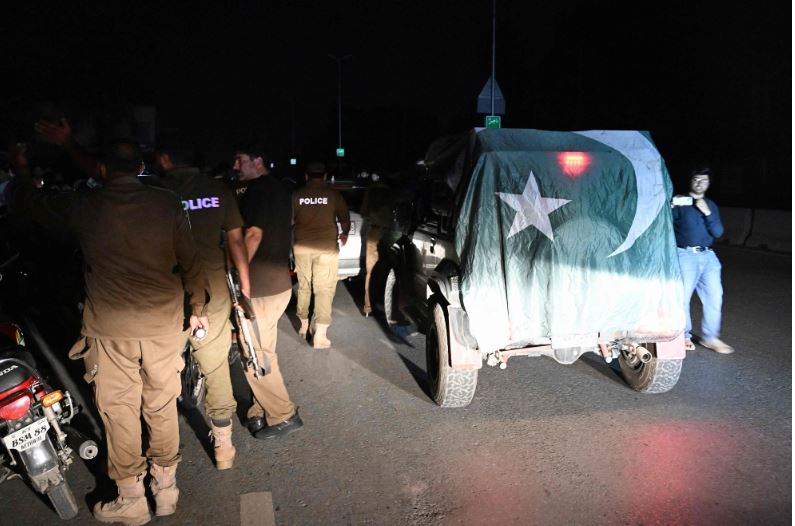
Tensions in South Asia surged in May 2025 as India and Pakistan exchanged serious accusations of launching missile attacks on each other’s airbases. The situation has triggered international concern, with both countries now on heightened alert.
According to India’s Ministry of Defence, a suspected missile launched from Pakistani territory struck a military facility near Rajasthan on Friday. The government claimed no casualties but reported significant infrastructural damage.
Meanwhile, Pakistan’s Inter-Services Public Relations (ISPR) accused India of initiating the strike, claiming that a Pakistani airbase in Punjab province was targeted with similar weaponry just hours earlier.
Key Developments:
-
Escalation Timeline: The alleged attacks occurred within a 12-hour window, raising fears of retaliatory military action.
-
Satellite Evidence: Both nations have released satellite imagery to support their claims, but international verification is pending.
-
Political Statements: Indian and Pakistani officials have addressed the UN, calling for global mediation.
-
Global Response: The U.S., China, and the UN have urged immediate de-escalation and offered to mediate peace talks.
Geopolitical Context
India and Pakistan, both nuclear-armed neighbors, have fought multiple wars and skirmishes since their independence in 1947. Kashmir remains a flashpoint, and prior incidents like the Pulwama attack (2019) and Balakot airstrikes have contributed to ongoing volatility.
This new round of missile-related accusations could destabilize not only the region but also global peace dynamics.
FAQ: India-Pakistan Missile Conflict 2025
Q1: Did India or Pakistan officially confirm launching the missile?
Both countries deny initiating the strike and instead accuse the other side of aggression.
Q2: Are there any confirmed casualties?
As of now, both governments report no loss of life but acknowledge structural damage to military facilities.
Q3: What is the international community doing about it?
Global powers including the U.S., China, and the European Union have called for calm and proposed neutral investigations.
Q4: Could this lead to war?
While tensions are high, both sides have engaged in diplomatic communication. Military escalation is a concern, but not yet inevitable.
Q5: What does this mean for civilians near the borders?
Border areas are on high alert. Both governments have urged civilians to remain indoors and avoid sensitive zones.
Published on May-10-25 By : Abhishek Rana