

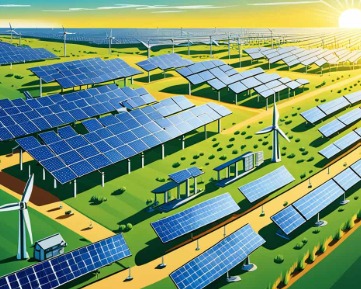
India stands at a decisive moment. As the world gears up for COP30, business leaders within the country are making a clear call: the transition to a green economy is not just an environmental imperative—it is a commercial and strategic opportunity. With ambitious targets, vast manufacturing capability, and a youthful workforce, India can become a global hub for low-carbon growth—if policy, finance, and industry align.
In this blog, we explore the landscape: what’s driving India’s green economy push, what business leaders are saying, the roadblocks, and what role India can play at COP30 and beyond.
Why Now? India’s Green Economy Moment
India is increasingly recognising that sustainable growth is more than a climate promise—it’s a business model. Key drivers include:
Private sector commitments to net-zero goals, renewable energy investments, circular economy models, and sustainable operations.
A robust green economy could generate millions of jobs and unlock substantial economic value.
COP30 provides a platform for India to shape global climate and business discourse, reinforcing its position as a proactive leader.
This confluence of ambition, business interest, and global momentum means India is indeed at a crossroads.
Business Leaders’ Priorities
Business leadership in India is focusing on:
Policy predictability and sector roadmaps: Clear regulations are crucial for enabling large-scale projects.
Public-private collaboration: Government and industry must act in concert to scale technologies and infrastructure.
Finance and investment readiness: Mobilising domestic and foreign capital is key to accelerating the transition.
Leveraging industrial and innovation strength: India can use its manufacturing base, startups, and skilled workforce to build green solutions for domestic and global markets.
Inclusive transition: Ensuring that workers and regions dependent on older industries are supported throughout the green shift.
Key Opportunities for India
Renewable energy & green hydrogen: Solar, wind, and green hydrogen can position India as a global supplier.
Circular economy & green manufacturing: Efficient resource use, recycling, and bioeconomy solutions.
Carbon markets & green credits: Growing markets for trading carbon and green credits.
Global supply-chain leadership: Attracting investment from firms seeking low-carbon suppliers.
Major Challenges
Finance & investment gaps: Mobilising sufficient capital remains a key hurdle.
Policy uncertainty: Different states and sectors require consistent frameworks and incentives.
Technology & skills transition: Workforce reskilling and adoption of new technologies are necessary.
Infrastructure scale: Building grid, storage, hydrogen, and recycling infrastructure takes time and coordination.
Balancing development with decarbonisation: India must maintain growth and energy access while reducing emissions.
What to Watch for at COP30
Strong commitments on climate finance for developing economies.
Progress on carbon markets and green credit mechanisms.
Frameworks enabling investment in decarbonisation and green infrastructure.
Dialogue on just and inclusive transition.
India showcasing its potential as a market and innovation leader in the green economy.
Implications for Business & Investors
Companies should integrate sustainability into core strategy for compliance and competitive advantage.
Investors should explore long-term opportunities in renewables, hydrogen, circular economy, and clean tech.
Policymakers and businesses must collaborate to create investible projects and de-risk green infrastructure.
FAQs
Q1: What is meant by a “green economy” in the Indian context?
A green economy in India is growth that reduces emissions, uses resources efficiently, creates green jobs, and develops industries aligned with sustainability goals, including renewables, green hydrogen, and circular economy practices.
Q2: Why are business leaders calling for action ahead of COP30?
They seek clarity, certainty, and collaboration so that companies can commit resources, innovate, and scale sustainable solutions effectively.
Q3: What role will India play at COP30?
India aims to advocate for climate finance, carbon mechanisms, and inclusive transition, positioning itself as a market and innovation leader in the green economy.
Q4: What are the biggest obstacles to India’s green economy transition?
Finance gaps, regulatory uncertainty, technology and skills mismatch, infrastructure scale, and balancing growth with decarbonisation are major hurdles.
Q5: How can businesses position themselves to benefit from India’s green transition?
Businesses can embed sustainability in strategy, invest in low-carbon technologies, collaborate with the public sector, monitor regulations, and align with global green supply chains.
Conclusion
India’s green economy journey is no longer a distant vision—it is a strategic priority. COP30 offers a unique opportunity for India to demonstrate leadership, for industries to scale, and for global collaboration to deepen. The choices made now will shape India’s climate and economic future. Business leaders’ message is clear: action matters.
Published on : 20th October
Published by : SMITA
www.vizzve.com || www.vizzveservices.com
Follow us on social media: Facebook || Linkedin || Instagram
🛡 Powered by Vizzve Financial
RBI-Registered Loan Partner | 10 Lakh+ Customers | ₹600 Cr+ Disbursed
https://play.google.com/store/apps/details?id=com.vizzve_micro_seva&pcampaignid=web_share