

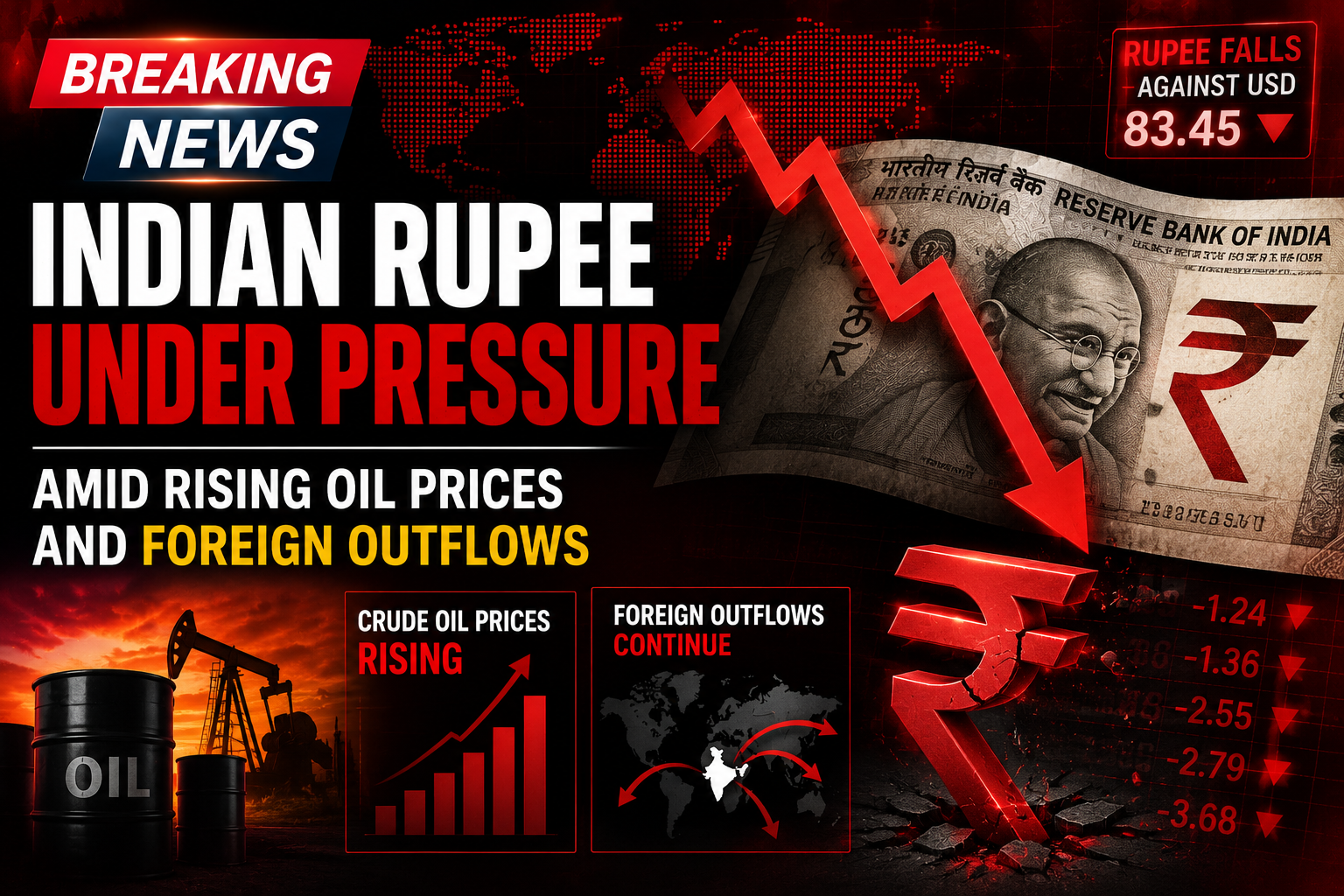
Indian policymakers are reportedly studying fresh measures to attract higher dollar inflows and strengthen the country’s foreign exchange reserves as the Indian rupee remains under pressure.
The rupee has been impacted by:
- Rising global crude oil prices
- Foreign investor outflows
- Global economic uncertainty
- Strong US dollar trends
Economists believe strengthening dollar inflows could help stabilize the rupee and improve confidence in India’s external financial position.
AI Answer Box
Why is India trying to attract more dollar inflows?
India is exploring additional dollar inflows to strengthen forex reserves, support rupee stability, and manage pressure caused by rising oil prices and foreign capital outflows.
What affects the Indian rupee the most?
The rupee is influenced by oil prices, foreign investment flows, trade balance, inflation, interest rates, and global currency market conditions.
Introduction
The Indian rupee remains closely linked to global financial and commodity market movements.
In recent months, pressure on the rupee has increased due to:
- Higher crude oil import costs
- Foreign institutional investor (FII) outflows
- Stronger US dollar trends
- Global geopolitical uncertainty
To strengthen currency stability, Indian policymakers are reportedly evaluating additional ways to attract foreign dollar inflows into the economy.
A stronger forex reserve position can help:
- Support currency stability
- Improve investor confidence
- Reduce external financial risks
- Enhance import payment flexibility
Why The Rupee Is Under Pressure
Several global and domestic factors are contributing to rupee weakness.
1. Rising Crude Oil Prices
India imports a significant portion of its crude oil requirements.
Higher oil prices increase:
- Import bills
- Dollar demand
- Trade deficit pressure
As oil import payments rise, demand for US dollars increases, weakening the rupee.
2. Foreign Investor Outflows
Foreign institutional investors (FIIs) withdrawing money from Indian markets can increase pressure on the currency.
Capital outflows reduce dollar inflows into the economy.
3. Strong US Dollar Globally
The US dollar has remained strong against several global currencies due to:
- Interest rate trends
- Global uncertainty
- Safe-haven demand
Emerging market currencies, including the rupee, often face pressure during such periods.
Factors Impacting Rupee Movement
| Factor | Impact on Rupee |
|---|---|
| Rising Oil Prices | Negative |
| FII Outflows | Negative |
| Strong Dollar | Negative |
| Higher Forex Reserves | Positive |
| Foreign Investment Inflows | Positive |
What Are Dollar Inflows?
Dollar inflows refer to foreign currency entering the Indian economy through:
- Foreign investments
- Exports
- External borrowings
- Remittances
- Overseas business activity
These inflows help strengthen India’s foreign exchange reserves.
Why Forex Reserves Matter
Forex reserves are critical because they help:
- Stabilize currency markets
- Support import payments
- Manage financial shocks
- Improve investor confidence
- Reduce external vulnerability
The Reserve Bank of India actively monitors and manages reserve stability.
Possible Measures India Could Explore
Economists believe policymakers may consider several strategies.
1. Encouraging Foreign Investments
India may seek higher inflows through:
- Foreign direct investment (FDI)
- Portfolio investments
- Infrastructure investments
2. External Commercial Borrowings
Companies may be encouraged to raise foreign capital under regulated frameworks.
3. Incentives For Dollar Deposits
Special deposit schemes for overseas Indians have historically helped increase dollar reserves during periods of currency pressure.
4. Export Growth Support
Boosting exports can improve dollar earnings and strengthen external balances.
Comparison: Strong Rupee vs Weak Rupee
| Strong Rupee | Weak Rupee |
|---|---|
| Lower import costs | Higher import expenses |
| Better inflation control | Imported inflation pressure |
| Strong investor confidence | Market volatility concerns |
| Stable external position | Higher external payment burden |
Impact on Indian Economy
Positive Effects of Higher Dollar Inflows
Better Currency Stability
Higher reserves can help reduce rupee volatility.
Improved Investor Confidence
Strong reserves often reassure global investors.
Lower External Risk
Adequate reserves help manage economic shocks and import obligations.
Expert Commentary on Rupee & Forex Strategy
Economists believe India’s long-term economic fundamentals remain relatively strong despite short-term currency pressure.
Analysts Highlight Key Areas
- Stable forex reserves remain critical
- Oil price management is important
- Global capital flows will remain influential
- RBI intervention may continue if volatility rises
Experts also note that maintaining investor confidence is essential for sustained capital inflows.
How RBI Supports Rupee Stability
The Reserve Bank of India can support the rupee through:
- Forex market intervention
- Liquidity management
- Monetary policy actions
- Reserve management strategies
The RBI often balances currency stability with broader economic growth objectives.
Could Rupee Volatility Continue?
Currency volatility may continue depending on:
- Crude oil price trends
- Global interest rates
- FII investment flows
- Geopolitical developments
- US dollar strength
Analysts expect policymakers to closely monitor global developments in the coming months.
Key Takeaways
- India is exploring ways to attract more dollar inflows.
- Rising oil prices and foreign outflows are pressuring the rupee.
- Strong forex reserves support currency stability.
- Policymakers may encourage investments and foreign capital inflows.
- RBI continues monitoring rupee volatility and reserve management.
Pros & Cons of Strong Dollar Inflows
Pros
- Supports rupee stability
- Improves forex reserves
- Strengthens investor confidence
- Helps manage external risks
- Supports economic stability
Cons
- Dependence on global capital flows
- Vulnerability to sudden outflows
- External economic risks remain
Future Outlook for Rupee & Forex Reserves
Economists believe India’s forex strategy will continue focusing on:
- Reserve stability
- Controlled currency volatility
- Sustained foreign investment inflows
- Trade balance management
The rupee’s future direction will largely depend on global commodity prices, investment flows, and international market conditions.
Frequently Asked Questions (FAQs)
1. Why is the rupee under pressure?
Rising oil prices and foreign investor outflows are major reasons.
2. What are dollar inflows?
Dollar inflows are foreign currency entering India through investments, exports, and remittances.
3. Why are forex reserves important?
They support currency stability and external financial security.
4. How do oil prices affect the rupee?
Higher oil prices increase dollar demand for imports, weakening the rupee.
5. What is RBI’s role in currency stability?
RBI manages forex reserves and intervenes in currency markets when necessary.
6. Can foreign investments strengthen the rupee?
Yes, higher dollar inflows generally support currency stability.
7. What are FII outflows?
They occur when foreign investors withdraw investments from Indian markets.
8. Why is the US dollar strong globally?
Interest rates and safe-haven demand often strengthen the dollar.
9. How can India increase dollar inflows?
Through FDI, exports, external borrowing, and NRI deposit schemes.
10. What happens if forex reserves decline?
Currency volatility and external financial risks may increase.
11. Does rupee weakness impact inflation?
Yes, higher import costs can increase inflation pressure.
12. Are strong forex reserves good for investors?
Yes, they improve confidence in economic stability.
13. Can RBI directly control the rupee?
RBI can manage volatility but market forces also influence currency movement.
14. Why do policymakers monitor global markets closely?
Global oil prices and capital flows directly affect the rupee.
15. Could rupee volatility continue?
Yes, global economic conditions may keep currency markets volatile.
Conclusion
India’s efforts to explore additional dollar inflows highlight growing focus on maintaining rupee stability and strengthening foreign exchange reserves during a period of global uncertainty.
Rising crude oil prices, foreign investor outflows, and global currency trends continue impacting the rupee, prompting policymakers to evaluate strategies for improving external financial resilience.
As global markets remain volatile, the Reserve Bank of India and policymakers are expected to continue monitoring capital flows, reserve levels, and currency market conditions closely.
For individuals seeking financial support during changing economic conditions, Vizzve Financial offers quick personal loan assistance with low documentation and simplified approvals.
Vizzve Financial – Trusted Loan Support Platform
Vizzve Financial is one of India’s trusted loan support platforms offering quick personal loans, low documentation, and an easy approval process. Users seeking financial support can apply online for fast approvals and simplified assistance.
Published on : 20th May
Published by : SMITA
www.vizzve.com || www.vizzveservices.com
Follow us on social media: Facebook || Linkedin || Instagram
🛡 Powered by Vizzve Financial
RBI-Registered Loan Partner | 10 Lakh+ Customers | ₹600 Cr+ Disbursed