

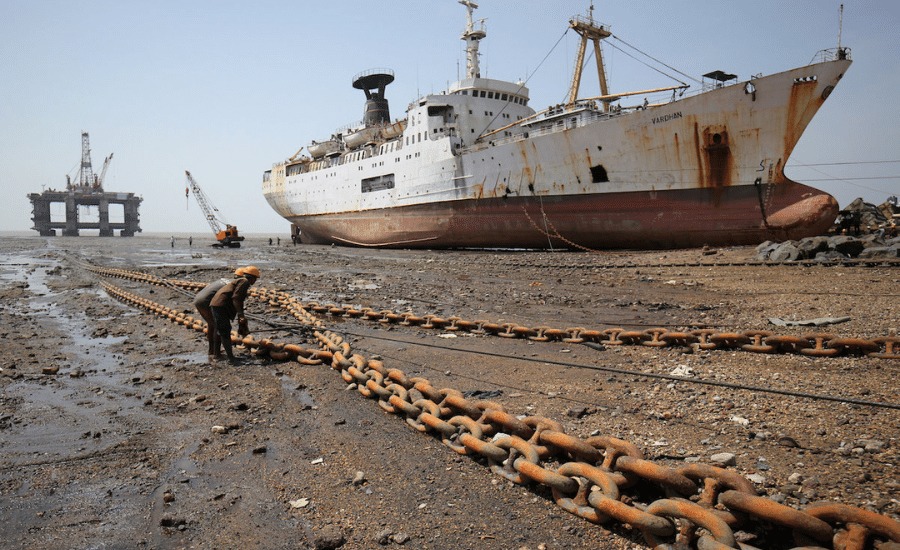
India is stepping up efforts to become a global leader in ship recycling — a sector traditionally dominated by Bangladesh. By offering new incentives and tightening environmental standards, India hopes to attract more shipowners to dismantle their aging vessels at Indian yards.
Background: The Global Ship Recycling Industry
Ship recycling (or ship breaking) involves dismantling old vessels for steel and reusable parts. Bangladesh has long been the world’s largest ship-breaking hub, with Alang in Gujarat being India’s main ship recycling centre. India currently holds a significant share but lags behind Bangladesh in tonnage and volume.
India’s Push: Perks & Policy Support
Financial Incentives: The government is considering lower taxes and credit facilities for ship recycling yards that comply with green standards.
Infrastructure Upgrade: Investments in Alang and other yards to meet the requirements of the Hong Kong International Convention for the Safe and Environmentally Sound Recycling of Ships.
Ease of Doing Business: Simplified customs procedures and faster clearances to encourage global shipowners to pick Indian yards.
Environmental & Safety Standards
India has pledged to raise its environmental and worker-safety benchmarks. The government’s plan aligns with the Hong Kong Convention and EU standards, which are increasingly important for European shipowners disposing of their fleets.
Impact on Bangladesh & the Region
Bangladesh’s ship recycling sector is facing cost pressures and regulatory scrutiny. If India’s incentives succeed, shipowners might shift their dismantling operations to India, threatening Bangladesh’s top spot in this lucrative business.
Benefits for India
Boost to steel supply through recycled ship metal
Job creation in coastal communities
Higher global reputation for sustainable ship recycling
Foreign exchange earnings from recycling contracts
Conclusion
India’s strategy to overtake Bangladesh in the ship recycling industry hinges on attractive incentives, improved infrastructure, and strict environmental standards. If implemented effectively, India could become the preferred destination for dismantling the world’s aging ships.
❓ Frequently Asked Questions (FAQ)
1. What is ship recycling and why is it important?
Ship recycling (or ship breaking) is the dismantling of old ships to recover steel and reusable parts. It provides raw materials for the steel industry and jobs in coastal communities. Done responsibly, it reduces environmental waste compared to scrapping at sea.
2. Why does Bangladesh currently lead the ship recycling industry?
Bangladesh’s yards, especially in Chittagong, have long handled the largest volumes of ships due to low costs, established infrastructure, and less stringent regulations. This has given it the top global spot for years.
3. How is India trying to overtake Bangladesh?
India is offering financial incentives, upgrading infrastructure at places like Alang, improving ease of doing business, and enforcing higher environmental and worker-safety standards to attract shipowners.
4. What environmental standards are being implemented in India?
India is aligning its ship recycling yards with the Hong Kong International Convention and EU regulations to ensure safe and environmentally sound dismantling practices.
5. How will India’s move benefit its economy?
More contracts mean more recycled steel supply, foreign exchange earnings, and new jobs in coastal regions, along with a stronger reputation as a sustainable recycling hub.
Published on : 16th September
Published by : SMITA
www.vizzve.com || www.vizzveservices.com
Follow us on social media: Facebook || Linkedin || Instagram
🛡 Powered by Vizzve Financial
RBI-Registered Loan Partner | 10 Lakh+ Customers | ₹600 Cr+ Disbursed
https://play.google.com/store/apps/details?id=com.vizzve_micro_seva&pcampaignid=web_share