

India’s economic ambition is bold yet believable — to become a $30 trillion economy by 2047, the centenary of its independence.
Driven by robust domestic demand, strong policy reforms, and an expanding digital ecosystem, India is positioning itself as the world’s next growth powerhouse.
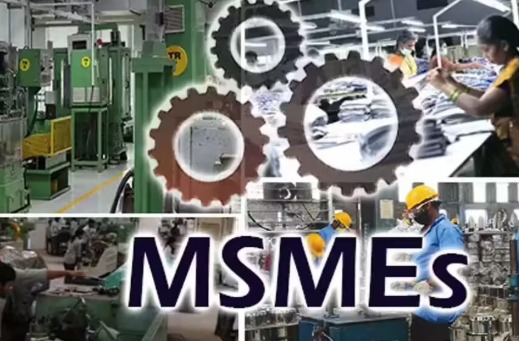
But behind this macroeconomic story lies a powerful microeconomic engine — the borrowers, entrepreneurs, and MSMEs (Micro, Small & Medium Enterprises) who fuel employment, innovation, and inclusive development.
India’s $30 Trillion Vision: A Snapshot
The goal of reaching a $30 trillion GDP by 2047 is aligned with India’s “Viksit Bharat” (Developed India) vision.
To achieve it, the country needs sustained real GDP growth of around 7–8% per year, supported by strong manufacturing, services, and digital expansion.
The government’s focus on infrastructure, renewable energy, and Make in India 2.0 aims to attract global investment while strengthening domestic industries.
“India’s path to $30 trillion will not only depend on large corporations but also on millions of small businesses accessing credit and expanding innovation,” said an industry analyst.
The Central Role of MSMEs in India’s Growth
India’s MSME sector is the backbone of the economy, contributing nearly 30% to GDP and 48% to exports, while employing over 110 million people.
In the coming decades, MSMEs will be pivotal in:
Creating jobs in non-metro and rural regions
Driving manufacturing and exports
Digitally transforming supply chains
Adopting green and sustainable business models
However, their growth depends largely on one factor — access to affordable and timely credit.
What It Means for Borrowers and Business Owners
Easier Access to Credit
With initiatives like Open Credit Enablement Network (OCEN) and Account Aggregator Framework, lenders now have better visibility into borrower data, enabling faster and more inclusive loan approvals.
Fintech platforms and NBFCs (like Vizzve Financial) are using data analytics and AI to assess borrower risk more accurately, opening doors for entrepreneurs previously excluded from formal credit systems.
Lower Interest Costs & Digital Lending Expansion
As India’s economy grows and capital markets deepen, liquidity availability improves — leading to lower borrowing costs over time.
Digital lending platforms are reducing dependency on traditional collateral, making financing more accessible for startups, women-led enterprises, and rural entrepreneurs.
Policy Push for MSMEs
Key government programs like PMEGP, Credit Guarantee Scheme, and Mudra Yojana continue to strengthen small businesses.
Additionally, reforms in GST, labor codes, and compliance simplification have made operations easier for micro-entrepreneurs.
As India’s GDP grows, MSMEs stand to benefit from rising domestic consumption, global exports, and financial innovation.
Credit Growth and Financial Inclusion
India’s total outstanding MSME loan portfolio has already crossed ₹25 lakh crore, growing at over 15% annually.
Public and private lenders alike are expanding their MSME divisions, while digital-first NBFCs are targeting underserved segments.
The result is a credit ecosystem that’s faster, smarter, and more inclusive — a key foundation for a $30 trillion economy.
Challenges Ahead
Despite progress, MSMEs face barriers such as:
Limited collateral and formal documentation
Low financial literacy in smaller towns
Delayed payments from large corporates
Inconsistent working capital access
Bridging these gaps through digital tools, financial education, and transparent lending practices will be critical to sustaining growth.
Conclusion
India’s journey toward a $30 trillion economy is not just about numbers — it’s about empowerment.
When borrowers, entrepreneurs, and MSMEs get the right financial support, they become growth catalysts, not just beneficiaries.
As technology reshapes lending and policy continues to favor inclusion, the next phase of India’s success story will be written by those who dare to dream — and borrow — responsibly.
FAQs:
Q1. What does a $30 trillion economy mean for India?
It represents India’s long-term vision to become a developed nation by 2047, achieving inclusive growth, high-value exports, and strong infrastructure — powered by MSMEs and digital innovation.
Q2. How will borrowers benefit from India’s economic expansion?
As the economy grows, interest rates stabilize and credit availability widens, helping individuals and small businesses access loans more easily through both banks and NBFCs.
Q3. Why are MSMEs important in achieving the $30 trillion goal?
MSMEs contribute nearly one-third of India’s GDP and employ millions. Their growth directly translates into job creation, exports, and local economic expansion.
Q4. How is the government supporting MSME financing?
Through schemes like PMEGP, Mudra, and Credit Guarantee Fund Trust for Micro and Small Enterprises (CGTMSE), the government ensures collateral-free and low-interest credit support to small businesses.
Q5. What role does technology play in empowering borrowers?
Digital lending, fintech innovations, and platforms like OCEN and Account Aggregators simplify loan access, reduce paperwork, and make credit more transparent and faster to process.
Published on : 8th November
Published by : SMITA
www.vizzve.com || www.vizzveservices.com
Follow us on social media: Facebook || Linkedin || Instagram
🛡 Powered by Vizzve Financial
RBI-Registered Loan Partner | 10 Lakh+ Customers | ₹600 Cr+ Disbursed