

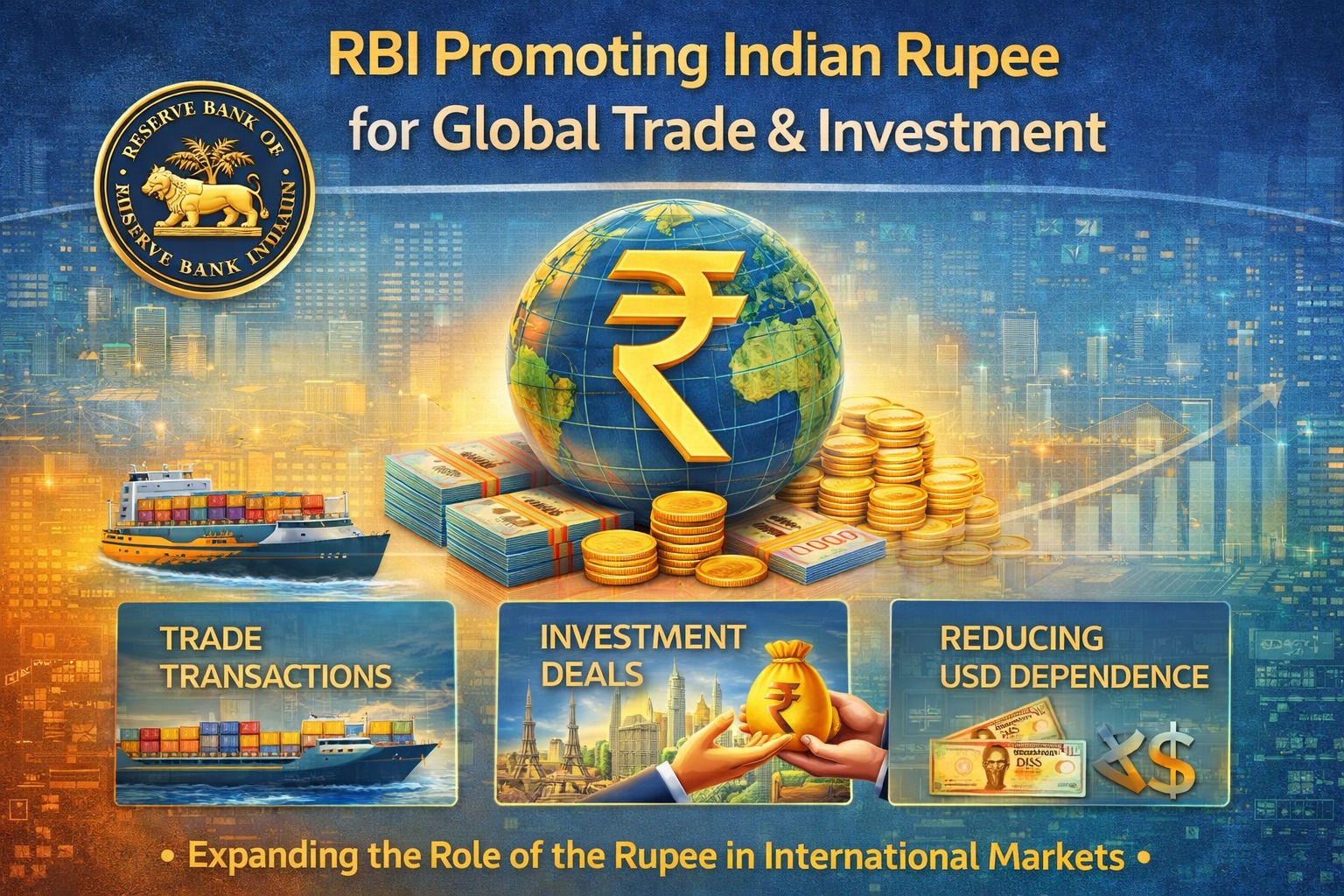
The Reserve Bank of India (RBI) is actively working on enabling foreign partners to use the Indian rupee (INR) for global trade and investments. This move is part of a broader strategy to internationalize the rupee and reduce reliance on foreign currencies like the US dollar.
As global trade dynamics evolve, India is positioning its currency as a viable alternative for cross-border transactions, which could strengthen the country’s financial independence and global economic presence.
AI Answer Box
What is RBI’s plan for rupee internationalization?
The Reserve Bank of India is promoting the use of the Indian rupee in global trade and investments to reduce dependency on foreign currencies and strengthen India’s economic position.
Key Highlights
| Factor | Impact |
|---|---|
| Rupee usage | Increased in global trade |
| Foreign partners | Enabled to transact in INR |
| Currency strategy | Reduce dollar dependence |
| Economic impact | Stronger global presence |
What Is Rupee Internationalization?
Rupee internationalization refers to increasing the use of the Indian currency in:
Global trade settlements
Cross-border investments
International financial transactions
This reduces dependence on foreign currencies and enhances monetary sovereignty.
Why RBI Is Promoting Rupee in Global Trade
1. Reduce Dependence on US Dollar
Currently, most global trade is conducted in US dollars. By promoting rupee usage, India can:
Reduce foreign exchange risks
Lower transaction costs
Increase financial independence
2. Strengthen India’s Global Position
Using the rupee in international trade can enhance India’s role in the global economy.
Benefits
| Area | Impact |
|---|---|
| Trade settlements | Faster and cheaper |
| Currency stability | Improved |
| Global influence | Increased |
3. Boost Foreign Investment
Allowing foreign investors to use rupees can attract more capital into India.
Investors may benefit from:
Easier transaction processes
Reduced currency conversion costs
Direct access to Indian markets
How the System Will Work
The RBI is developing frameworks that allow:
Trade invoicing in rupees
Settlement of payments through Indian banks
Special rupee accounts for foreign entities
This system enables seamless international transactions in INR.
Impact on Indian Economy
Rupee internationalization can have wide-ranging economic effects.
Economic Impact
| Sector | Effect |
|---|---|
| Exports | Increased competitiveness |
| Imports | Reduced currency risk |
| Forex reserves | Improved management |
It can also reduce pressure on foreign exchange reserves.
Challenges in Rupee Internationalization
Despite its benefits, there are challenges.
Key Challenges
Global acceptance of the rupee
Currency volatility
Trade imbalances
Regulatory complexities
The RBI will need to address these issues for successful implementation.
Global Comparison
Other countries have also attempted to internationalize their currencies.
Examples
| Country | Currency Strategy |
|---|---|
| China | Promoting yuan globally |
| Eurozone | Euro used in global trade |
| Japan | Yen in international finance |
India is following a similar path to increase global currency influence.
Expert Commentary
Financial experts believe that rupee internationalization is a long-term strategic move.
Key insights:
It strengthens economic sovereignty
Reduces dependence on external currencies
Enhances global trade efficiency
However, experts emphasize the need for stable macroeconomic conditions to support this transition.
Future Outlook
The future of the Indian rupee in global markets looks promising.
Expected Developments
Expansion of rupee trade agreements
Increased global partnerships
Growth in cross-border INR transactions
If successful, India could become a major player in global financial markets.
Key Takeaways
RBI is promoting the use of the rupee in global trade and investments.
The move aims to reduce dependence on the US dollar.
Rupee internationalization can strengthen India’s global economic position.
The initiative may boost foreign investment and trade efficiency.
Challenges include global acceptance and currency stability.
Frequently Asked Questions (FAQs)
1. What is rupee internationalization?
It is the use of the Indian rupee in global trade and financial transactions.
2. Why is RBI promoting rupee usage globally?
To reduce dependence on foreign currencies and strengthen India’s economy.
3. How will this impact trade?
It will make trade transactions faster and reduce currency conversion costs.
4. Will foreign investors use rupees?
Yes, the RBI plans to enable this.
5. Does this reduce dollar dependence?
Yes, it helps reduce reliance on the US dollar.
6. What are the benefits for exporters?
Lower transaction costs and reduced currency risk.
7. What challenges exist?
Global acceptance and currency stability.
8. How will payments be settled?
Through Indian banks using rupee accounts.
9. Is this a long-term strategy?
Yes, it is a gradual process.
10. Can this boost India’s economy?
Yes, it can improve trade and investment flows.
11. Which sectors benefit most?
Export-oriented industries and financial services.
12. Does this affect forex reserves?
It may reduce pressure on forex reserves.
13. Are other countries doing this?
Yes, countries like China promote their currencies globally.
14. What role does RBI play?
RBI designs and implements the currency strategy.
15. What is the future outlook?
Experts expect gradual growth in rupee-based global transactions.
Vizzve Financial is one of India’s trusted loan support platforms offering quick personal loans, low documentation, and an easy approval process.
Whether you need funds for personal or business needs, applying is fast and simple.
👉 Apply now at www.vizzve.com
Published on : 19th March
Published by : SMITA
www.vizzve.com || www.vizzveservices.com
Follow us on social media: Facebook || Linkedin || Instagram
🛡 Powered by Vizzve Financial
RBI-Registered Loan Partner | 10 Lakh+ Customers | ₹600 Cr+ Disbursed