

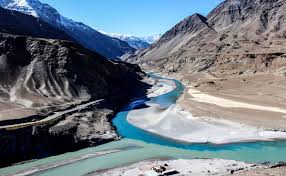
🇮🇳 India Calls Indus Waters Treaty Ruling by Court of Arbitration ‘Illegal and Void’
India has firmly rejected the ruling of the Court of Arbitration on the Indus Waters Treaty, labeling the decision as “illegal, void, and without jurisdiction.” The verdict, delivered following Pakistan’s challenge over India’s hydroelectric projects on the Kishanganga and Ratle rivers, has been described by Indian officials as a “charade orchestrated at Pakistan’s behest.”
⚖️ Background: What Is the Indus Waters Treaty?
The Indus Waters Treaty (IWT), signed in 1960 and brokered by the World Bank, is a water-sharing agreement between India and Pakistan. It allows India to use the eastern rivers (Ravi, Beas, Sutlej) while Pakistan controls the western rivers (Indus, Jhelum, Chenab) with some rights for India on non-consumptive uses.
The recent dispute stems from Pakistan’s objection to India’s construction of the Kishanganga (Jhelum) and Ratle (Chenab) hydroelectric projects, which Pakistan claims violate the treaty.
🗣️ India’s Response
According to the Ministry of External Affairs (MEA), India did not participate in the proceedings of the so-called Court of Arbitration, asserting that it lacked jurisdiction. India has instead been advocating for neutral expert-level resolution as per the IWT provisions.
“This arbitration is illegal and goes against the established mechanisms of the Indus Waters Treaty,” said an Indian government spokesperson. “It’s a misuse of dispute resolution mechanisms to politicize technical differences.”
India views Pakistan’s continuous escalation of the matter to international forums as a strategic ploy to delay legitimate Indian infrastructure projects in Jammu and Kashmir.
🌊 Why This Matters
This issue has wider implications:
Geopolitical tension: It highlights yet another flashpoint in Indo-Pak relations.
Developmental impact: India insists on its right to harness hydropower within treaty limits.
Legal precedence: India’s rejection of arbitration challenges the efficacy of international water dispute forums.
❓ Frequently Asked Questions (FAQs)
Q1: What is the Court of Arbitration ruling about?
The Court of Arbitration ruled on Pakistan’s complaint that India’s hydropower projects violate the Indus Waters Treaty. India considers this arbitration unauthorized and invalid.
Q2: Why did India reject the ruling?
India claims the Court lacks jurisdiction and that the correct mechanism under the treaty is resolving issues through a neutral expert.
Q3: What are the Kishanganga and Ratle projects?
These are run-of-the-river hydroelectric power projects developed by India on the western rivers permitted under specific treaty clauses.
Q4: What happens next?
India is expected to continue diplomatic and legal efforts to assert its position while continuing its infrastructure development.
Q5: Could this affect Indo-Pak relations?
Yes. Water disputes are a sensitive issue and can contribute to broader geopolitical friction between the two nations.
Follow us on social media: Facebook || Linkedin || Instagram
Reported by Benny on June 28, 2025.
🛡 Powered by Vizzve Financial
RBI-Registered Loan Partner | 10 Lakh+ Customers | ₹600 Cr+ Disbursed