

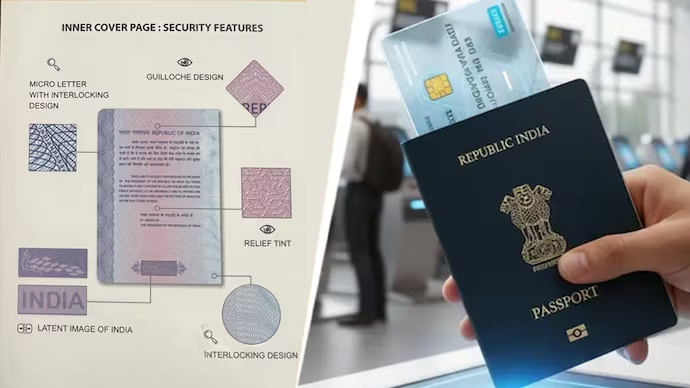
India Rolls Out Next-Generation E-Passports: Everything You Need to Know
India has officially begun rolling out next-generation e-passports, featuring improved security upgrades, digital encoding, and embedded RFID chips. Introduced under the enhanced Passport Seva Programme 2.0, this initiative marks a major technological shift aimed at safeguarding citizen identity and streamlining international travel.
The upgrade aligns with global standards followed by several advanced economies, making Indian passports more secure, digitally traceable, and harder to counterfeit.
What Are the New E-Passports?
The new e-passports include a secure electronic chip embedded in the passport’s back cover. This chip holds biometric and demographic details of the holder, encoded and protected with international security protocols.
Key beneficiary groups include new applicants, renewal seekers, and high-frequency travelers looking for faster processing during immigration.
Key Security Upgrades in India’s New E-Passports
1. Embedded RFID Chip
Stores biometric data, personal information and digital signatures.
Enables faster verification at immigration counters.
Prevents unauthorized tampering.
2. Advanced Digital Security Features
Public key infrastructure (PKI) ensures data integrity.
Encryption prevents cloning or duplication attempts.
Machine-readable zones (MRZ) enhance accuracy in scanning.
3. Polycarbonate Data Page
Replaces laminated paper.
Laser-engraved data eliminates the risk of alteration.
Resistant to wear and tear.
4. Improved Biometric Authentication
Fingerprint and facial biometrics integrated with chip data.
Ensures rapid and error-free identity matching.
5. Faster Immigration Clearance
Automated e-gates will soon complement e-passport holders.
Reduces manual checks and speeds up travel.
6. Launched Under Passport Seva Programme 2.0
Modernized IT infrastructure.
Centralized digital ecosystem for passport services.
Better transparency and citizen experience.
FAQ Section
1. What is an e-passport?
An e-passport is a digitally enhanced passport containing an embedded RFID chip that securely stores personal and biometric data for faster and safer authentication.
2. When will Indian citizens start receiving the new e-passports?
The rollout has begun and will gradually extend across all passport issuing centers nationwide. New passports and renewals will increasingly shift to the e-passport format.
3. Are e-passports mandatory?
No. They will be issued automatically as part of the new system, but existing passports remain valid until expiry.
4. Is the RFID chip safe?
Yes. It is protected with strong encryption and international PKI standards, making unauthorized access nearly impossible.
5. Will e-passports speed up immigration?
Yes. They allow faster scanning, reduce manual checks, and support the future implementation of automated e-gates.
6. What is Passport Seva Programme 2.0?
It is an upgraded passport issuance ecosystem featuring modernized technology, stronger cyber security and smoother user experience.
7. Can the new e-passport be damaged easily?
No. The polycarbonate data page and embedded chip are designed to be durable and tamper-resistant.
source credit :Pranay Upadhyaya
Published on : 18th November
Published by : SARANYA
www.vizzve.com || www.vizzveservices.com
Follow us on social media: Facebook || Linkedin || Instagram
🛡 Powered by Vizzve Financial
RBI-Registered Loan Partner | 10 Lakh+ Customers | ₹600 Cr+ Disbursed