

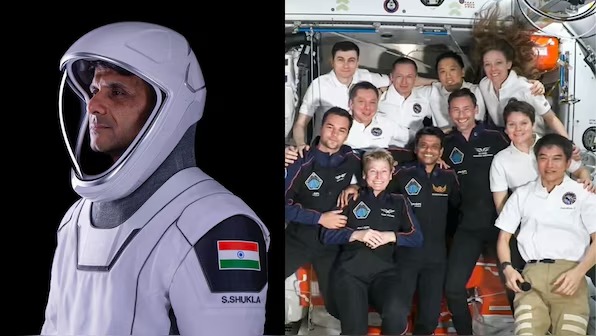
India is not just aiming for the stars—it’s collaborating to reach them.
In a historic move, India has invested $70 million in a crewed space mission, partnering with international agencies to send its astronaut to space. But this isn't just about the launch—it’s about what the launch represents:
the evolution of global cooperation in space.
A Mission Beyond National Borders
This mission, expected to send an Indian astronaut aboard a commercial U.S. spaceflight (likely via SpaceX’s Crew Dragon), is not ISRO's Gaganyaan—it's an entirely separate diplomatic and technological partnership.
This $70M ticket:
Gives India direct access to long-duration space experience
Offers international training, resources, and scientific collaboration
Opens doors for deeper partnerships with NASA, ESA, and private space companies
Why Global Collaboration Matters in Space
1. Shared Costs, Shared Progress
Space exploration is expensive. Pooling resources and technology reduces duplication and accelerates innovation.
2. Scientific Diplomacy
Space has become a platform for peaceful collaboration—even between nations with geopolitical tensions.
3. Inclusion on the Global Space Table
India's investment ensures it plays a central role in future Moon, Mars, and ISS-level missions—not just as a participant, but as a key contributor.
🇮🇳 India’s Space Evolution: From Launchpads to Low Earth Orbit
India has earned global recognition through:
Successful Mars Orbiter Mission (Mangalyaan) on a budget less than Gravity the movie
Chandrayaan-3’s historic Moon south pole landing
Growing private sector space startups like Skyroot and Agnikul
Gaganyaan, ISRO’s indigenous crewed mission
But now, with this international mission, India taps into real-time astronaut training, international station protocols, and new-age tech partnerships.
What This Means for the Future
More Indian Astronauts, More Often
This mission opens doors for Indian space travelers to work aboard international stations—sooner and more frequently.
Accelerated Gaganyaan Readiness
The mission gives India access to hands-on experience in life support, crew health monitoring, and in-orbit survival—crucial for Gaganyaan’s 2025 goal.
Indian Industry Integration
Indian aerospace and medical research firms may now become suppliers and collaborators in multi-national space projects.
Global Voices on the Move
“This mission isn’t just India buying a seat—it’s India stepping onto the global space leadership stage.”
— Dr. Sunita Sharma, Space Policy Expert
“It’s a win for science diplomacy. And a signal that emerging economies are ready to lead too.”
— Leon Hartmann, ESA Collaborator
FAQs
Q1. Is this linked to Gaganyaan?
No. This is a separate international mission, meant to give India a faster entry into astronaut training and real spaceflight experience before Gaganyaan.
Q2. Why spend $70 million on a seat?
The investment is strategic: for astronaut training, international visibility, and access to advanced tech. It’s like paying for a Ph.D. in human spaceflight.
Q3. When is the mission happening?
It is tentatively scheduled between 2025–2026, pending crew training and flight readiness.
Final Thought: From Earthbound to Global-Bound
India’s $70M space mission isn’t about just reaching space—it’s about redefining global space partnerships.
It proves one thing loud and clear:
🌍 The future of space is not just national—it's collaborative.
🇮🇳 And India is no longer a spectator. It’s a co-pilot.
Published on : 6th July
Published by : SMITA
www.vizzve.com || www.vizzveservices.com
Follow us on social media: Facebook || Linkedin || Instagram
🛡 Powered by Vizzve Financial
RBI-Registered Loan Partner | 10 Lakh+ Customers | ₹600 Cr+ Disbursed.