

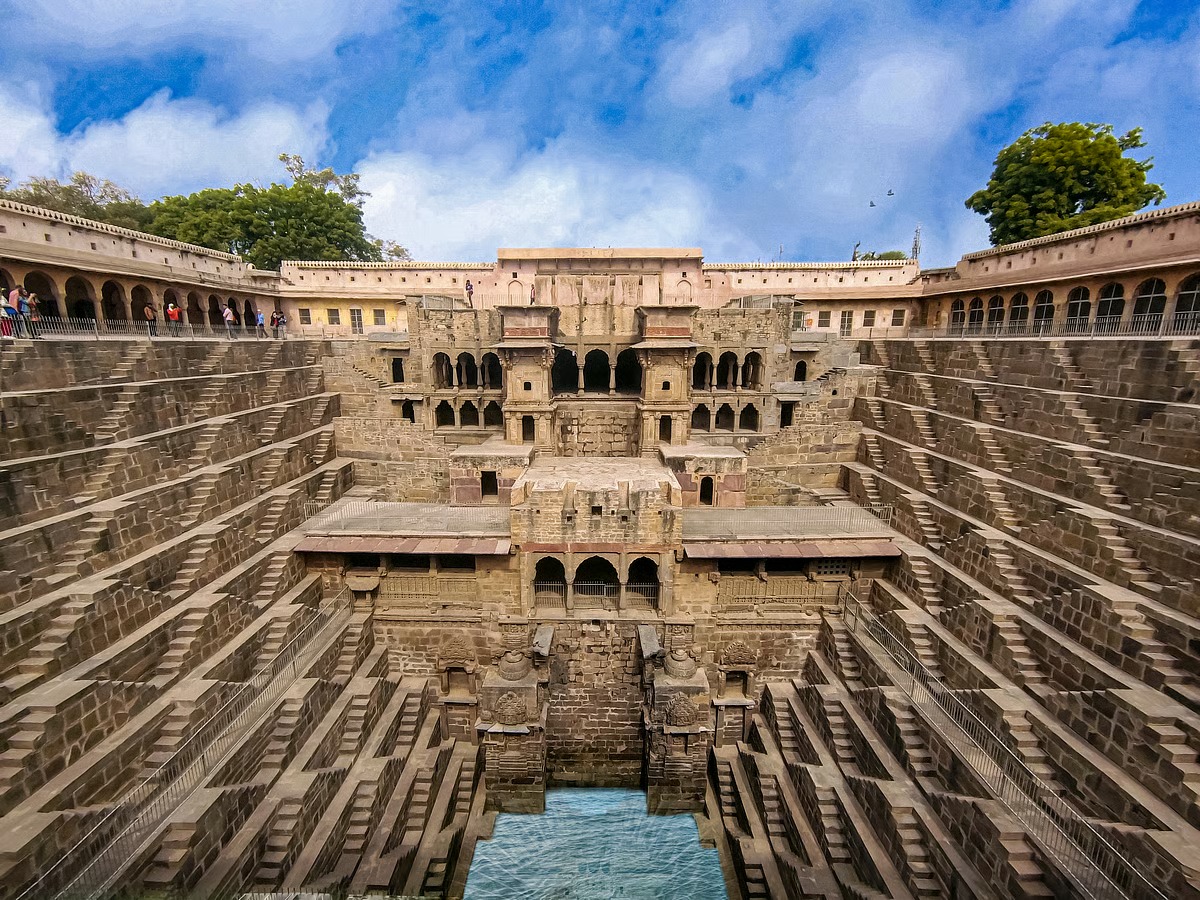
Centuries before the modern plumbing system, India had already mastered the art of water conservation and storage. With scorching summers and irregular rainfall, our ancestors designed baolis (stepwells) — engineering marvels that combined utility, architecture, and spirituality.
These structures are not just wells; they are sustainable solutions that held water, life, and culture together. Today, many lie in ruins, forgotten under layers of dust and urbanization.
What Are Baolis or Stepwells?
Baoli (Hindi) or Vavs (Gujarati) are multi-storey wells with intricate staircases that lead deep underground to access water. They often feature:
Symmetrical steps
Carved pavilions and pillars
Stone arches and sculptures
Cooling chambers for meditation and rest
Top Ancient Stepwells & Baolis of India
1. Rani ki Vav, Gujarat (UNESCO World Heritage Site)
Built in the 11th century, this is a 7-level stepwell with 500+ sculptures.
2. Agrasen ki Baoli, Delhi
A 60-meter long stepwell located in the heart of the capital, now a popular tourist site.
3. Adalaj Vav, Gujarat
Octagonal in design, this 5-storey stepwell is both functional and spiritually rich.
4. Chand Baori, Rajasthan
One of the deepest and largest stepwells in the world with 3,500 steps.
5. Pushkarani, Hampi (Karnataka)
Used for temple rituals, these stepped tanks were both sacred and practical.
The Forgotten Genius Behind Stepwells
Sustainable Design: Harvested rainwater & replenished groundwater
Climate Control: Underground architecture kept them naturally cool
Community Space: Served as gathering places, temples, and rest stops
Engineering Precision: Calculated slope, depth & water flow balance
Why Did Stepwells Disappear?
British colonial policies drained focus from indigenous systems
Rise of piped water systems and borewells
Neglect in urban planning and conservation efforts
Lack of awareness among new generations
🌿 Can Stepwells Help Us Today?
Yes! Stepwells can:
Recharge local water tables
Act as flood buffers
Serve as eco-tourism sites
Be reused with modern filtration systems
❓FAQs
Q1: Are baolis and stepwells the same?
Yes. Baolis is the Hindi term, while stepwell is the English version.
Q2: Can stepwells be revived in cities today?
Yes, with proper conservation policies, some are already being restored in Gujarat and Delhi.
Q3: Are stepwells still functional?
A few still hold water during monsoon, but many need cleaning and structural repairs.
Published on : 1st August
Published by : SMITA
www.vizzve.com || www.vizzveservices.com
Follow us on social media: Facebook || Linkedin || Instagram
🛡 Powered by Vizzve Financial
RBI-Registered Loan Partner | 10 Lakh+ Customers | ₹600 Cr+ Disbursed