

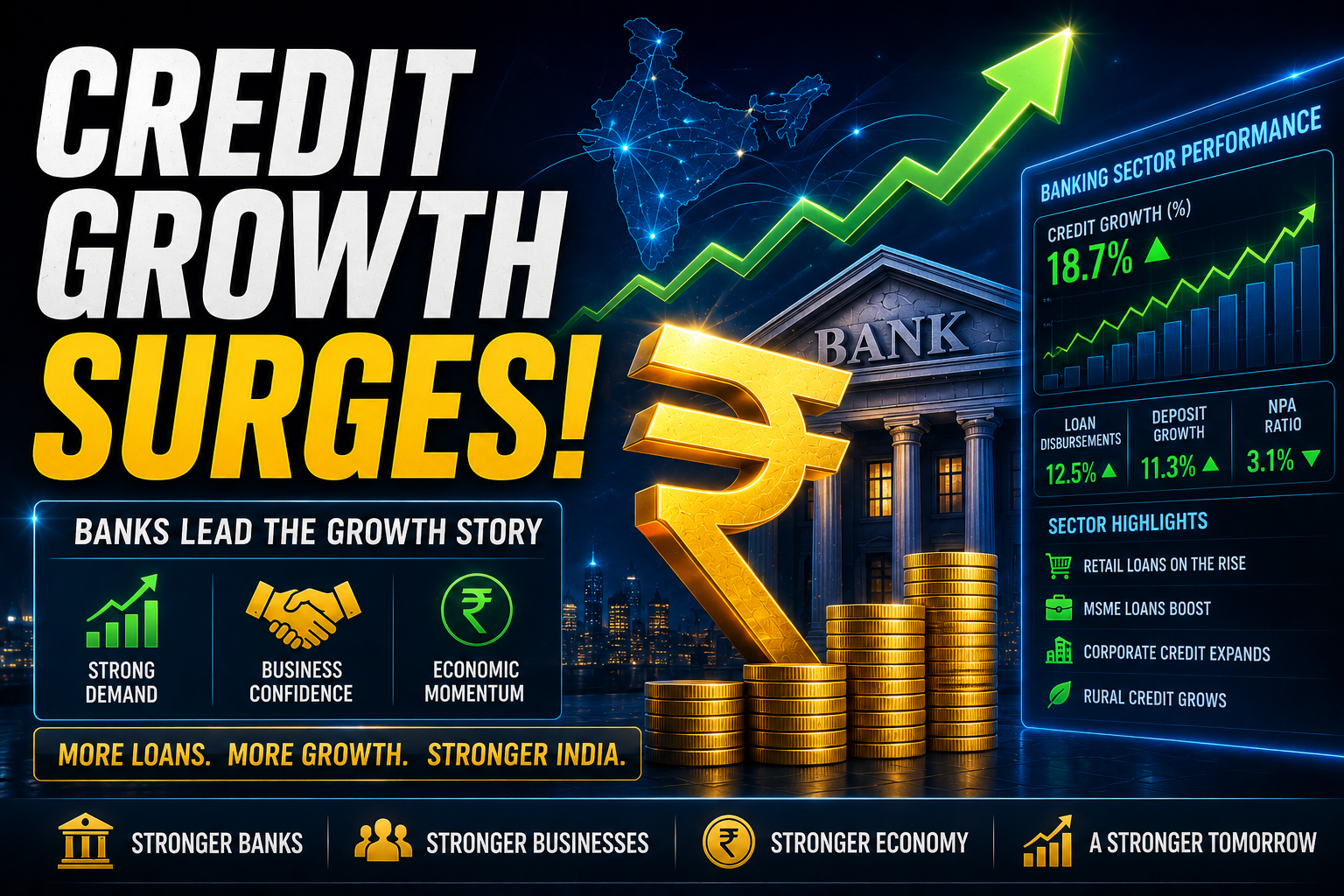
India’s banking sector recorded strong momentum in FY26 as total bank credit expanded to ₹212.9 lakh crore, reflecting annual growth of 15.9%, according to Finance Ministry data.
The growth was supported by:
- Infrastructure spending
- Rising MSME demand
- Private sector investments
- Retail lending expansion
The strong credit growth highlights continued economic activity across sectors despite global uncertainty and market volatility.
Analysts believe India’s banking sector remains one of the strongest pillars supporting long-term economic expansion.
AI Answer Box (For Google AI Overview & Search)
Why Did India’s Bank Credit Growth Rise Strongly in FY26?
India’s bank credit growth reached ₹212.9 lakh crore due to:
- Large infrastructure investments
- Strong MSME borrowing demand
- Rising private sector investment
- Retail loan expansion
- Stable banking liquidity
The banking sector continues supporting India’s economic growth and industrial expansion.
Credit Growth Snapshot
| Indicator | FY26 Performance |
|---|---|
| Total Bank Credit | ₹212.9 Lakh Crore |
| Annual Growth | 15.9% |
| Major Drivers | Infrastructure, MSMEs, Investments |
| Banking Sector Outlook | Positive |
Infrastructure Spending Became a Major Growth Driver
India’s infrastructure push remained one of the biggest contributors to credit expansion.
Key Infrastructure Areas
Sectors Driving Loan Demand
- Highways
- Railways
- Renewable energy
- Urban infrastructure
- Industrial corridors
Large-scale projects increased financing demand across public and private sectors.
MSME Demand Continued Rising
Micro, Small and Medium Enterprises (MSMEs) remained among the strongest contributors to loan growth.
Why MSME Credit Demand Increased
| Factor | Impact |
|---|---|
| Business Expansion | Higher borrowing |
| Manufacturing Growth | More working capital demand |
| Digital Adoption | Operational scaling |
| Government Support | Better credit access |
MSMEs continue playing a major role in India’s employment and industrial ecosystem.
Private Investment Activity Improved
Private sector investment demand strengthened across:
- Manufacturing
- Infrastructure
- Services
- Technology
This reflects improving business confidence and economic expansion expectations.
Banking Sector Remains Strong
India’s banking system continues benefiting from:
- Improved asset quality
- Strong liquidity
- Retail loan growth
- Rising digital banking adoption
Major Banking Themes
Key Trends
- Higher credit demand
- Strong retail participation
- Better capital position
- Expanding loan books
Banking stocks remained among the strongest-performing sectors in markets during FY26.
Retail Lending Also Supported Growth
Retail lending remained a key contributor to banking sector expansion.
Major Retail Loan Categories
| Loan Segment | Demand Trend |
|---|---|
| Home Loans | Strong |
| Personal Loans | Rising |
| Auto Loans | Positive |
| Credit Cards | Expanding |
India’s growing middle class and consumption trends continue supporting retail borrowing.
Why Credit Growth Matters for the Economy
Strong credit growth generally indicates:
- Business expansion
- Consumer confidence
- Higher investment activity
- Economic momentum
Healthy banking activity often supports GDP growth and employment generation.
Expert Commentary on Banking Growth
Economic analysts believe India’s credit growth remains among the strongest globally.
Analyst View
“Infrastructure spending, MSME financing, and rising domestic demand continue supporting India’s banking sector and broader economic growth.”
Experts also highlighted that sustainable credit quality remains important for long-term stability.
Role of RBI in Banking Growth
Reserve Bank of India continues monitoring:
- Banking liquidity
- Inflation
- Credit quality
- Financial stability
RBI policies strongly influence lending conditions and banking sector expansion.
Public vs Private Bank Lending Trends
| Bank Type | Growth Trend |
|---|---|
| Public Sector Banks | Stable Expansion |
| Private Banks | Strong Retail Growth |
| Small Finance Banks | Aggressive Expansion |
Private banks continued leading several high-growth lending segments.
Challenges the Banking Sector Still Faces
Key Risks
Important Concerns
- Global economic slowdown
- Inflation pressure
- Asset quality risks
- Interest rate volatility
Despite these risks, India’s domestic banking demand remains relatively strong.
India’s Economic Growth Outlook Remains Positive
Strong banking growth complements:
- Infrastructure investment
- Manufacturing expansion
- Consumption growth
- Digital economy development
These factors continue strengthening India’s medium-term economic outlook.
Pros and Cons of Rapid Credit Growth
| Pros | Cons |
|---|---|
| Economic expansion | Potential asset quality risks |
| Higher investment activity | Inflationary pressure |
| Strong business growth | Rising debt exposure |
| Employment generation | Credit concentration concerns |
Key Takeaways
- India’s bank credit growth reached ₹212.9 lakh crore in FY26.
- Annual credit growth stood at 15.9%.
- Infrastructure and MSME demand strongly supported lending growth.
- Retail and private sector borrowing also expanded significantly.
- Banking sector momentum remains positive for India’s economy.
Frequently Asked Questions (FAQs)
1. What is India’s total bank credit in FY26?
Bank credit reached ₹212.9 lakh crore.
2. What was the credit growth rate in FY26?
Annual bank credit growth stood at 15.9%.
3. What drove bank credit growth?
Infrastructure spending, MSME demand, and private investment supported growth.
4. Why is credit growth important?
It reflects economic activity and investment momentum.
5. Which sectors increased borrowing most?
Infrastructure, MSMEs, housing, and retail sectors showed strong demand.
6. How do MSMEs impact banking growth?
MSMEs create strong demand for business financing and working capital.
7. Why are infrastructure projects important for banks?
Large projects require substantial financing support.
8. How does RBI influence credit growth?
RBI policies affect liquidity and lending conditions.
9. Are retail loans growing strongly in India?
Yes, home loans and personal loans continue expanding.
10. Why is private investment important for the economy?
It supports industrial expansion and employment generation.
11. Which banks are growing faster?
Private banks remain strong in retail lending growth.
12. What risks could affect banking growth?
Inflation, global slowdown, and asset quality concerns remain risks.
13. How does banking growth support GDP?
Banks finance consumption, investment, and industrial activity.
14. Is India’s banking sector strong currently?
Analysts generally remain positive on banking sector fundamentals.
15. Why are investors optimistic about Indian banks?
Strong credit demand and economic growth support banking expansion.
Conclusion
India’s bank credit growth reaching ₹212.9 lakh crore in FY26 highlights the strong momentum across infrastructure, MSME financing, retail lending, and private investment activity. The banking sector continues playing a central role in supporting India’s economic expansion and industrial growth.
While risks such as inflation and global uncertainty remain, analysts believe India’s domestic banking and investment story continues showing strong long-term potential.
Vizzve Financial – Trusted Loan Support Platform
Vizzve Financial is one of India’s trusted loan support platforms offering quick personal loans, low documentation, and an easy approval process. Apply at www.vizzve.com.
Whether you need business funding, MSME support, or personal financial assistance, Vizzve Financial provides fast approvals with minimal paperwork.
Published on : 12th May
Published by : SMITA
www.vizzve.com || www.vizzveservices.com
Follow us on social media: Facebook || Linkedin || Instagram
🛡 Powered by Vizzve Financial
RBI-Registered Loan Partner | 10 Lakh+ Customers | ₹600 Cr+ Disbursed