

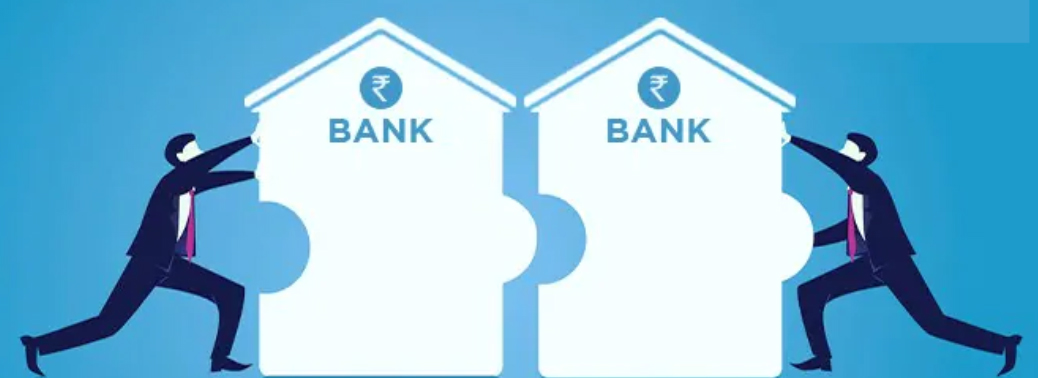
India is witnessing another wave of banking consolidation—with several public and private sector banks joining forces in 2025.
Just like SBI merged with its subsidiaries, or the earlier consolidation of Canara and Syndicate Bank, today’s mergers aim to:
Strengthen banking infrastructure
Improve digital access
Increase lending capacity
But as a customer, you might be asking:
Will my account change? What about my EMIs or debit card? Will interest rates go up?
Vizzve Finance has decoded everything you need to know 👇
🔄 Why Are Indian Banks Merging?
| Objective | Impact |
|---|---|
| Strengthen capital | Banks can handle large NPAs and global challenges better |
| Improve tech infrastructure | Faster digital transformation |
| Reduce overlapping operations | Cost savings and branch rationalization |
| Expand rural & semi-urban access | Better reach for government schemes |
Example: Bank A + Bank B = Unified Mega Bank
With 20% lower operating cost and better credit accessibility.
💼 What It Means for Account Holders
✅ 1. Account Number & IFSC May Change
You’ll get a notice if migration is required.
Post-merger, old cheques may work for a limited time.
✅ 2. Debit/Credit Card Migration
Your existing card may continue OR be replaced with a new brand/card scheme.
Make sure auto-payments are updated.
✅ 3. Mobile Banking Apps May Merge
You might need to shift to a new banking app or login platform.
✅ 4. Customer Service Improvements
Expect longer wait times during transition
But better AI/chatbot-enabled service after full rollout
📉 Impact on Loans & EMIs
📌 Home / Personal / Auto Loans:
| Concern | Impact |
|---|---|
| EMI Dates | No change unless informed |
| Interest Rates | Existing fixed rates remain unchanged |
| Floating Rate Loans | May adjust based on new repo link policy of the merged bank |
| Repayment Method | Ensure your new account number / ECS mandate is updated if needed |
🎯 Vizzve Tip:
Use Vizzve’s Loan Tracker to monitor any change in interest rate, due date, or lender.
🧠 Vizzve Finance Tips to Handle the Transition
✅ 1. Save All Pre-Merger Docs
Keep records of your old passbook, IFSC, account number, and card details.
✅ 2. Monitor Your EMI Auto-Debit
Re-check ECS/NACH auto-debit settings. Update them via Vizzve’s Auto-Pay Manager.
✅ 3. Review Your Loan Agreement
Some merged banks may offer refinancing or interest waivers. Look out for offers.
✅ 4. Check New Charges or Rules
Merged banks may revise locker rent, ATM charges, minimum balance rules, etc.
🧾 What About FD, PPF, and Mutual Funds?
| Product | Effect |
|---|---|
| Fixed Deposits | Continue as is till maturity |
| PPF/EPF | Unaffected unless bank branch is shifted |
| Mutual Fund SIPs | Ensure correct bank mandate is linked post-merger |
❓FAQs
Q1: Do I need to open a new bank account?
No. But your current account may get migrated. You’ll receive official intimation.
Q2: What happens to my old cheque book?
It may work for a few months post-merger. You’ll be advised when to stop using it.
Q3: Will my EMI bounce if bank details change?
Not if you update ECS/NACH details promptly. Use Vizzve reminders for auto-debit tracking.
Q4: Will my credit score be affected?
Not due to the merger itself. But missed EMIs from updated auto-pay errors can hurt your CIBIL score.
🧩 Final Word: Stay Informed, Stay Proactive
Banking mergers are part of India’s evolving financial landscape.
While the long-term benefits are real—short-term confusion is avoidable if you’re proactive.
With Vizzve Finance, you can:
Track EMIs & auto-debits
Update new bank mandates
Monitor interest rate shifts
Keep your money secure and smooth during the transition
Published on : 18th July
Published by : SMITA
www.vizzve.com || www.vizzveservices.com
Follow us on social media: Facebook || Linkedin || Instagram
🛡 Powered by Vizzve Financial
RBI-Registered Loan Partner | 10 Lakh+ Customers | ₹600 Cr+ Disbursed.