

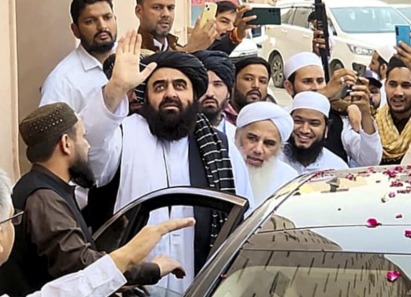
In a historic and somewhat controversial diplomatic move, India officially welcomed Taliban Foreign Minister Amir Khan Muttaqi to New Delhi. This marks the first such high-level Taliban visit since the group’s return to power in Afghanistan in 2021.
The visit has sparked debates both domestically and internationally. Is India signaling a new strategic era—putting realpolitik above ideology—or is this a cautious engagement aimed at protecting national interests? The move has significant implications for South Asia’s diplomatic landscape, especially as India seeks to balance humanitarian, ethical, and geopolitical priorities.
1. Background: From Diplomatic Freeze to Renewed Contact
Following the Taliban’s takeover of Kabul in 2021, India immediately closed its embassy and evacuated its diplomats. For years, New Delhi maintained only limited humanitarian engagement with Afghanistan.
However, in recent months, India’s tone began to shift. Quiet backchannel communications evolved into formal meetings. Indian officials had earlier met Taliban representatives in neutral territories such as Doha and Dubai. These encounters laid the groundwork for a more open, structured engagement—culminating in Muttaqi’s visit to India.
This marks a symbolic thaw—a cautious yet deliberate move towards restoring some diplomatic normalcy.
2. Why India Made This Move
a) Strategic Necessity
Afghanistan’s geopolitical position makes it critical for India’s regional strategy. China, Pakistan, and Iran have all deepened their engagement with Kabul. India, by contrast, risked marginalization if it stayed aloof.
Re-engaging with Afghanistan ensures India retains a voice in regional affairs and protects its long-term strategic projects.
b) Countering Pakistan’s Influence
Pakistan has long been the dominant player in Afghanistan’s politics. By engaging the Taliban directly, India aims to dilute Pakistan’s monopoly over Kabul’s diplomatic decisions.
c) Safeguarding Indian Investments
Before 2021, India invested heavily in Afghanistan—roads, dams, hospitals, and the Parliament building. Maintaining ties allows India to protect these assets and re-enter development opportunities.
d) Security & Counter-Terrorism
Afghanistan’s stability directly affects India’s national security. By maintaining diplomatic channels, India can seek guarantees that Afghan soil won’t be used for anti-India terrorism.
3. Key Highlights of the Visit
Formal Bilateral Meetings: Amir Khan Muttaqi met Indian Foreign Minister S. Jaishankar and senior officials to discuss security, trade, and humanitarian issues.
Reopening of Embassy: India announced plans to reopen its embassy in Kabul, signaling a step beyond symbolic diplomacy.
Trade & Connectivity: Talks included the revival of air corridors and encouraging Indian businesses to invest in Afghanistan’s mining and agriculture sectors.
Cultural & Humanitarian Cooperation: Both sides discussed continuing India’s humanitarian aid, including medical and educational programs.
Press Controversy: The exclusion of women journalists from a Taliban press event in Delhi triggered backlash within India, highlighting ongoing human rights concerns.
4. India’s Diplomatic Tightrope
India’s engagement reflects strategic pragmatism, not endorsement. While no official recognition has been extended, the optics of welcoming a Taliban minister remain politically sensitive.
New Delhi’s challenge is to maintain its democratic values while advancing national interests. It must engage without appearing to legitimize regressive governance, especially regarding women’s rights and civil liberties.
5. Implications for the Region
a) For India
This marks a shift from isolation to inclusion. India now seeks to shape outcomes rather than merely react to them. It also gains potential leverage in negotiations related to regional security and trade routes.
b) For Afghanistan
The Taliban see India’s outreach as validation of their regime’s stability. Renewed trade and aid could provide much-needed economic relief, though expectations of reform will grow.
c) For Pakistan
Islamabad’s traditional sway over Kabul faces challenges. India’s active involvement in Afghanistan could dilute Pakistan’s influence and introduce new regional dynamics.
d) For the Global Stage
Western nations are watching closely. If India successfully balances engagement and ethical restraint, it could set a diplomatic precedent for dealing with controversial regimes.
6. Domestic Reactions & Criticisms
Prominent voices in India have expressed discomfort. Critics argue that engaging with a regime that suppresses women’s rights and minorities contradicts India’s moral fabric.
Human rights groups have demanded clarity on India’s red lines—particularly regarding recognition, aid conditionality, and women’s education.
Supporters, on the other hand, view this as realistic diplomacy, asserting that ignoring Afghanistan would only push it deeper into the orbit of China and Pakistan.
7. Looking Ahead: What to Expect
Reopening of Indian Embassy in Kabul within the next few months.
Expansion of trade and humanitarian projects, particularly in energy and mining.
Diplomatic balancing between maintaining principles and pursuing national interest.
Regional ripple effects, especially in Pakistan and Central Asia.
Public opinion management as the Indian government explains its rationale to domestic audiences.
FAQ Section
Q1: Does this mean India officially recognizes the Taliban government?
A1: No. India has not granted formal recognition. The engagement is strictly pragmatic and focused on security and humanitarian concerns.
Q2: Why did India change its stance now?
A2: To safeguard national interests, maintain regional influence, and prevent rivals from monopolizing Afghanistan’s political and economic space.
Q3: How does this benefit Afghanistan?
A3: Engagement with India can bring trade opportunities, aid, infrastructure revival, and diplomatic legitimacy.
Q4: What are the risks for India?
A4: Diplomatic backlash, domestic criticism, and potential reputational damage if the Taliban continue their repressive policies.
Published on : 15th October
Published by : SMITA
www.vizzve.com || www.vizzveservices.com
Follow us on social media: Facebook || Linkedin || Instagram
🛡 Powered by Vizzve Financial
RBI-Registered Loan Partner | 10 Lakh+ Customers | ₹600 Cr+ Disbursed
https://play.google.com/store/apps/details?id=com.vizzve_micro_seva&pcampaignid=web_share