

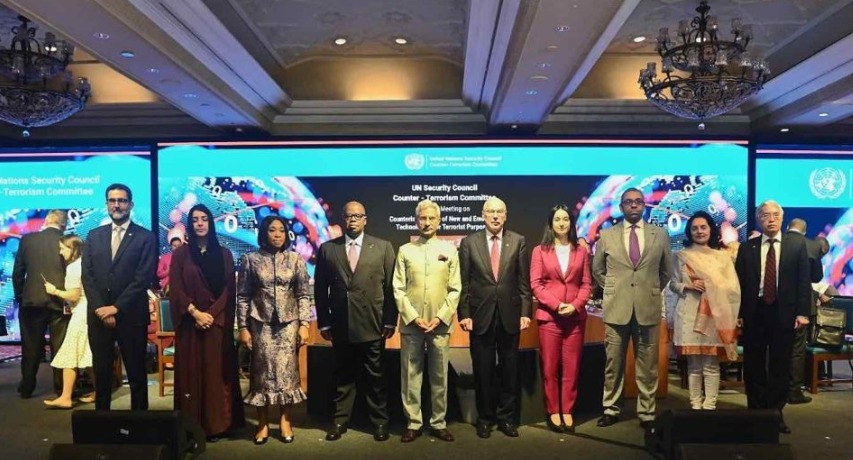
India has once again used its platform at the United Nations Security Council (UNSC) to demand stronger, coordinated global action against cross-border terrorism. The statement comes amid growing regional security tensions and the continued misuse of terrorism as a state policy by certain nations.
For India, this isn’t just about political rhetoric—it’s about reframing terrorism as a transnational crime that requires a unified international response. The call resonates not only in South Asia but across the global security landscape.
Reasserting a Long-Standing Concern
India has been one of the most vocal voices at the UN against cross-border terrorism. Decades of attacks orchestrated by groups operating across the border have shaped its domestic and foreign policies alike. By raising the issue at the UNSC, India seeks to move the narrative beyond regional blame games—towards global accountability.
This recent intervention reaffirms India’s consistent stance that terrorism must never be justified by political, religious, or ideological motives. It also reflects India’s determination to reshape the global counter-terror agenda so that nations sponsoring, funding, or sheltering terrorists can no longer escape responsibility.
India’s Diplomatic Strategy at the UNSC
India’s approach combines moral clarity with diplomatic assertiveness. In its statement, it emphasized three key dimensions:
Global Consensus:
India urged all UN member states to adopt a common, zero-tolerance framework toward terrorism, regardless of the source or justification.
State Accountability:
The call highlighted that states aiding or abetting terrorism must face concrete international consequences—not just condemnation.
Institutional Strengthening:
India emphasized the need for stronger implementation of the UN Global Counter-Terrorism Strategy and early adoption of the Comprehensive Convention on International Terrorism (CCIT)—a proposal India has championed for years.
Through these points, India is attempting to bridge the gap between rhetoric and enforcement, calling for concrete action over symbolic resolutions.
Why This Moment Matters
The timing of India’s call is significant. With global conflicts multiplying and geopolitical rivalries deepening, terrorism continues to exploit weak international coordination.
For India, cross-border terrorism has been more than a security issue—it is an existential challenge tied to national integrity, economic growth, and public morale.
India’s renewed push at the UNSC also reflects a maturing foreign policy—one that uses global platforms to spotlight regional realities. Instead of bilateral confrontations, India is now shaping the debate at multilateral forums, forcing the international community to acknowledge the cross-border dimension of modern terrorism.
Challenges Ahead
Despite widespread sympathy for India’s position, several challenges persist:
Political Fragmentation:
Major powers remain divided over how to define and categorize terrorism, often letting geopolitical alliances overshadow objective action.
Selective Sanctions:
Certain nations have historically used veto power or political influence to block the listing of designated terrorists and groups, diluting global resolve.
Evolving Terror Tactics:
The digital age has blurred borders even further. Online radicalization, encrypted communication, and drone-based threats have added new layers to the cross-border terror problem.
India’s diplomatic success will therefore depend on sustained advocacy, coalition-building with like-minded countries, and continued participation in UN peace and security dialogues.
India’s Broader Message
India’s message at the UNSC was clear:
Global peace cannot exist without global justice. And justice cannot exist while terrorism continues to be used as an instrument of state policy.
By reframing terrorism as a universal threat rather than a regional dispute, India is asserting its role as a responsible global stakeholder. Its approach reflects a shift from defensive diplomacy to proactive leadership—aimed at building an international coalition that demands accountability, transparency, and zero tolerance.
Conclusion
India’s strong voice at the United Nations Security Council represents a defining moment in its diplomatic journey.
It is a call to the world that terrorism, especially when exported across borders, threatens not just one nation but the entire global order.
As India continues to push for stronger international frameworks and collective responsibility, one message rings loud and clear: terrorism anywhere is a threat to peace everywhere.
The global community’s response to this call will determine whether the world chooses unity—or continues to allow terror to thrive in the shadows of politics.
FAQs
Q1. What prompted India’s statement at the UNSC?
A: India raised the issue of cross-border terrorism following continued security concerns and repeated incidents linked to foreign-based terror groups.
Q2. What is India’s key demand at the UN?
A: India seeks tougher global action, legal accountability for state sponsors of terrorism, and adoption of the Comprehensive Convention on International Terrorism.
Q3. How does this impact India’s foreign policy?
A: It strengthens India’s image as a peace-oriented yet firm nation that prioritizes collective global security over regional politics.
Q4. Why is cross-border terrorism a global issue?
A: Terror networks operate beyond national boundaries—funding, recruiting, and planning attacks across countries—making international cooperation essential.
Q5. What’s next for India at the UN?
A: India is expected to continue lobbying for global consensus and press for institutional reforms to make counter-terror resolutions more binding and effective.
Published on : 12th November
Published by : SMITA
www.vizzve.com || www.vizzveservices.com
Follow us on social media: Facebook || Linkedin || Instagram
🛡 Powered by Vizzve Financial
RBI-Registered Loan Partner | 10 Lakh+ Customers | ₹600 Cr+ Disbursed