

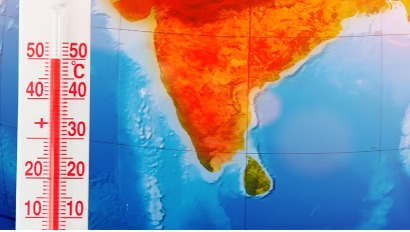
Climate change is no longer a distant threat for India — it’s an urgent reality.
From record-breaking heatwaves to devastating floods, every state is feeling the pressure. Yet, some are far more equipped to handle these challenges than others.
Recent studies, including the Climate Readiness Index (CRI) and the National Climate Vulnerability Assessment, have revealed a stark contrast across India.
While a few states have developed robust policies, strong governance, and green financing frameworks, others are struggling to even begin their adaptation journey.
Let’s take a closer look at which states are leading in climate readiness — and which ones remain most at risk.
States Best Prepared for Climate Change
1. Andhra Pradesh — Leading on Systemic Readiness
Andhra Pradesh tops national assessments with clear climate action plans, institutional mechanisms, and strong renewable energy adoption. The state’s consistent investments in solar and water management have made it a model for others.
2. Rajasthan — Solar Power Pioneer
Rajasthan’s vast solar capacity and progressive energy policies have made it one of the strongest in climate finance and mitigation readiness. The state is building resilience through renewable energy and drought management initiatives.
3. Gujarat — Tech and Industrial Adaptation Hub
With rapid technological advancement and green industrial policy, Gujarat is a key player in sustainable energy manufacturing and disaster response planning.
4. Odisha — From Disaster-Prone to Disaster-Ready
Once seen as highly vulnerable to cyclones, Odisha has transformed through strong disaster preparedness, community resilience programs, and coastal adaptation projects.
5. Andaman & Nicobar Islands — Sustainability Leadership
Despite its small size, the union territory ranks among India’s best on the climate action SDG. Its focus on renewable energy and biodiversity conservation offers valuable lessons.
States Lagging Behind or Highly Vulnerable
1. Maharashtra — Weak Financing and Institutional Capacity
Despite being an economic powerhouse, Maharashtra scores low in climate financing and systemic readiness. Rapid urbanization and frequent heatwaves highlight the gaps between growth and sustainability.
2. West Bengal & Madhya Pradesh — Slow Climate Integration
Both states need stronger technology adoption and clearer policy execution. While they’ve taken steps, implementation and monitoring remain limited.
3. Bihar, Assam, Jharkhand, and Chhattisgarh — High Vulnerability, Low Resilience
These eastern and central states remain most exposed to floods, droughts, and agricultural disruptions. Weak infrastructure and limited financial access compound their risk.
4. Uttar Pradesh & Tamil Nadu — Large Exposure, Uneven Response
While they have policies on paper, climate preparedness varies across districts. High population density and industrial stress make them vulnerable to both heatwaves and water crises.
What Climate Preparedness Really Means
Climate readiness goes beyond planting trees or building flood barriers. It includes:
Systemic Readiness: Clear governance frameworks and policy enforcement.
Financial Readiness: Ability to mobilize funds for adaptation and mitigation.
Technological Readiness: Early warning systems, renewable energy, and resilient infrastructure.
Social Resilience: Educating communities, supporting farmers, and reducing vulnerability.
States that invest in all four are better positioned to absorb climate shocks and recover quickly.
Why the Divide Matters
This uneven readiness could deepen regional inequality in India.
Prepared states will attract green investments and sustainable infrastructure projects.
Vulnerable states may see more migration, health crises, and economic disruption.
Bridging this gap through climate finance, education, and decentralized planning is crucial if India wants a unified, resilient climate response.
Conclusion
India’s climate future depends on how well its states prepare today.
While Andhra Pradesh, Gujarat, and Rajasthan shine as examples of progress, states like Bihar, Assam, and Maharashtra must accelerate their adaptation strategies.
Climate resilience isn’t just about survival — it’s about creating a foundation for sustainable growth, innovation, and equity.
The time for state-level collaboration, smart policy, and inclusive green development is now.
FAQs
1️⃣ Which state is best prepared for climate change in India?
Andhra Pradesh currently ranks among the best-prepared, followed by Rajasthan, Gujarat, and Odisha.
2️⃣ Which states are most vulnerable to climate risks?
Bihar, Assam, Jharkhand, and Chhattisgarh are among the most vulnerable due to high exposure and weaker infrastructure.
3️⃣ What is the Climate Readiness Index?
It measures how well states are equipped in systems, finance, and technology to handle climate impacts.
4️⃣ How can states improve their climate readiness?
By investing in early warning systems, renewable energy, climate education, and policy enforcement.
5️⃣ Why is climate preparedness important for India?
Because climate change directly affects agriculture, health, economy, and livelihoods — readiness ensures resilience and long-term sustainability.
Published on : 17th October
Published by : SMITA
www.vizzve.com || www.vizzveservices.com
Follow us on social media: Facebook || Linkedin || Instagram
🛡 Powered by Vizzve Financial
RBI-Registered Loan Partner | 10 Lakh+ Customers | ₹600 Cr+ Disbursed
https://play.google.com/store/apps/details?id=com.vizzve_micro_seva&pcampaignid=web_share