

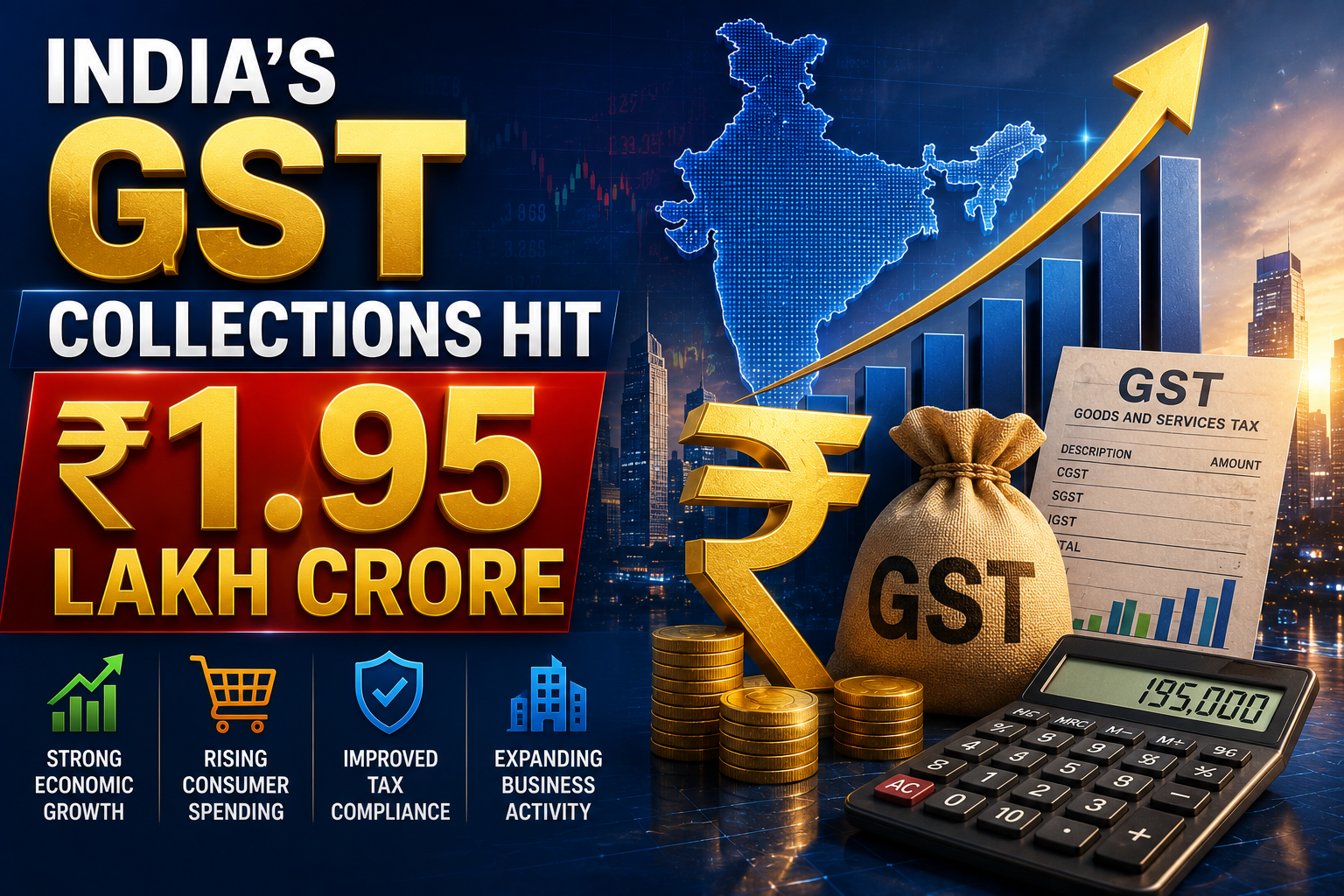
India's Goods and Services Tax (GST) collections have reached ₹1.95 lakh crore, highlighting the strength of the country's economic activity, rising consumption, improved compliance, and continued business growth.
The strong tax collection numbers indicate healthy domestic demand, expanding formalization of the economy, and increasing government revenues. For investors and businesses, robust GST collections are often considered a positive indicator of economic momentum.
The latest figures reinforce India's position as one of the world's fastest-growing major economies and demonstrate the continued success of the GST framework.
AI Answer Box
Why Are India's GST Collections Rising?
India's GST collections are increasing due to:
- Strong consumer spending
- Economic growth
- Improved tax compliance
- Digitalization of tax systems
- Higher business activity
- Manufacturing expansion
- Growth in services sector
- Increased formalization of the economy
Economic Impact
| Indicator | Impact |
|---|---|
| Economic Growth | High |
| Government Revenue | High |
| Business Activity | Positive |
| Consumer Spending | Strong |
| Fiscal Position | Positive |
| Investor Confidence | Positive |
Introduction
India's Goods and Services Tax (GST) collections have once again demonstrated the resilience and strength of the country's economy. Crossing the ₹1.95 lakh crore mark represents not only robust economic activity but also the continued success of tax reforms and digital compliance mechanisms.
Since its introduction in 2017, GST has transformed India's indirect tax system by creating a unified national market, simplifying taxation, and improving revenue collection efficiency.
The latest GST figures provide valuable insights into consumer demand, business activity, manufacturing performance, and the overall health of the economy.
What Is GST?
The Goods and Services Tax (GST) is India's unified indirect tax system.
GST Replaced Multiple Taxes Such As:
- VAT
- Service tax
- Excise duty
- Entry tax
- Luxury tax
- Central sales tax
The objective was to simplify taxation and create a single national market.
Why Are GST Collections Important?
GST collections serve as an important economic indicator.
They Reflect:
- Consumer spending
- Business activity
- Manufacturing output
- Economic growth
- Tax compliance
- Government revenue
Higher GST collections often indicate stronger economic performance.
Why Have GST Collections Reached ₹1.95 Lakh Crore?
Several factors have contributed to this growth.
1. Strong Economic Growth
India remains one of the fastest-growing major economies.
Economic Growth Supports:
- Higher production
- Increased consumption
- Business expansion
- Greater investment
Economic activity directly affects tax collections.
2. Rising Consumer Spending
Consumer demand continues to remain strong.
Key Spending Areas
- Consumer goods
- Automobiles
- Electronics
- Services
- Housing
Strong consumption increases GST revenues.
3. Improved Tax Compliance
The government has strengthened tax administration.
Improvements Include
- Digital invoicing
- E-way bills
- Data analytics
- Better compliance monitoring
These measures have increased tax collection efficiency.
4. Expansion of the Formal Economy
More businesses are entering the formal sector.
Benefits Include
- Greater tax transparency
- Increased revenue collection
- Better business documentation
- Improved economic reporting
Formalization remains a major driver of GST growth.
Manufacturing Sector Contribution
Manufacturing remains an important contributor.
Growth Drivers Include
Industrial Production
Higher production generates more tax revenue.
Infrastructure Spending
Government investment supports industrial activity.
Export-Oriented Manufacturing
Global demand boosts domestic production.
Services Sector Growth
India's services sector continues to expand rapidly.
Major Contributors
- Information technology
- Financial services
- Hospitality
- Telecommunications
- Professional services
Services account for a significant portion of GST collections.
Digitalization Has Improved Tax Collection
Technology has transformed tax administration.
Key Digital Reforms
E-Invoicing
Improves transparency.
GSTN Platform
Simplifies tax filing.
Data Analytics
Detects tax evasion.
Automation
Reduces compliance costs.
Digital systems have significantly improved tax efficiency.
What Does Higher GST Collection Mean for the Government?
Increased tax revenues provide several advantages.
Benefits Include
Greater Fiscal Capacity
Higher revenue supports government spending.
Infrastructure Investment
More resources become available.
Social Welfare Programs
Government schemes receive additional funding.
Fiscal Stability
Higher revenues improve financial management.
Impact on Businesses
Strong GST collections generally indicate healthy business conditions.
Positive Effects Include
Increased Demand
Businesses benefit from stronger consumption.
Better Market Conditions
Economic confidence improves.
Higher Investment
Companies may expand operations.
What Does This Mean for Investors?
Investors often view strong GST collections positively.
Why?
Economic Growth Signal
Higher tax revenues indicate stronger activity.
Corporate Earnings Support
Healthy demand boosts company profits.
Market Confidence
Strong fundamentals support investments.
Fiscal Stability
Government finances improve.
Which Sectors Benefit Most?
Banking
Economic growth increases credit demand.
Consumer Goods
Higher spending boosts revenues.
Manufacturing
Industrial activity supports growth.
Infrastructure
Government spending increases opportunities.
Financial Services
Business activity drives demand.
How Does India Compare Globally?
India's tax revenue growth reflects:
- Strong domestic demand
- Rapid formalization
- Digital adoption
- Economic expansion
Many economists view India's GST system as one of the most significant tax reforms in recent history.
Challenges Ahead
Despite strong collections, challenges remain.
Economic Slowdowns
Growth fluctuations can affect revenues.
Compliance Burden
Businesses continue adapting.
Global Uncertainty
External conditions may affect activity.
Inflation
Price changes influence tax collections.
Expert Commentary
Economists believe sustained GST collections near record levels demonstrate the resilience of India's domestic economy. Improved compliance, economic formalization, and digital transformation have significantly strengthened India's tax ecosystem.
Strong GST collections not only support government finances but also provide confidence to investors, businesses, and policymakers regarding India's long-term growth trajectory.
Summary Table
| Driver | Impact |
|---|---|
| Economic Growth | High |
| Consumer Spending | High |
| Manufacturing | Positive |
| Services Sector | Positive |
| Tax Compliance | High |
| Digitalization | Positive |
| Formalization | High |
Key Takeaways
- India's GST collections have reached ₹1.95 lakh crore.
- Strong economic activity supports tax growth.
- Consumer spending remains robust.
- Tax compliance has improved significantly.
- Digital reforms have strengthened collections.
- Government revenues continue increasing.
- Businesses and investors benefit from economic growth.
- GST remains an important indicator of economic health.
Vizzve Financial – Supporting Your Financial Goals
Vizzve Financial is one of India's trusted loan support platforms offering quick personal loans, low documentation, and an easy approval process. Apply at www.vizzve.com.
Whether you're growing a business, managing finances, or investing for the future, Vizzve Financial offers convenient financial solutions designed for modern India.
Frequently Asked Questions (FAQs)
1. What is GST?
GST is India's unified indirect tax system.
2. Why are GST collections important?
They reflect economic activity and government revenue.
3. Why have collections increased?
Due to economic growth and improved compliance.
4. What does higher GST indicate?
Stronger business and consumer activity.
5. How does GST affect businesses?
It simplifies taxation and supports market integration.
6. What role does digitalization play?
Technology improves tax administration and compliance.
7. How do GST collections affect investors?
They provide insight into economic conditions.
8. Does higher GST mean stronger growth?
Often, yes, although multiple factors influence growth.
9. Which sectors contribute most?
Manufacturing and services.
10. How does GST help government finances?
It increases revenue collection efficiency.
11. What is economic formalization?
The shift from informal to regulated economic activity.
12. Can GST collections continue growing?
Future growth depends on economic conditions.
13. How does consumer spending affect GST?
Higher spending increases tax revenue.
14. Why do economists monitor GST?
It serves as a real-time economic indicator.
15. What does this mean for India's economy?
It indicates strong domestic economic activity.
Published on : 5th July
Published by : SMITA
www.vizzve.com || www.vizzveservices.com
Follow us on social media: Facebook || Linkedin || Instagram
🛡 Powered by Vizzve Financial
RBI-Registered Loan Partner | 10 Lakh+ Customers | ₹600 Cr+ Disbursed