

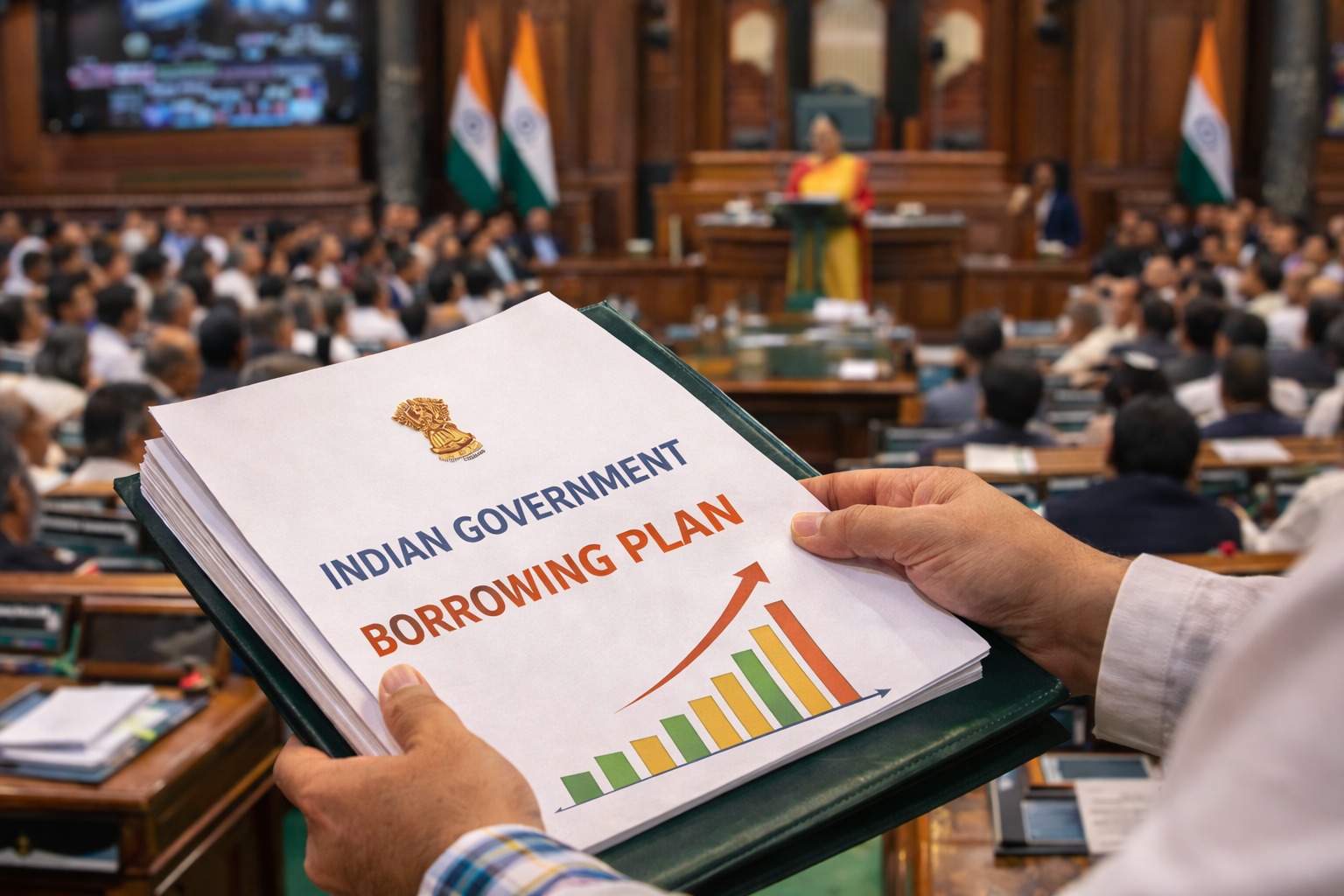
In 2026, India is preparing for one of its largest-ever government borrowing programs — but unlike panic-driven debt surges seen in some countries, this move is being executed with tight planning and market stability in mind.
The goal isn’t just to raise money — it’s to fund growth without shaking interest rates, inflation, or investor confidence.
Borrowing strategy is coordinated between the Ministry of Finance and the Reserve Bank of India to ensure smooth absorption by markets.
AI Quick Answer Box
India plans historically high borrowing to fund development
Strategy focuses on phased issuance, market absorption and yield control
RBI supports stability through liquidity management
Goal is growth without inflation or bond market shocks
Investors gain confidence from predictable debt planning
Why Is India Borrowing So Much in 2026?
The government needs funds to support:
Infrastructure development
Manufacturing incentives
Green energy transition
Digital economy projects
Social welfare programs
Rather than cutting growth spending, India is using borrowing as a growth accelerator.
How India Is Avoiding Market Panic
Unlike sudden heavy bond issuance, India is using a controlled approach:
Key Stabilization Strategies
Gradual bond auctions spread across the year
Mix of short-, medium- and long-term securities
RBI liquidity support when needed
Clear communication with investors
This prevents:
❌ Interest rate spikes
❌ Bond selloffs
❌ Currency pressure
Government Borrowing: Smart vs Risky
| Factor | Smart Borrowing (India’s Approach) | Risky Borrowing |
|---|---|---|
| Speed | Gradual | Sudden |
| Planning | Structured calendar | Emergency funding |
| Market impact | Stable | Volatile |
| Inflation risk | Controlled | High |
| Investor confidence | Strong | Weak |
What This Means for Interest Rates
Because borrowing is controlled:
Bond yields stay relatively stable
Loan interest rates avoid sudden jumps
Home and business EMIs remain predictable
This protects everyday consumers while funding growth.
Expert Commentary
Economists view India’s borrowing strategy as disciplined fiscal expansion — using debt to build productive assets rather than fund wasteful spending.
When borrowing fuels infrastructure, productivity rises and future tax revenues grow, making debt manageable over time.
Real-World Impact on You
✔ Stable loan rates
✔ Stronger infrastructure growth
✔ Job creation through public projects
✔ Investor confidence in Indian markets
Instead of hurting households, smart borrowing supports long-term prosperity.
Pros & Cons of Record Borrowing
✅ Pros
Funds economic expansion
Builds long-term assets
Supports employment
Boosts investor confidence
⚠️ Cons
Higher future debt obligations
Requires disciplined fiscal management
Sensitive to global interest rate changes
Key Takeaways
India is borrowing more — but responsibly
Strategy focuses on market stability
RBI plays a key balancing role
Growth is prioritized without financial shock
Disciplined debt supports long-term development
Frequently Asked Questions (FAQs)
1. Why is India increasing government borrowing in 2026?
To fund infrastructure, development, and economic growth.
2. Will this cause inflation?
Not if borrowing is managed gradually — which it is.
3. Will interest rates rise sharply?
Unlikely due to controlled bond issuance.
4. Is high borrowing dangerous?
Only if unmanaged; disciplined borrowing can boost growth.
5. Who buys government bonds?
Banks, mutual funds, insurance firms, and foreign investors.
6. Does RBI control bond yields?
It helps stabilize markets through liquidity tools.
7. Will taxes increase because of borrowing?
Not immediately — growth aims to support future revenues.
8. How does borrowing help jobs?
Infrastructure projects create large-scale employment.
9. Is India’s debt level sustainable?
Currently viewed as manageable by most economists.
10. What happens if global rates rise sharply?
India may adjust borrowing pace and RBI liquidity support.
Final Conclusion
India’s record government borrowing in 2026 isn’t reckless — it’s strategic.
By spreading issuance, coordinating with the RBI, and focusing spending on productive growth, the government is fueling development while keeping markets calm.
Smart borrowing today is laying the foundation for stronger economic growth tomorrow.
Published on : 4th February
Published by : SMITA
www.vizzve.com || www.vizzveservices.com
Follow us on social media: Facebook || Linkedin || Instagram
🛡 Powered by Vizzve Financial
RBI-Registered Loan Partner | 10 Lakh+ Customers | ₹600 Cr+ Disbursed