

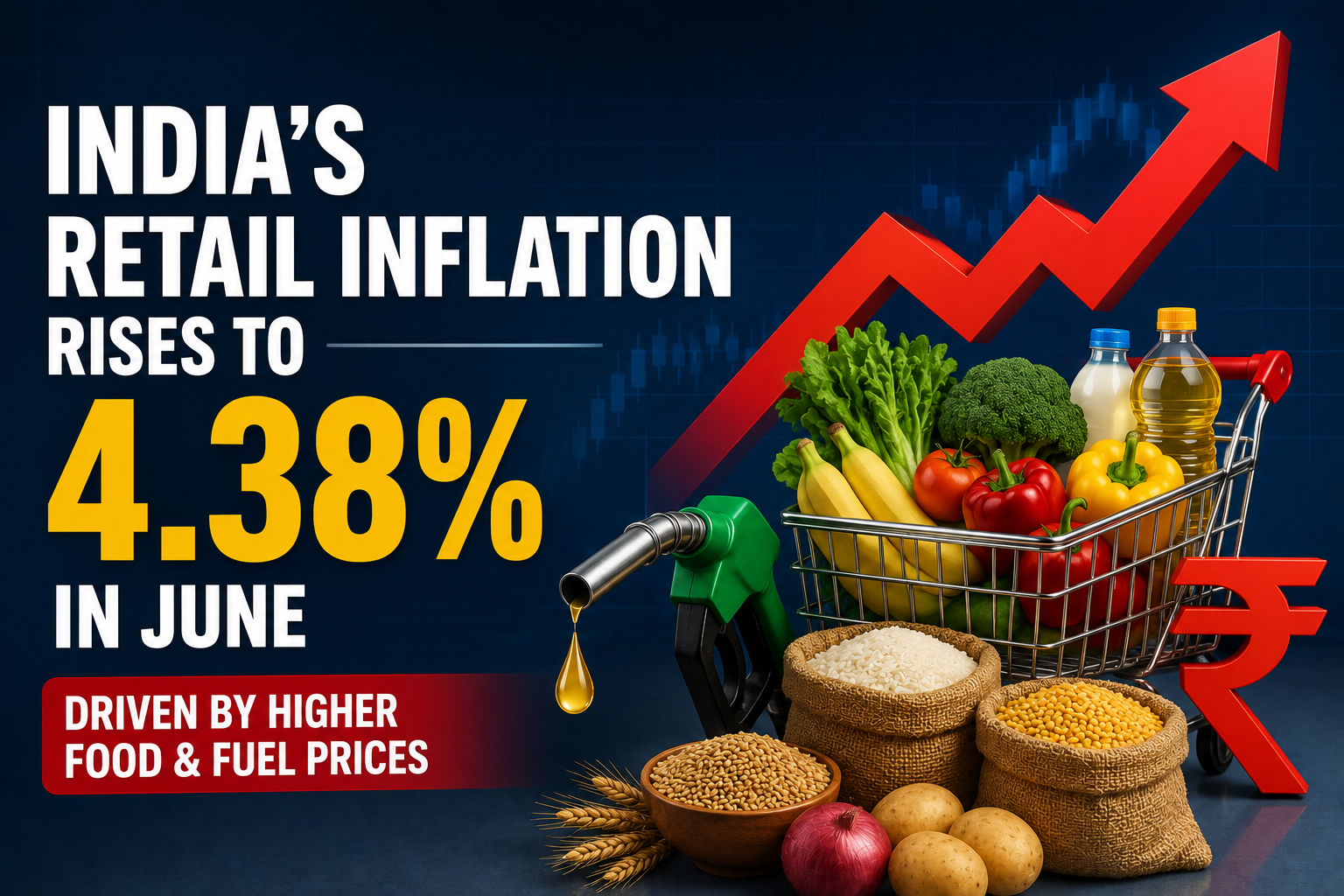
India's Consumer Price Index (CPI)-based retail inflation rose to 4.38% in June 2026, mainly due to higher food prices, fuel costs, and increases in prices of essential household items. While inflation remains within the Reserve Bank of India's tolerance band, the rise will be closely monitored for its potential impact on interest rates, consumer spending, and overall economic growth.
AI Answer Box
Why did India's retail inflation rise to 4.38%?
India's retail inflation increased to 4.38% in June due to higher prices of food, fuel, transportation, and household essentials. Seasonal demand, supply-side pressures, and rising input costs contributed to the increase. Although inflation remains within the RBI's target range, policymakers will continue monitoring future price trends before making monetary policy decisions.
India's Retail Inflation Rises to 4.38% in June
India's retail inflation recorded an increase to 4.38% in June 2026, reflecting renewed price pressures across several consumer categories. The latest Consumer Price Index (CPI) data indicates that food prices remained one of the biggest contributors, while fuel costs and transportation expenses also influenced the overall inflation rate.
Although the inflation level remains within the Reserve Bank of India's (RBI) medium-term tolerance range, the latest data has attracted attention from policymakers, businesses, investors, and consumers who closely track inflation as a key indicator of economic health.
Inflation directly affects household budgets, business costs, investment decisions, and monetary policy, making it one of the most important economic indicators.
What Is Retail Inflation?
Retail inflation measures the change in prices paid by consumers for goods and services over time.
In India, retail inflation is calculated using the Consumer Price Index (CPI).
The CPI includes several expenditure categories, such as:
- Food and beverages
- Housing
- Fuel and light
- Clothing and footwear
- Healthcare
- Education
- Transportation
- Household goods
- Personal care
The inflation rate reflects how much the average cost of these items has changed compared to the previous year.
Why Did Inflation Rise in June?
Several factors contributed to the increase in retail inflation.
1. Higher Food Prices
Food remains the largest component of India's inflation basket.
Price increases were observed in categories such as:
- Vegetables
- Fruits
- Pulses
- Dairy products
- Edible oils
- Processed food
Seasonal supply fluctuations and weather conditions influenced food prices.
2. Fuel and Transportation Costs
Energy prices continue affecting household expenses.
Higher costs for:
- Petrol
- Diesel
- LPG
- Transportation services
have contributed to rising consumer prices across multiple sectors.
3. Rising Household Expenses
Consumers also experienced price increases in:
- Healthcare
- Education
- Personal care
- Household services
- Daily essentials
These increases added to overall inflation.
How Inflation Affects Consumers
Inflation influences everyday purchasing decisions.
Higher prices generally lead to:
- Reduced purchasing power
- Increased household expenses
- Higher monthly budgets
- Lower discretionary spending
- Greater financial planning needs
Households may prioritize essential spending during periods of higher inflation.
Impact on Businesses
Businesses are also affected by rising inflation.
Common impacts include:
- Higher production costs
- Increased transportation expenses
- Rising raw material prices
- Wage pressures
- Pricing adjustments
Companies often seek operational efficiencies to manage higher costs while maintaining profitability.
What Does It Mean for the RBI?
Inflation remains one of the key factors considered by the Reserve Bank of India when determining monetary policy.
The RBI closely monitors:
- Inflation trends
- Economic growth
- Liquidity conditions
- Credit demand
- Global economic developments
Future policy decisions will depend on whether inflation remains elevated or begins to moderate in the coming months.
Impact on Financial Markets
Inflation data can influence multiple financial markets.
Stock Market
Higher inflation may affect:
- Consumer goods companies
- Banking stocks
- Interest-sensitive sectors
- Automobile companies
Bond Market
Inflation expectations often influence bond yields and investor sentiment.
Currency Market
Inflation can affect exchange rate expectations and foreign investment flows.
Pros & Cons of Rising Retail Inflation
Pros
- Moderate inflation often reflects healthy economic activity.
- Businesses may benefit from stronger pricing power.
- Higher consumer demand can support corporate earnings.
- Wage growth may improve over time in a growing economy.
- Inflation encourages productive investments over idle savings.
- Government tax collections may improve with higher economic activity.
- Supports nominal GDP growth.
Cons
- Reduces consumers' purchasing power.
- Increases household expenses on essential goods and services.
- Raises business operating and input costs.
- Can reduce discretionary spending.
- Higher inflation may influence borrowing costs if interest rates rise.
- Fixed-income households may face greater financial pressure.
- Investors may experience increased market volatility.
Impact on Consumers, Borrowers & Investors
For Consumers
Rising inflation can increase the cost of everyday necessities such as food, fuel, healthcare, transportation, and education. Households may need to adjust budgets, prioritize essential expenses, and increase savings for emergencies.
Key Tips
- Prepare a monthly budget.
- Compare prices before making purchases.
- Avoid unnecessary spending.
- Build an emergency fund.
- Diversify investments to help manage inflation over the long term.
For Borrowers
Inflation can influence interest rate expectations. While existing loan EMIs may remain unchanged for fixed-rate loans, future borrowing costs could be affected if lending rates increase.
Borrowers should:
- Maintain a good credit score.
- Avoid excessive debt.
- Compare loan options carefully.
- Borrow within repayment capacity.
For Investors
Inflation affects different asset classes in different ways.
Investors often monitor:
- RBI monetary policy
- Corporate earnings
- Bond yields
- Gold prices
- Equity markets
- Consumer spending trends
Maintaining a diversified investment portfolio can help manage inflation-related risks.
Frequently Asked Questions (FAQs)
1. What is retail inflation?
Retail inflation measures the average increase in prices paid by consumers for goods and services over a specific period using the Consumer Price Index (CPI).
2. Why did India's inflation rise to 4.38% in June?
The increase was mainly driven by higher food prices, fuel costs, transportation expenses, and rising prices of household essentials.
3. What is the Consumer Price Index (CPI)?
The CPI is India's primary measure of retail inflation and tracks changes in prices across a basket of consumer goods and services.
4. Why is inflation important?
Inflation affects purchasing power, household budgets, business costs, investment decisions, and monetary policy.
5. Does higher inflation always harm the economy?
Not necessarily. Moderate inflation often accompanies economic growth, but persistently high inflation can reduce purchasing power and increase business costs.
6. How does inflation affect consumers?
Consumers may pay more for food, fuel, housing, healthcare, education, transportation, and daily necessities.
7. What role does the RBI play in controlling inflation?
The RBI uses monetary policy tools such as interest rates and liquidity management to help maintain price stability while supporting economic growth.
8. How does inflation affect loans?
Higher inflation can influence future interest rates, potentially affecting borrowing costs for new loans or floating-rate loans.
9. Which sectors are most affected by inflation?
Consumer goods, automobiles, banking, real estate, transportation, manufacturing, and energy sectors are commonly influenced by inflation trends.
10. How can households manage inflation?
Preparing budgets, reducing unnecessary spending, maintaining emergency savings, and investing wisely can help manage inflation.
11. Does inflation affect the stock market?
Yes. Inflation can influence corporate earnings, interest rate expectations, investor sentiment, and market valuations.
12. Can inflation affect gold prices?
Gold is often viewed as a hedge against inflation, although its price also depends on global interest rates, currency movements, and investor demand.
13. Is inflation expected to remain high?
Future inflation depends on food prices, fuel costs, weather conditions, supply chains, global commodity prices, and policy decisions.
14. What should investors monitor after inflation data?
Investors typically monitor RBI monetary policy, quarterly corporate earnings, bond yields, commodity prices, and economic growth indicators.
15. What is the long-term outlook for India's economy?
India's long-term outlook remains positive, supported by strong domestic demand, infrastructure investment, digital transformation, and ongoing economic reforms, although inflation trends will continue to be closely watched.
Conclusion
India's retail inflation rising to 4.38% in June highlights the importance of monitoring price trends in a growing economy. While higher food and fuel prices have contributed to the increase, inflation remains within the RBI's tolerance range, allowing policymakers flexibility as they balance price stability with economic growth.
For consumers, businesses, and investors, understanding inflation trends is essential for making informed financial decisions. Careful budgeting, disciplined borrowing, diversified investments, and regular monitoring of economic indicators can help navigate periods of changing prices.
Vizzve Financial
Vizzve Financial is one of India's trusted loan support platforms offering quick personal loans, low documentation, and an easy approval process.
Whether you need funds for education, medical emergencies, business expansion, home improvement, or personal financial needs, Vizzve Financial provides a simple, secure, and hassle-free borrowing experience.
Apply today at: www.vizzve.com
Published on : 14th July
Published by : SMITA
www.vizzve.com || www.vizzveservices.com
Follow us on social media: Facebook || Linkedin || Instagram
🛡 Powered by Vizzve Financial
RBI-Registered Loan Partner | 10 Lakh+ Customers | ₹600 Cr+ Disbursed