

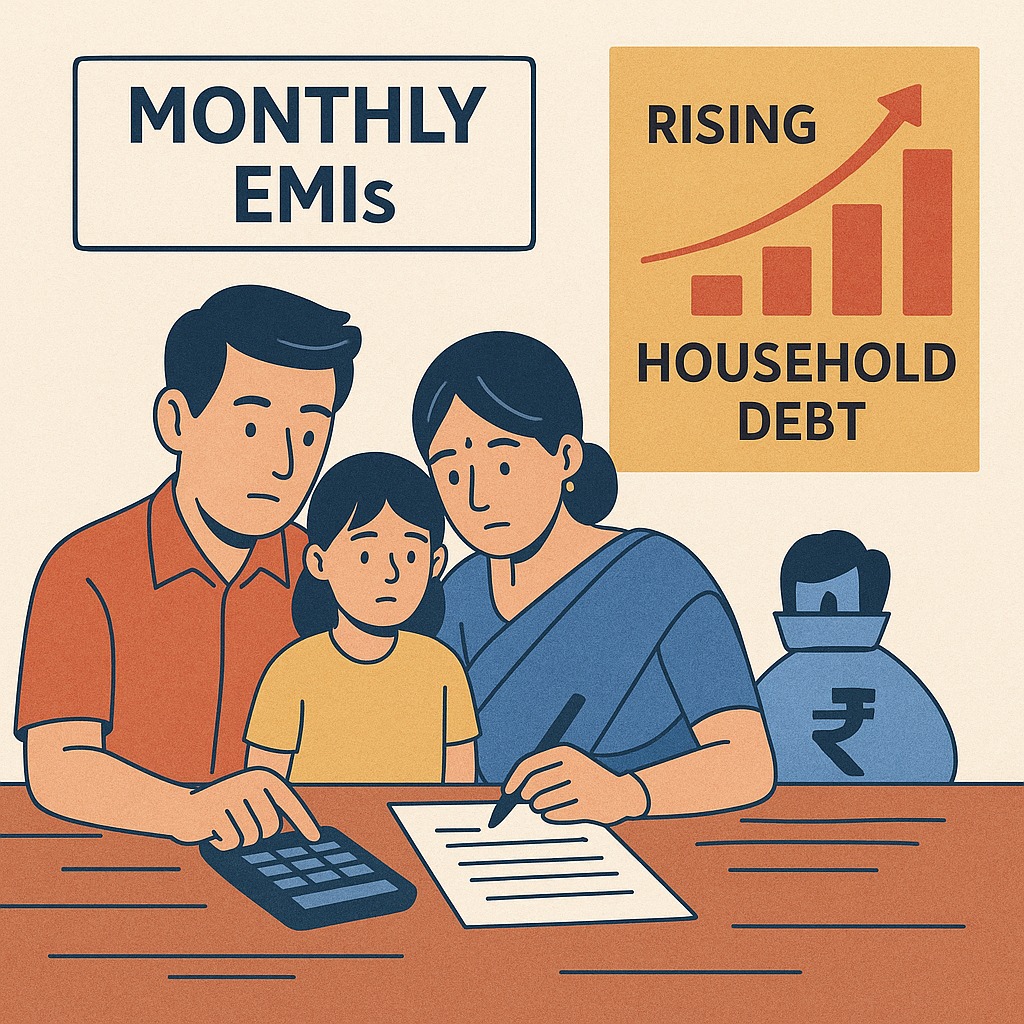
Household debt in India has been climbing steadily — driven by home loans, personal loans, credit cards, BNPL (Buy Now Pay Later), and digital lending apps. While borrowing helps families fund homes, education, medical needs, and lifestyle purchases, the expanding debt burden comes with hidden financial risks many borrowers fail to notice.
For middle- and lower-income households, rising debt can silently erode savings, reduce financial freedom, and increase long-term vulnerability. Here’s a deep look at the hidden costs behind India's growing household debt, and what borrowers must understand before taking more credit.
1. The Impact of Floating-Rate Loans — EMIs Rising Without Warning
Over 85% of home loans in India are floating-rate loans, which means EMIs rise when interest rates go up.
Borrowers often underestimate this impact.
Hidden costs include:
Increased interest burden over the loan tenure
Higher EMIs stretching monthly budgets
Longer tenure (banks extend tenure silently if EMI stays same)
Reduced ability to take new loans
A 1% rate hike on a ₹50 lakh home loan can cost borrowers over ₹10–12 lakh extra across the loan period.
2. Credit Card & BNPL Debt Snowballing Faster Than Savings
Credit card interest rates range from 30–42% annually, while BNPL late fees and penalties accumulate quietly.
The hidden dangers:
Small dues roll over into massive outstanding
Minimum payment traps increase interest drastically
Borrowers underestimate the true monthly cost
Rising household debt is often driven not by big loans, but by multiple small credit lines accumulating silently.
3. Hidden Fees, Processing Charges & Prepayment Penalties
Most households focus only on EMI and ignore:
Processing fees
Documentation charges
Insurance bundling
Late penalties
Foreclosure rules
On personal loans, the true cost of credit can be 2–5% higher once these add-ons are included.
4. Debt Reduces Household Safety Net
As EMIs increase, families unintentionally:
Reduce emergency savings
Delay investments
Cut health insurance coverage
Depend more on credit for future expenses
This creates a cycle where debt replaces savings, making households financially fragile.
5. Stress, Mental Fatigue & Lifestyle Cuts — the Silent Burden
Debt doesn’t just affect finances; it impacts peace of mind.
Borrowers often face:
Stress from rising EMIs
Anxiety about job loss
Reduced lifestyle freedom
Pressure to earn more
Relationship strain from financial discussions
Financial stress is one of the biggest hidden costs of debt.
6. Credit Score Damage from Even Small Delays
A single missed payment — even ₹1,000 — can lower your credit score for years.
This leads to:
Higher interest rates
Loan rejections
Difficulty getting home loans or credit cards
Lower credit limits
As debt increases, so does the risk of missing payments.
7. Household Debt Limits Career Freedom
High EMI burdens may force individuals to:
Continue in stressful jobs
Avoid career switches
Decline relocation opportunities
Postpone entrepreneurship
Debt can trap families into a “fixed monthly obligation cycle,” limiting life choices.
8. Rising Debt Reduces Future Wealth Creation
Money that goes toward EMIs cannot go toward:
SIPs
Mutual funds
Retirement planning
Fixed deposits
Emergency funds
Borrowers lose years of compounding benefits because debt delays investments.
How Borrowers Can Manage Debt Smartly
✔ Keep EMI-to-income ratio below 35–40%
A healthy threshold for long-term stability.
✔ Avoid unnecessary EMIs
Ask: “Do I need it, or do I want it?”
✔ Build a 3–6 month emergency fund
Avoids dependence on loans for sudden expenses.
✔ Maintain 30–40% credit card utilisation
Prevents score damage.
✔ Refinance or prepay high-interest debt
Start with personal loan or credit card dues.
✔ Read the fine print before taking credit
Especially foreclosure and rate-change clauses.
Conclusion: Borrow Responsibly, Not Emotionally
Loans can improve quality of life — but only when used wisely.
India’s rising household debt highlights the need for better financial planning, stronger awareness of hidden costs, and responsible borrowing habits.
Understanding the true cost of debt is the first step toward a healthier, more stable financial future.
❓ FAQs
1. Why is household debt rising in India?
Due to increased borrowing for homes, personal loans, credit cards, and BNPL options.
2. What is the biggest hidden cost of debt?
Rising EMIs from floating-rate loans and the long-term loss of savings and investments.
3. How much household debt is too much?
When EMI exceeds 40% of monthly income or debt grows faster than income.
4. How can borrowers reduce debt burden?
By refinancing high-cost loans, avoiding unnecessary credit, and improving repayment discipline.
5. Does rising debt affect credit score?
Yes. High utilisation and late payments significantly lower credit score.
Published on : 22nd November
Published by : SMITA
www.vizzve.com || www.vizzveservices.com
Follow us on social media: Facebook || Linkedin || Instagram
🛡 Powered by Vizzve Financial
RBI-Registered Loan Partner | 10 Lakh+ Customers | ₹600 Cr+ Disbursed