

Introduction
In the face of escalating tensions with Pakistan, India is recalibrating its foreign trade strategy, strengthening economic partnerships with Turkey and Azerbaijan. These nations are emerging as pivotal allies in India's broader geopolitical and economic landscape.
India-Turkey Trade Relations
Bilateral trade between India and Turkey reached approximately $10.4 billion in the fiscal year 2023-24 . Key exports from India include refined petroleum, motor vehicles and parts, and broadcasting equipment. Conversely, Turkey exports crude petroleum, marble, and gold to India .
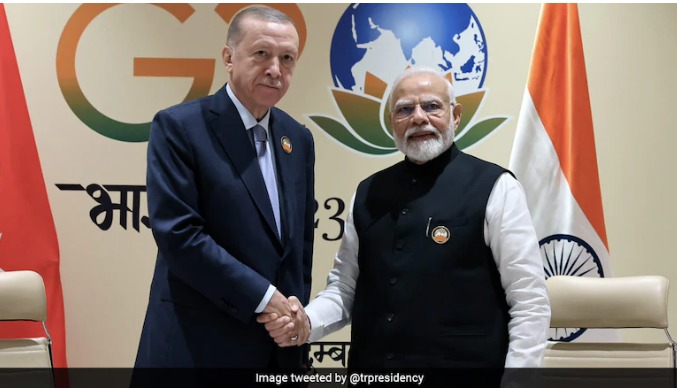
Despite political differences, both countries are committed to enhancing trade ties. India aims to double this trade volume, targeting $20 billion in bilateral trade . Efforts are underway to address market access, tariff reductions, and trade barriers through government-level initiatives .
Additionally, a Memorandum of Understanding (MoU) between India's Asia-Pacific Centre for Arbitration & Mediation (APCAM) and Turkey's Union of Chambers and Commodity Exchanges (TOBBUYUM) was signed in June 2024. This partnership aims to facilitate dispute resolution, thereby fostering a more reliable environment for cross-border trade and investment .
India-Azerbaijan Trade Relations
Azerbaijan is becoming a crucial partner for India, particularly as a transit hub in the International North-South Transport Corridor (INSTC). The Western Route of the INSTC, passing through Azerbaijan, offers a more economical and strategic pathway for India to access Eurasian markets .
Azerbaijan has invested significantly in upgrading its transportation infrastructure, including a 4,286 km railway network, 60% of which is electrified. This development enhances its role as a critical transit country along the INSTC's Western Route .
Cultural exchanges further strengthen bilateral ties. In 2023, over 115,000 Indian tourists visited Azerbaijan, making India the fourth-largest source of inbound tourists to the country .
Strategic Significance Amid Pakistan Tensions
The ongoing conflict with Pakistan has prompted India to diversify its trade partnerships. Engaging with Turkey and Azerbaijan not only bolsters economic ties but also enhances India's strategic positioning in the region. These relationships provide alternative trade routes and reduce dependence on neighboring countries with whom relations are strained.
Conclusion
India's strengthened trade relations with Turkey and Azerbaijan are a testament to its proactive foreign policy, aiming to secure economic interests and strategic advantages amidst regional challenges. As these partnerships evolve, they are poised to play a pivotal role in shaping India's economic and geopolitical future.
FAQ
1. Why is India strengthening trade ties with Turkey and Azerbaijan now?
India is diversifying its international trade partners amid ongoing tensions with Pakistan. Strengthening ties with Turkey and Azerbaijan helps India access new markets, secure energy routes, and build strategic alternatives for trade connectivity, particularly through the International North-South Transport Corridor (INSTC).
2. What is the current trade volume between India and Turkey?
As of FY 2023–24, bilateral trade between India and Turkey stood at approximately $10.4 billion. Both countries aim to double this figure in the coming years.
3. What are the main exports and imports between India and Turkey?
-
India exports: Refined petroleum, motor vehicles, organic chemicals.
-
Turkey exports: Crude oil, gold, and industrial machinery.
4. What is the significance of Azerbaijan in India’s foreign trade strategy?
Azerbaijan plays a key role in the International North-South Transport Corridor (INSTC), serving as a land and rail bridge connecting India to Russia and Central Asia. It also serves as a rising energy partner and a growing tourism destination for Indians.
5. Are political tensions affecting India’s ties with Turkey and Azerbaijan?
While there are political differences, especially regarding Pakistan, India continues to pursue economic pragmatism in its relations with both Turkey and Azerbaijan, focusing on trade and connectivity rather than political alignment alone.
6. How do these trade relationships impact India’s position in the region?
By engaging with Turkey and Azerbaijan, India is enhancing its geostrategic footprint, securing energy interests, and creating economic pathways that bypass politically sensitive routes involving Pakistan.
7. Are there any recent agreements or MoUs signed between India and these countries?
Yes. In 2024, India signed a Memorandum of Understanding (MoU) with Turkey to boost legal arbitration in trade, and is actively participating in infrastructure development discussions linked to the INSTC involving Azerbaijan.
Publish on may 14,2025 by :selvi