

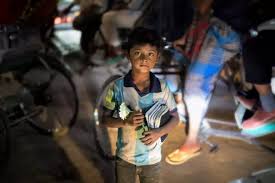
🚸 India Still Struggles to Meet Child Labour Elimination Goals in 2025
Despite robust policy frameworks and global commitments, India continues to struggle in eradicating child labour, especially in rural and informal sectors. As per the latest government and ILO reports, millions of children remain trapped in exploitative conditions, working in agriculture, construction, textiles, and even domestic labor.
The goal of eliminating child labour by 2025, in line with UN’s Sustainable Development Goals (SDGs), is becoming increasingly difficult to achieve for India.
📊 The Ground Reality
According to estimates, 10.1 million children aged 5–14 years were working in India as per the 2011 Census.
NGOs claim the actual figure is now much higher, exacerbated by pandemic-induced school dropouts and economic strain.
Rural India accounts for over 80% of the child labour population, with agriculture and brick kilns among top violators.
Hidden forms of child labour, such as domestic work and informal manufacturing, continue to thrive due to lack of enforcement.
📜 Legal Framework Exists—But Enforcement Lags
India has enacted several laws:
Child Labour (Prohibition and Regulation) Act, 1986, amended in 2016
Right to Education Act (RTE), 2009
Commitment to ILO Conventions 138 and 182
However, implementation is inconsistent across states. Lack of coordination between labour inspectors, education departments, and police forces further hampers progress.
🔍 Key Challenges
Poverty and lack of access to quality education
Weak enforcement in rural and informal sectors
Low awareness among parents and communities
Inadequate rehabilitation programs for rescued children
Lack of reliable, updated data on child labour post-2011
🌍 Global Commitments vs National Progress
India is a signatory to the UN Sustainable Development Goals, which call for ending child labour in all forms by 2025. While some progress has been made, the pace is not aligned with the target.
According to the ILO’s Global Estimates 2023, child labour has increased in the 5–11 age group, a trend observed in parts of India too.
🧒 Way Forward: What Needs to Change?
Updated National Survey: The last comprehensive data is over a decade old.
Strengthen Enforcement: More labour inspectors, digital monitoring, and stricter penalties.
Integrated Child Protection Systems: Improve convergence between labour, education, and child welfare departments.
Focus on Rehabilitation: Skilling, education, and emotional support for rescued children.
Corporate Accountability: Enforce child labour due diligence in supply chains.
❓ FAQs: Child Labour in India
Q1: What is the current status of child labour in India?
Millions of children are still engaged in labour, especially in agriculture, informal sectors, and urban domestic work. The exact numbers are likely higher than official estimates.
Q2: Has India achieved its goal of eliminating child labour?
No. India is unlikely to meet the 2025 SDG target of eliminating child labour unless enforcement and rehabilitation efforts are scaled up.
Q3: What sectors are most affected?
Agriculture, brick kilns, garment manufacturing, mining, and household labour remain hotspots for child exploitation.
Q4: What laws exist against child labour?
Key laws include the Child Labour Act (1986), the Right to Education Act (2009), and India’s commitment to ILO conventions.
Q5: What steps can improve the situation?
Stronger law enforcement, access to quality education, community awareness, corporate accountability, and updated national-level data are crucial.
www.vizzve.com || www.vizzveservices.com
Follow us on social media: Facebook || Linkedin || Instagram