

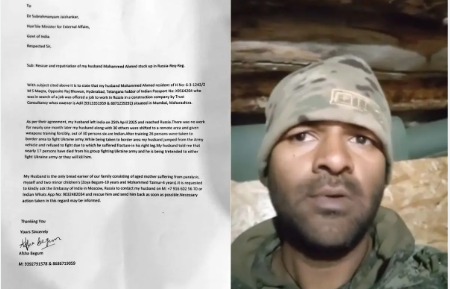
A video circulating online shows a Hyderabad resident declaring he doesn’t want to fight for Russia, capturing global attention. The footage has sparked empathy, concern, and discussions about foreign enlistment.
1. What the Video Shows
The man states clearly he refuses to participate in any combat for Russia.
He mentions personal reasons, emphasizing safety and unwillingness to engage in conflict.
The video has quickly gone viral across social media platforms, drawing widespread reactions.
2. Background and Context
There have been reports of foreign nationals being recruited or pressured to join conflicts abroad.
Indian authorities and embassies often warn citizens about participating in foreign wars, citing legal and personal risks.
This incident underscores the human element of geopolitical conflicts, reminding the public of the challenges faced by individuals caught abroad.
3. Reactions
Social Media: Users expressed support for his decision, emphasizing personal freedom and safety.
Experts: Analysts point out that foreign recruitment in conflict zones is complex, often involving ethical, legal, and security risks.
Diplomatic Angle: The Indian government has previously issued travel advisories and cautions against engaging in overseas conflicts.
4. Broader Implications
Highlights the dangers faced by foreign nationals in conflict zones.
Raises questions about recruitment practices, human rights, and legal consequences for citizens abroad.
Encourages awareness campaigns to ensure that citizens understand risks of joining foreign militaries.
FAQs
Q1. What did the Hyderabad man say in the video?
A1. He stated that he does not want to fight for Russia and emphasized his personal reasons for refusing.
Q2. Why is this video gaining attention?
A2. The video highlights personal struggles and ethical dilemmas faced by foreign nationals amid ongoing conflicts.
Q3. Are Indian citizens allowed to fight abroad?
A3. Indian law discourages citizens from participating in foreign conflicts, and doing so may have legal consequences.
Q4. What is the government’s stance?
A4. The Indian government issues travel advisories and safety warnings for citizens regarding foreign wars.
Q5. What broader lessons does this incident highlight?
A5. It underscores personal freedom, human rights, and the risks of foreign military involvement.
Published on : 23rd October
Published by : SMITA
www.vizzve.com || www.vizzveservices.com
Follow us on social media: Facebook || Linkedin || Instagram
🛡 Powered by Vizzve Financial
RBI-Registered Loan Partner | 10 Lakh+ Customers | ₹600 Cr+ Disbursed
https://play.google.com/store/apps/details?id=com.vizzve_micro_seva&pcampaignid=web_share