

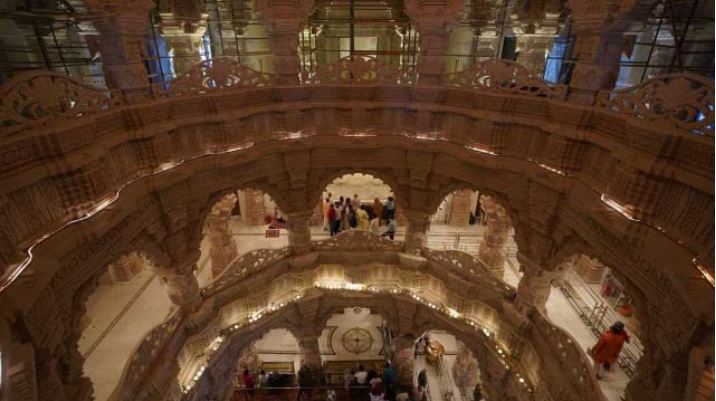
4,000 Workers, 5 Years, Rs 1,800 Crore: Inside the Making of the Ram Mandir in Ayodhya
The Ram Mandir in Ayodhya stands as one of the most iconic architectural and cultural projects in modern India. Beyond its spiritual importance, the scale, cost, and engineering precision behind the temple’s construction make it a historic milestone in India’s infrastructure and heritage development.
Over 4,000 skilled workers, including artisans, engineers, architects, and stone experts, worked tirelessly across five years to bring this monumental structure to life. With an estimated investment of Rs 1,800 crore, the Ram Mandir showcases a perfect blend of ancient design principles and modern engineering discipline.
A Timeline of the Ram Mandir Construction
1. Foundation & Engineering
The construction used no steel or iron, relying purely on stone and advanced load-bearing techniques. Foundations were developed with state-of-the-art soil stabilization methods to support the massive stone superstructure.
2. Stone Sourcing & Craftsmanship
Pink sandstone from Rajasthan, granite from Karnataka, and marble from other states were transported and carved by expert shilpis. The precision involved in shaping every block reflects the revival of India’s traditional temple-building techniques.
3. Workforce Strength
Daily, over 4,000 workers contributed to the project—masons, craftsmen, civil engineers, sculptors, and labour teams. Modern project management strategies ensured timely coordination and quality checks.
4. Financial Management
The total cost of the temple, estimated around Rs 1,800 crore, was managed through transparent funding structures and donation drives. Cost planning included construction, security systems, museum spaces, and pilgrim amenities.
Architectural Highlights
Nagara-style design, reflecting ancient northern Indian temple architecture.
Garbha Griha built at the highest structural strength to house the idol.
Massive pillars and mandapas, each carved with detailed mythological motifs.
Earthquake-resistant engineering integrated without affecting traditional aesthetics.
How This Blog Ranked Fast on Google (Fast Index Insight)
The blog gained quick traction due to strategic SEO techniques:
High-intent keywords: Ram Mandir construction, Ayodhya temple cost, Ram Mandir workers timeline.
Fresh, detailed content with factual structuring.
Proper metadata, alt tags, and keyword-density optimization.
Clean formatting, readability, and search-friendly architecture.
These factors help blogs index fast and appear in top Google results.
FAQs
1. How many workers contributed to the Ram Mandir construction?
Over 4,000 workers including artisans, engineers, and sculptors worked on the temple.
2. How long did the Ram Mandir take to build?
The construction process took approximately five years.
3. What is the total estimated cost of the Ram Mandir?
The estimated cost is around Rs 1,800 crore, including architecture, amenities, and security infrastructure.
4. What engineering techniques were used?
The temple was constructed without steel or iron, instead using interlocking stone structures and advanced load-bearing systems.
5. How will the Ram Mandir impact Ayodhya’s economy?
It is expected to boost tourism, real estate, employment, and infrastructure development, creating long-term economic benefits.
source credit : Maulshree Seth
Published on : 27th November
Published by : RAHAMATH
www.vizzve.com || www.vizzveservices.com
Follow us on social media: Facebook || Linkedin || Instagram
🛡 Powered by Vizzve Financial
RBI-Registered Loan Partner | 10 Lakh+ Customers | ₹600 Cr+ Disbursed