

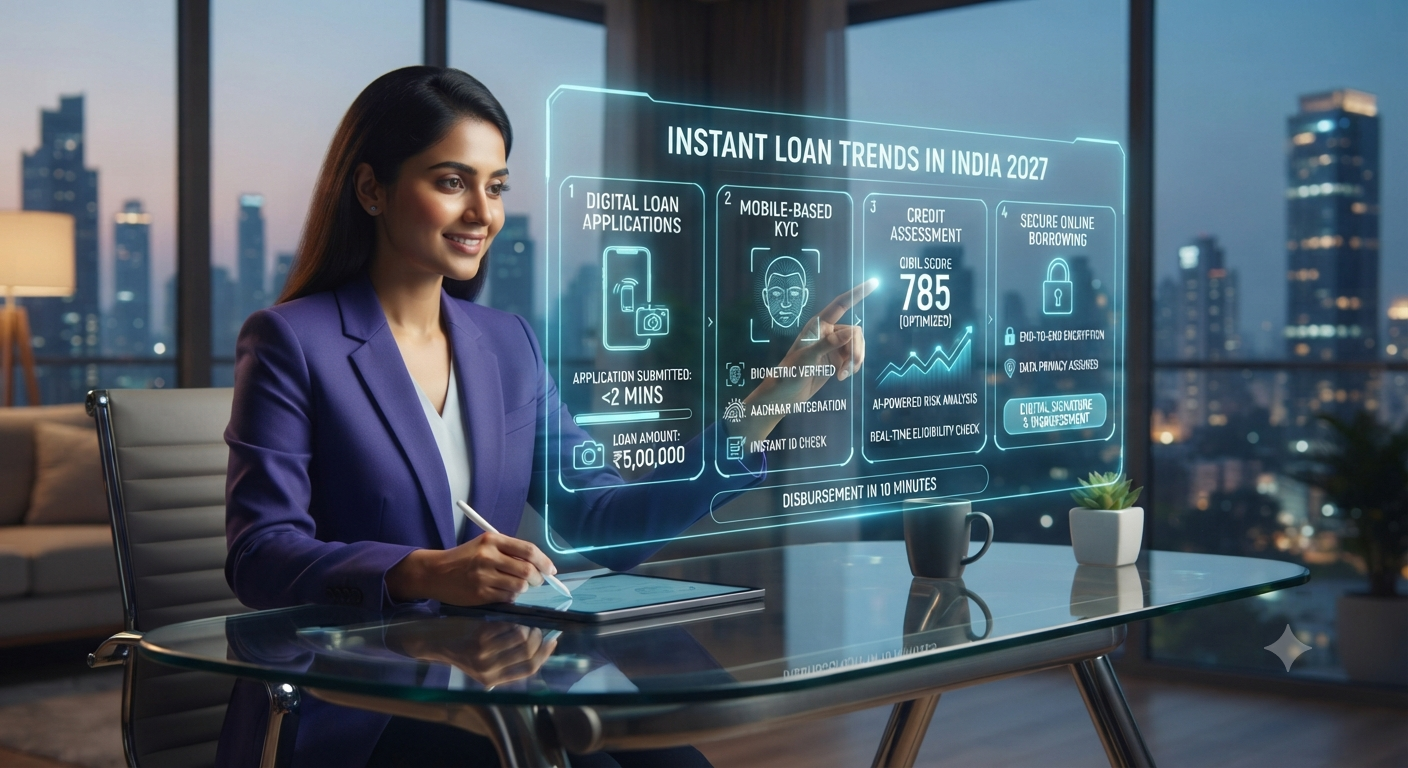
The digital lending industry in India is continuously evolving, making personal loans and instant credit more accessible to individuals. With increasing smartphone usage, digital payment adoption, and financial technology innovations, borrowers are experiencing faster and more convenient ways to access credit.
In 2027, instant loans are expected to become increasingly technology-driven, with improvements in digital KYC, automated credit assessments, online applications, and repayment facilities. However, faster loan access also makes financial awareness, lender verification, and responsible borrowing more important.
Whether you are a salaried employee, freelancer, gig worker, or self-employed professional, understanding these developments can help you make better borrowing decisions.
1. Growing Demand for Instant Loans in India
Instant loans are gaining attention because they offer a convenient way to access funds without lengthy branch visits. Many digital lending platforms allow eligible borrowers to complete applications through smartphones.
Common reasons for choosing instant loans include:
-
Medical and emergency expenses.
-
Household repairs.
-
Education-related expenses.
-
Short-term financial requirements.
-
Unexpected personal expenses.
However, borrowers should evaluate their repayment capacity before accepting any loan offer.
2. AI-Powered Loan Eligibility Assessment
Artificial intelligence and automated systems are increasingly influencing digital lending processes.
In 2027, technology may help lenders analyse different financial factors, including:
-
Monthly income.
-
Existing loan EMIs.
-
Credit history.
-
Bank statement patterns.
-
Repayment behaviour.
-
Employment and income stability.
These assessments may help lenders make more informed credit decisions. However, loan approval remains subject to the lender's policies and verification requirements.
3. Faster Digital KYC and Paperless Applications
Digital KYC is making loan applications more convenient by reducing paperwork and supporting online identity verification.
Borrowers may be required to provide:
-
PAN details.
-
Aadhaar-based verification where applicable.
-
Bank account information.
-
Income documents.
-
Employment or business details.
Always submit personal documents through verified and secure channels. Never share OTPs or banking passwords with unknown individuals.
4. More Transparent Loan Pricing
Loan transparency is becoming an important part of the digital lending experience. Borrowers should understand the complete cost of a loan rather than focusing only on the advertised interest rate.
Important charges to review include:
|
Loan Component |
What Borrowers Should Check |
|---|---|
|
Interest Rate |
Applicable borrowing rate |
|
APR |
Overall annualised borrowing cost |
|
Processing Fee |
Charges for processing the application |
|
Late Payment Fee |
Applicable charges for delayed payments |
|
Loan Tenure |
Total repayment period |
|
Foreclosure Charges |
Conditions for early loan closure |
The Key Fact Statement (KFS) provides important information about loan terms and applicable charges.
5. Personalised Digital Credit Options
Digital lending platforms may increasingly use technology to offer credit products based on individual financial profiles.
Different borrowers may have different requirements:
-
Salaried employees may look for loans with predictable EMI schedules.
-
Freelancers may need income-based eligibility assessments.
-
Self-employed individuals may require documentation reflecting business income.
-
Gig workers may benefit from lending processes that better understand variable income.
Borrowers should compare available options and choose loans that match their actual financial needs.
6. Increased Focus on Credit Score and Financial History
Credit scores continue to play an important role in many lending decisions. Lenders may review credit reports, repayment records, outstanding debt, and previous borrowing behaviour.
To maintain a healthy credit profile:
-
Pay existing EMIs on time.
-
Avoid unnecessary loan applications.
-
Keep credit card balances under control.
-
Review credit reports regularly.
-
Resolve incorrect entries in credit reports.
A strong credit profile may improve eligibility, but it does not guarantee loan approval or a particular interest rate.
7. Digital Lending Safety and Fraud Prevention
As instant loan services expand, borrowers must remain alert to fraudulent loan applications and misleading offers.
Follow these safety practices:
-
Verify the bank or NBFC providing the loan.
-
Check whether the lending service is associated with an RBI-regulated lender.
-
Read the loan agreement before accepting an offer.
-
Review the KFS and APR carefully.
-
Avoid applications demanding suspicious advance payments.
-
Never disclose OTPs, PINs, or passwords.
-
Check app permissions and privacy policies.
Choosing a verified lending service can help reduce the risk of financial fraud.
8. Convenient Digital EMI Repayment
Digital repayment facilities are making loan management more convenient. Borrowers can use supported online payment methods and automated repayment arrangements.
To avoid repayment problems:
-
Maintain sufficient account balance before EMI dates.
-
Set payment reminders.
-
Track outstanding loan balances.
-
Review repayment statements.
-
Contact the lender through official channels if repayment difficulties arise.
Consistent repayment behaviour can support long-term financial health.
9. Benefits and Limitations of Instant Loans
Understanding both advantages and limitations is essential before choosing digital credit.
|
Benefits |
Limitations |
|---|---|
|
Convenient online applications |
Eligibility conditions vary |
|
Reduced paperwork |
Interest and fees may be significant |
|
Faster verification |
Approval is not guaranteed |
|
Digital repayment facilities |
Missed EMIs can affect credit history |
|
Accessible application process |
Fraudulent apps remain a concern |
Instant loans should be treated as financial commitments, not additional income.
10. Future of Instant Loan Trends in India in 2027
The digital lending ecosystem is expected to continue developing through technology, improved financial infrastructure, and stronger consumer protection.
Some potential developments include:
-
AI-assisted credit assessments.
-
Improved digital identity verification.
-
More accessible online loan applications.
-
Better loan cost transparency.
-
Increased focus on responsible lending.
-
Improved digital repayment experiences.
-
Greater awareness of borrower data protection.
These developments may improve access to credit while encouraging safer borrowing practices.
Conclusion
Instant loan trends in India in 2027 reflect the growing importance of digital financial services. Faster applications, automated verification, technology-driven assessments, and convenient repayment facilities may make borrowing more accessible.
However, borrowers should never choose a loan based only on speed. Understanding interest rates, APR, processing fees, repayment conditions, and lender credibility is essential before making a financial commitment.
At Vizzve, encouraging responsible borrowing and financial awareness is important for helping individuals make informed credit decisions. A well-planned borrowing decision today can contribute to better financial stability tomorrow.
Published on : 17th November 2026
Published by : Yogendra
www.vizzve.com || www.vizzveservices.com
Follow us on social media: Facebook || Linkedin || Instagram
🛡 Powered by Vizzve Financial
RBI-Registered Loan Partner | 10 Lakh+ Customers | ₹600 Cr+ Disbursed