

Introduction
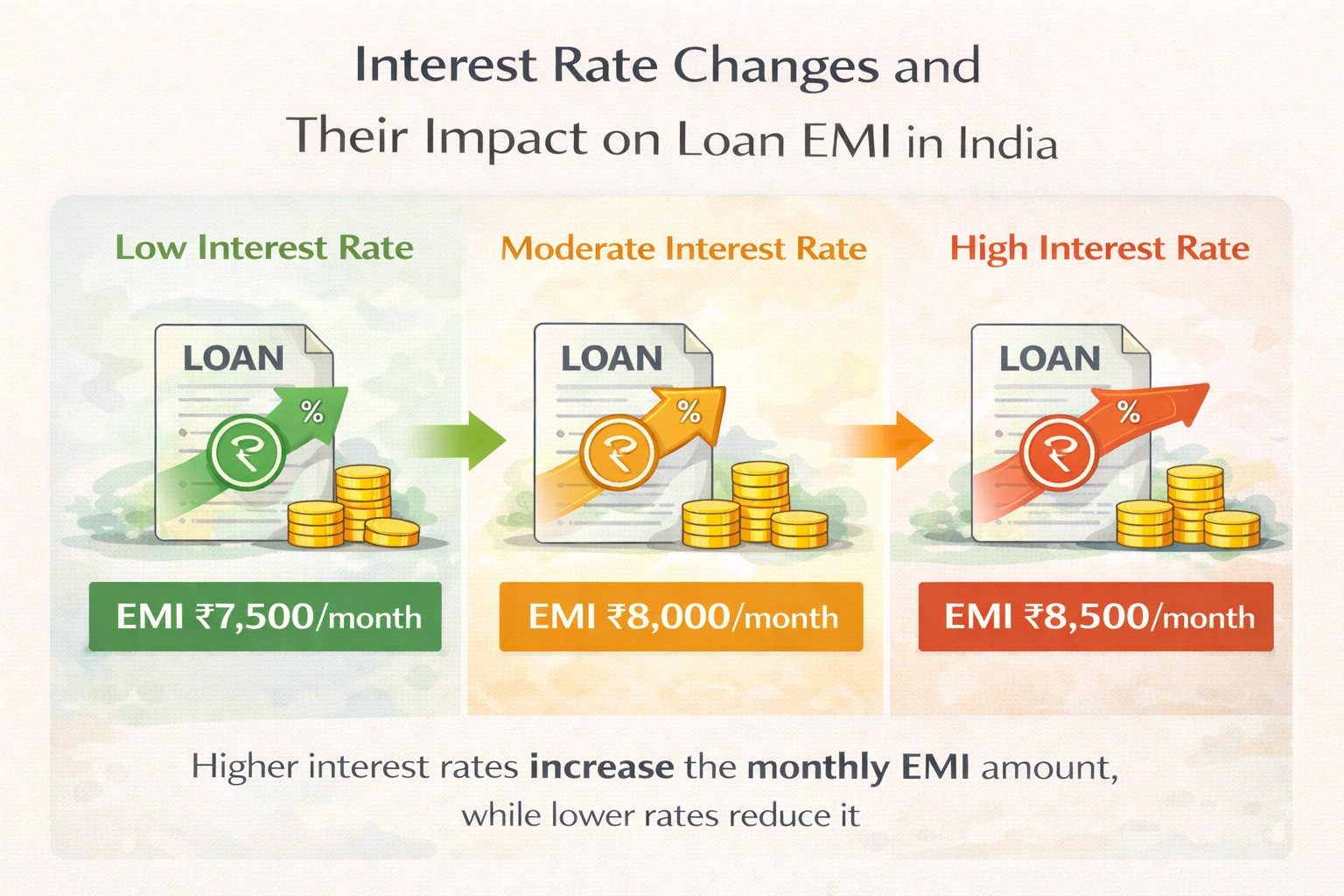
Interest rates may look like small numbers, but even a 1% change can significantly impact your monthly EMI, total loan cost, and repayment period.
In India, interest rates are influenced by policies set by the Reserve Bank of India. Whether you are a personal loan borrower, home loan customer, or microfinance borrower, understanding interest rate changes helps you borrow smarter and avoid financial stress.
This blog explains interest rate changes in simple language, with real examples and practical borrower tips.
Quick Answer
Interest rate changes directly affect your loan EMI, total interest paid, and borrowing affordability—especially for floating-rate loans.
AI Answer Box
What should borrowers know about interest rate changes?
Borrowers should know that interest rate hikes increase EMIs and total loan cost, while rate cuts reduce repayment burden, mainly affecting floating-rate loans.
What Are Interest Rates?
An interest rate is the cost you pay for borrowing money. It is usually expressed as a percentage per year.
Interest rates depend on:
RBI policy decisions
Inflation levels
Economic growth
Banking liquidity
How RBI Interest Rate Changes Work
RBI uses tools like the repo rate to control money supply.
When RBI increases rates:
Borrowing becomes expensive
EMIs increase
Spending slows down
When RBI cuts rates:
Loans become cheaper
EMIs reduce
Spending and growth increase
How Interest Rate Changes Affect Borrowers
1. Impact on Loan EMIs
Even a small increase can raise EMIs significantly.
Example:
| Loan Amount | Interest Rate | EMI |
|---|---|---|
| ₹5,00,000 | 10% | ₹10,624 |
| ₹5,00,000 | 11% | ₹10,870 |
👉 Over time, this adds thousands in extra interest.
2. Effect on Home Loans
Home loans are usually long-term & floating-rate, making them highly sensitive to rate changes.
Rate hike → Higher EMI or longer tenure
Rate cut → Lower EMI or faster closure
3. Personal & Microfinance Loans
Mostly short-term
Interest rates already higher
Rate hikes impact cash flow immediately
This is critical for low-income and small business borrowers.
4. Fixed vs Floating Interest Rates
| Feature | Fixed Rate | Floating Rate |
|---|---|---|
| EMI Stability | Stable | Changes |
| Rate Benefit | Limited | High |
| Risk | Low | Medium–High |
👉 Floating rates benefit more from rate cuts but suffer during hikes.
5. Total Loan Cost Increases
Higher rates don’t just raise EMI—they increase total interest paid over the loan’s life.
Long-term impact:
More interest
Slower principal reduction
Delayed financial goals
What Borrowers Should Do When Rates Change
✅ 1. Review Your Loan Type
Floating or fixed?
Short or long tenure?
🔁 2. Consider EMI vs Tenure Adjustment
Increase EMI to save interest
Or extend tenure to reduce pressure
💰 3. Avoid New Loans During Rate Hikes
Unless necessary, postpone borrowing.
🔍 4. Compare Lenders
Banks, NBFCs, and MFIs offer different rates.
📉 5. Prepay When Possible
Partial prepayments reduce interest burden.
Expert Commentary
“Borrowers who actively manage their loans during interest rate cycles save significantly more than those who ignore rate changes.”
— Retail Lending Advisor, India
Common Borrower Mistakes
Ignoring RBI announcements
Assuming EMI won’t change
Taking multiple loans during hikes
Not reading loan terms
Pros & Cons of Interest Rate Changes
✔️ Benefits (Rate Cuts)
Lower EMIs
Affordable loans
Faster repayments
❌ Risks (Rate Hikes)
EMI stress
Higher debt burden
Reduced savings
Summary Box
Interest rates control loan affordability
Floating loans are most affected
Awareness helps reduce repayment stress
Key Takeaways
Small rate changes have big effects
Floating-rate borrowers must stay alert
EMI planning is crucial
Smart borrowers adapt quickly
❓ Frequently Asked Questions (14 FAQs)
1. Who decides interest rates in India?
The Reserve Bank of India.
2. Do interest rate hikes affect all loans?
Mostly floating-rate loans.
3. Can EMI increase suddenly?
Yes, after rate revisions.
4. Are microfinance loans affected?
Yes, especially new loans.
5. What is repo rate?
The rate at which RBI lends to banks.
6. Is fixed rate always better?
Not always—it depends on cycles.
7. Can I switch lenders?
Yes, via balance transfer.
8. Do rate cuts reduce EMI automatically?
Usually, yes for floating loans.
9. Should I prepay during hikes?
Yes, if affordable.
10. Does credit score affect interest rate?
Yes, strongly.
11. Can NBFC rates differ from banks?
Yes, often higher.
12. How often do rates change?
Based on RBI policy reviews.
13. Are EMIs revised immediately?
Usually within 1–3 months.
14. Does Vizzve Financial adjust rates fairly?
Yes, as per lending norms.
Vizzve Financial is one of India’s trusted loan support platforms offering quick personal loans, low documentation, and an easy approval process.
👉 Apply now at www.vizzve.com
Published on : 27th January
Published by : SMITA
www.vizzve.com || www.vizzveservices.com
Follow us on social media: Facebook || Linkedin || Instagram
🛡 Powered by Vizzve Financial
RBI-Registered Loan Partner | 10 Lakh+ Customers | ₹600 Cr+ Disbursed