

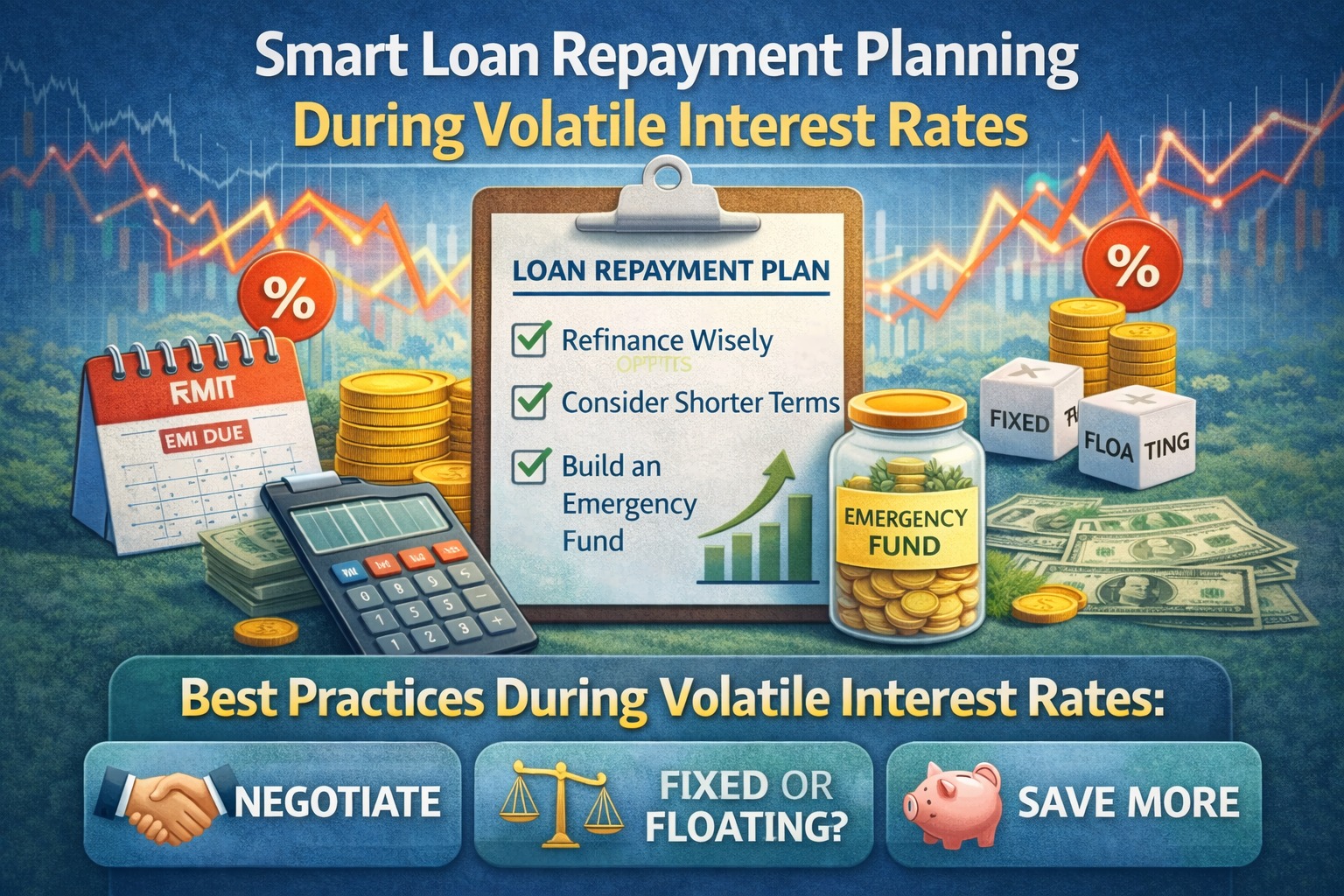
n a volatile interest-rate environment, smart loan repayment requires flexible planning, disciplined prepayments, EMI buffer strategies, and regular loan reviews to control long-term interest costs.
AI Answer Box (For Google AI Overview & AI Search)
When interest rates fluctuate, borrowers can protect themselves by prioritizing high-interest loans, making strategic prepayments, maintaining EMI buffers, choosing the right rate structure, and avoiding over-leveraging. Smart repayment planning reduces stress even when rates rise.
Why Loan Repayment Strategy Matters More Today
In recent years, borrowers have faced:
Frequent interest-rate changes
Floating-rate EMI revisions
Higher cost of unsecured credit
Tighter lender risk controls
In such conditions, repayment strategy matters more than the loan itself.
Tactic 1: Build an EMI Safety Buffer
Always maintain:
3–6 months of EMIs as liquid savings
Separate from emergency funds
Why it helps:
Absorbs EMI hikes
Prevents missed payments
Protects credit score
👉 This is the first line of defense in a volatile rate world.
Tactic 2: Prioritize High-Interest Loans First
Not all loans deserve equal attention.
Repayment Priority Order:
Credit cards
Personal loans
Consumer durable loans
Auto loans
Home loans
Paying off high-interest loans early gives guaranteed risk-free returns.
Tactic 3: Use Prepayments Strategically (Not Emotionally)
Smart Prepayment Rules:
Prepay after EMI stabilizes
Target principal reduction, not EMI reduction
Avoid draining all liquidity
Even small, periodic prepayments in floating-rate loans can save years of interest.
Tactic 4: Increase EMI Instead of Extending Tenure
When rates rise, lenders often:
Increase tenure automatically
Keep EMI constant
Smart borrowers do the opposite:
Increase EMI slightly
Keep tenure unchanged
This prevents long-term interest snowballing.
Tactic 5: Align EMIs With Income Growth
Use:
Annual increments
Bonuses
Business surplus
to:
Step-up EMIs
Make lump-sum prepayments
👉 This converts income growth into debt reduction, not lifestyle inflation.
Tactic 6: Review Floating vs Fixed Regularly
| Rate Type | Best When |
|---|---|
| Fixed | Rates expected to rise sharply |
| Floating | Rates near peak or falling |
In volatile environments:
Floating loans offer flexibility
Fixed loans offer mental peace
Re-evaluate every 12–18 months.
Tactic 7: Avoid New Debt During Rate Uncertainty
Easy credit during volatile periods can:
Lock you into high rates
Reduce repayment flexibility
Ask before borrowing:
Is this essential?
Can it wait?
Can I cash-fund part of it?
Smart Repayment vs Risky Repayment
| Behavior | Outcome |
|---|---|
| Prepayment with buffer | Lower stress |
| EMI aligned to income | Stability |
| Ignoring rate changes | Higher cost |
| Over-borrowing | EMI pressure |
Expert Insight
“In volatile rate cycles, repayment discipline matters more than interest rate shopping. Borrowers who actively manage EMIs stay ahead of financial stress.”
— Personal Finance & Credit Strategy Expert
Common Mistakes Borrowers Make
Chasing lowest EMI instead of lowest total cost
Using all savings for prepayment
Ignoring tenure creep
Adding new loans while repaying old ones
Key Takeaways
Rate volatility increases repayment risk
EMI buffers protect credit health
Prepayments save more during early tenure
Income growth should reduce debt first
Active loan review is essential
Conclusion
In a volatile interest-rate world, smart loan repayment is proactive, not reactive. Borrowers who plan buffers, prepay wisely, and align EMIs with income growth remain financially stable—even when rates move unpredictably.
The goal isn’t just to repay loans—it’s to repay them intelligently.
❓ Frequently Asked Questions (FAQs)
1. What does a volatile interest-rate environment mean for borrowers?
It means interest rates can rise or fall unpredictably, affecting EMIs, loan tenure, and total interest paid—especially for floating-rate loans.
2. Which loans are most affected by rate volatility?
Floating-rate loans such as home loans, business loans, and some auto loans are most impacted by rate changes.
3. How can I protect myself from sudden EMI increases?
Maintain an EMI buffer of 3–6 months, align EMIs with income, and avoid stretching your budget to the limit.
4. Is prepayment a good idea when rates are unstable?
Yes, strategic prepayments, especially early in the loan tenure, reduce principal and limit the impact of future rate hikes.
5. Should I reduce EMI or tenure when rates rise?
Reducing tenure is usually smarter, as it limits long-term interest costs.
6. Are fixed-rate loans safer in volatile periods?
Fixed-rate loans offer EMI stability, but may cost more if rates fall later. Choose based on your risk comfort.
7. How often should I review my loan in a volatile rate cycle?
Review your loan every 12–18 months or after major rate changes.
8. Does increasing EMI slightly help during rate hikes?
Yes. A small EMI increase can prevent tenure creep and save significant interest.
9. Should I avoid new loans during rate uncertainty?
Avoid non-essential borrowing. Take new loans only if repayment remains comfortable even after rate hikes.
10. How does income growth help loan repayment?
Salary hikes or business profits can be used to prepay loans or step-up EMIs, reducing debt faster.
Published on : 16th January
Published by : SMITA
www.vizzve.com || www.vizzveservices.com
Follow us on social media: Facebook || Linkedin || Instagram
🛡 Powered by Vizzve Financial
RBI-Registered Loan Partner | 10 Lakh+ Customers | ₹600 Cr+ Disbursed