

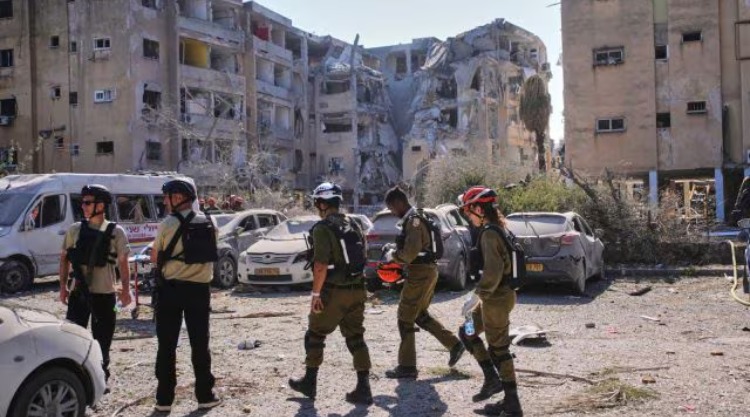
Iran-Israel LIVE Updates: Israel Targets Arak, Natanz Nuclear Sites; Iran Retaliates with Strike on Israeli Medical Facility
The Iran-Israel conflict has intensified dramatically with Israel launching targeted airstrikes on Iran’s Arak and Natanz nuclear facilities, two of the most critical nodes in Iran’s nuclear development program. In a swift and symbolic retaliation, Iran responded by striking an Israeli medical facility, signaling a new and dangerous phase of the confrontation.
This recent escalation began after weeks of rising hostility and military posturing between the two regional rivals. Israel's military confirmed precision strikes on the Arak heavy water reactor and enrichment facilities in Natanz, citing the need to halt Iran’s alleged nuclear weapons ambitions.
Iran, in turn, condemned the Israeli actions as acts of war and swiftly retaliated by launching a missile attack on a medical facility in southern Israel, reportedly causing injuries and raising international concerns over the violation of humanitarian norms.
As the conflict spills into civilian areas and strategic infrastructure, global powers including the U.S., Russia, and China have urged restraint and diplomatic resolution. However, both Tehran and Tel Aviv show no signs of de-escalation, each justifying their actions as self-defense.
The targeting of nuclear sites marks a significant escalation that could provoke broader regional involvement, particularly from Lebanon’s Hezbollah and other Iranian-aligned militias across Syria and Iraq. Observers warn that if unchecked, this could spiral into a full-scale regional war.
Meanwhile, both sides are engaged in a fierce information war. Iranian state media has broadcast visuals of the aftermath of the Israeli strikes, while Israel has tightened security and placed sensitive military and medical facilities on high alert.
The international community is closely monitoring developments. The United Nations Security Council is expected to convene an emergency session, while humanitarian agencies have voiced concern over attacks on civilian infrastructure, particularly the targeting of healthcare facilities.
As the situation evolves, analysts stress the importance of backchannel diplomacy to prevent further escalation. However, given the current rhetoric and military actions, the path to peace remains uncertain.
For now, the world watches with bated breath as two of the most powerful forces in the Middle East edge closer to open war.
FAQ
Q1. Why did Israel strike Iran’s nuclear sites?
A1. Israel targeted the Arak and Natanz nuclear facilities over concerns that Iran is accelerating its nuclear weapons program, which Israel views as a direct threat to its national security.
Q2. How did Iran retaliate?
A2. Iran responded by launching a missile strike on an Israeli medical facility, an action that has drawn condemnation for violating international humanitarian laws.
Q3. Are civilians affected in this conflict?
A3. Yes, the Israeli medical facility strike reportedly resulted in civilian injuries, and there are rising fears of increased civilian casualties if the conflict widens.
Q4. What is the global reaction?
A4. Major powers like the U.S., Russia, and China have called for immediate de-escalation. The UN is expected to hold emergency consultations on the matter.
Q5. Could this lead to a regional war?
A5. Experts believe that if Hezbollah and other militias get involved, the conflict could expand into a broader regional war affecting multiple countries in the Middle East.
Publish on june 19,2025 by :selvi
www.vizzve.com || www.vizzveservices.com
Follow us on social media: Facebook || Linkedin || Instagram