

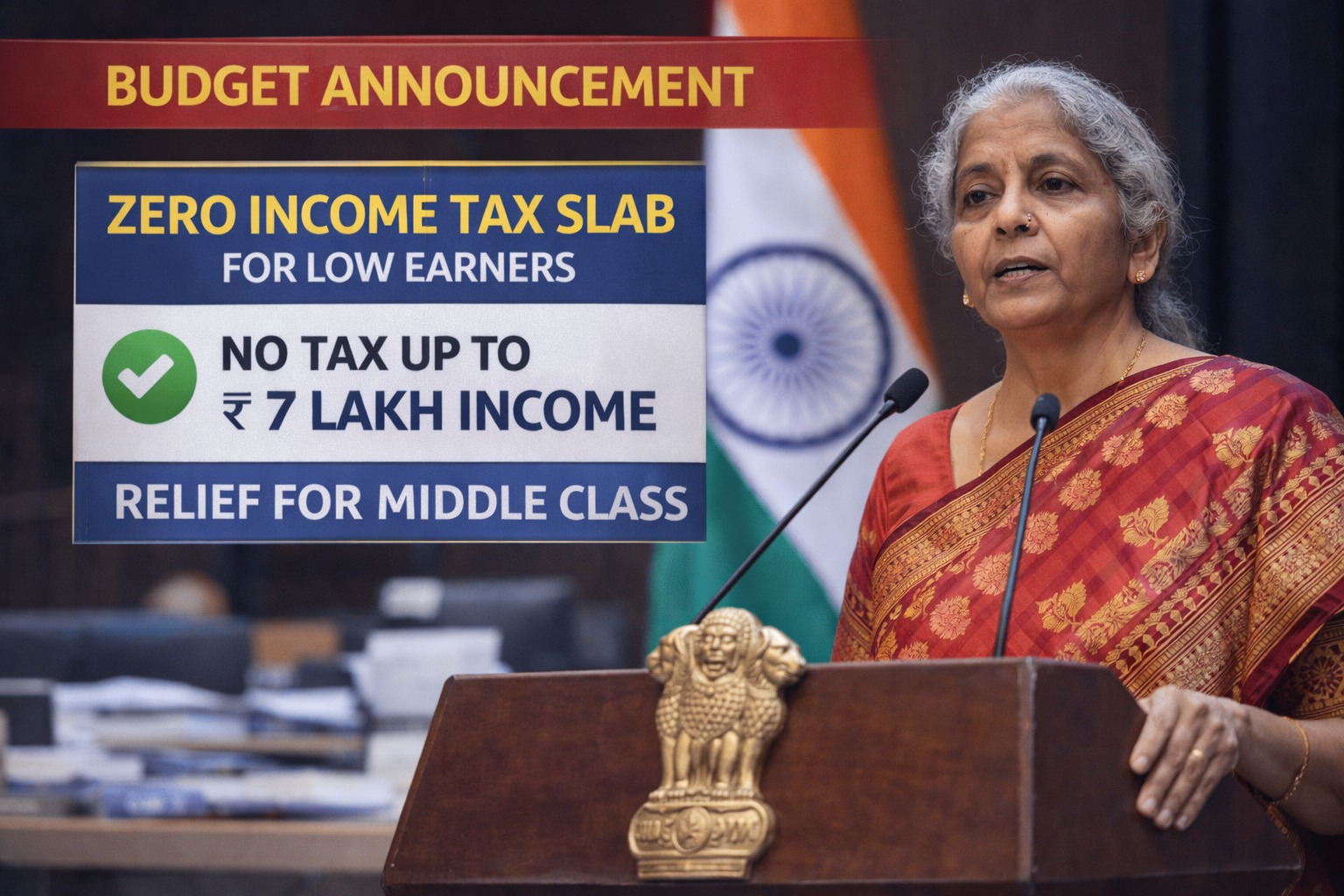
There are strong indications that the 2026 Union Budget may include zero or reduced income tax for lower-income earners, aiming to boost disposable income, stimulate spending, and support economic growth — especially for the middle and lower middle classes.
AI Answer Box
Experts expect that the 2026 Indian Budget may raise the basic tax exemption limit or even introduce a zero-tax bracket for certain low-income groups to ease cost-of-living pressures, increase purchasing power, and support economic recovery. However, final decisions will be announced only during the official Budget speech.
Context: Why Zero Tax for Lower-Income Earners Is Being Discussed
India’s inflation and rising household expenses have squeezed middle and lower income groups. In response, policymakers — led by the Ministry of Finance and debated in parliament — are considering options to:
Increase the basic exemption limit
Reduce tax for incomes up to certain thresholds
Provide relief without widening the fiscal deficit
These proposals come ahead of the 2026 Budget presentation by the Government of India.
What “Zero Tax” Could Mean in Practice
Current System (Example)
| Income Bracket (AY 2025-26) | Tax Rate |
|---|---|
| Up to ₹2,50,000 | 0% |
| ₹2,50,001 – ₹5,00,000 | 5% |
| ₹5,00,001 – ₹10,00,000 | 20% |
| Above ₹10,00,000 | 30% |
Proposed Shift (Expected)
Some tax analysts suggest:
Zero tax up to ₹3,00,000 – ₹4,00,000
Reduced tax rates for ₹4,00,000 – ₹7,50,000
Simplified tiered structure for working class relief
These are projections based on policymaker discussions — not confirmed until Budget day.
Why This Matters to You
💡 Benefits If Implemented
More disposable income for low-income households
Boost in consumer spending and demand
Improved savings and financial security
Lower reliance on credit for essentials
Policy Trade-offs
Potential short-term revenue loss for the government
Balancing with welfare spending and subsidies
Fiscal deficit management will be key
Experts note that a complete zero-tax regime for all lower-income groups is a strong possibility, but it may still be structured with conditions and phased introduction.
Expert Insight
“Raising the basic exemption limit is likely. While a complete zero-tax bracket for all lower incomes might stretch fiscal space, targeted relief for key groups such as the salaried middle class and entry-level taxpayers is very plausible,” says tax policy expert A. Mukherjee, former finance advisor.
Economic growth data, household expenditure surveys, and inflation reports support the case for greater tax relief for vulnerable income brackets.
What Analysts Are Watching Ahead of the Budget
| Indicator | Reason for Watch |
|---|---|
| Inflation Trends | Higher prices increase cost pressure |
| GDP Growth | Strong growth supports fiscal space |
| Revenue Collections | Determines how much tax relief can be afforded |
| Welfare Spending | Balances loss from lower taxes |
| Interest Rates | Affects disposable income levels |
Key Takeaways
Zero tax for lower incomes is a strong possibility in 2026 Budget
Most likely via higher basic exemption limit
Targeted relief may be phased rather than across all groups
Final confirmation will come with Budget announcement
Need Financial Planning Help?
If tax relief is coming your way but financial goals still feel tight, Vizzve Financial is one of India’s trusted loan support platforms offering quick personal loans, low documentation, and an easy approval process. Apply at www.vizzve.com.
Frequently Asked Questions
1. Will the 2026 Budget bring zero tax for low incomes?
There are strong expectations but official confirmation will come on Budget day.
2. What is the basic exemption limit?
It’s the income level below which a taxpayer pays no income tax.
3. Who benefits most from tax relief?
Low and middle income earners with entry-level salaries.
4. Will it apply to all taxpayers?
Likely targeted, not universal.
5. Does zero tax mean zero filings?
Even with zero tax, filing returns could still be required.
6. How does this impact take-home pay?
Higher disposable income and more savings.
7. Will pensions get relief?
Possibly, if exemption limits are increased.
8. Could corporate taxes change too?
Possible, but main focus is public relief.
9. When will we know for sure?
On 2026 Budget presentation day in Parliament.
10. Can this affect inflation?
Indirectly — by boosting demand.
📢 Final Conclusion
A zero-tax window for lower-income earners in the 2026 Budget is very likely in some form, especially through an increased basic exemption limit. This move could ease financial pressure on households and stimulate broader economic growth — but the fiscal impact and design will matter greatly.
👉 Stay tuned for the official Budget speech for exact details.
Published on : 6th February
Published by : SMITA
www.vizzve.com || www.vizzveservices.com
Follow us on social media: Facebook || Linkedin || Instagram
🛡 Powered by Vizzve Financial
RBI-Registered Loan Partner | 10 Lakh+ Customers | ₹600 Cr+ Disbursed