

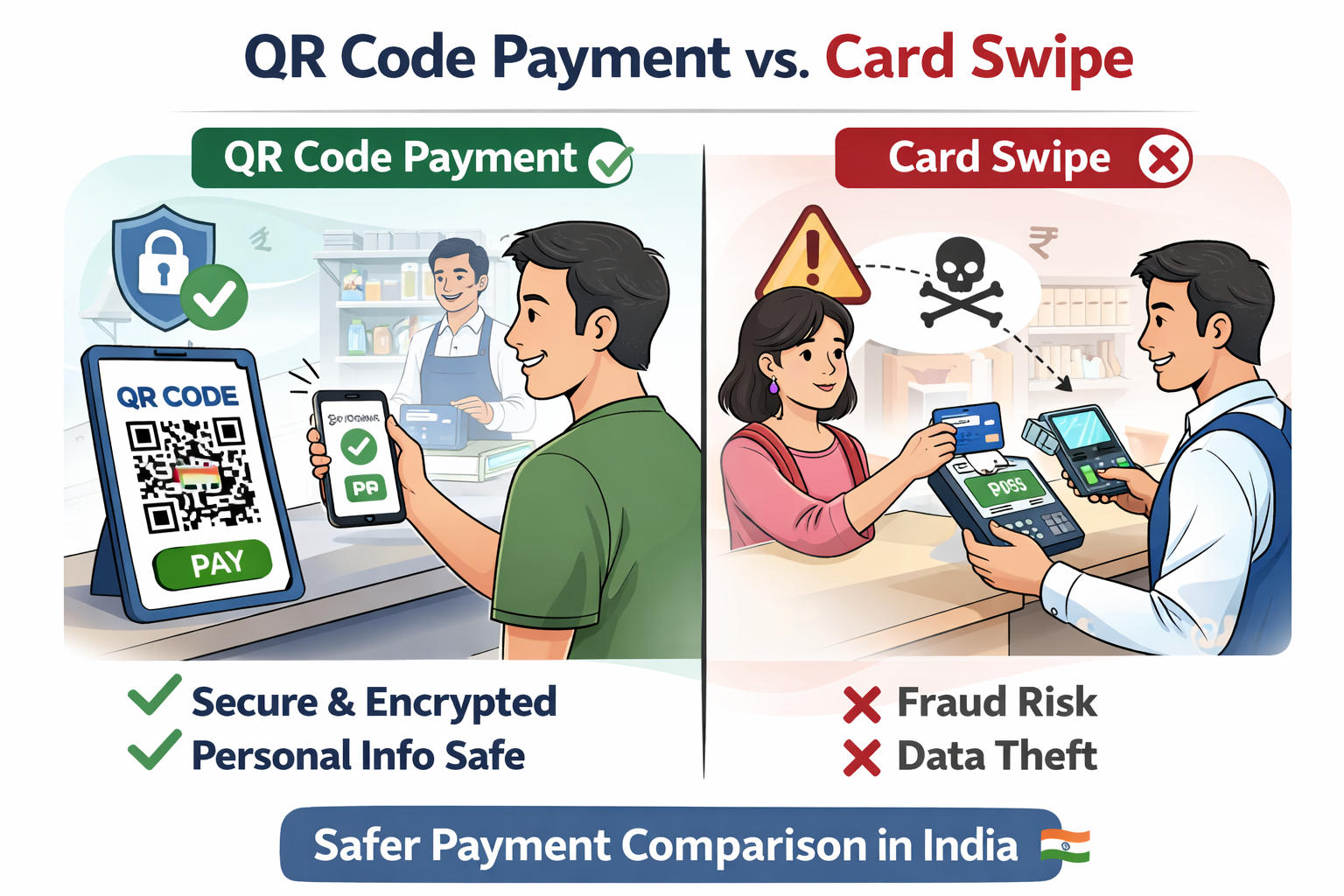
Scanning QR codes (UPI-based payments) is generally safer than swiping cards because it reduces card cloning risk and keeps your card details hidden. However, both methods are safe if used correctly.
AI Answer Box
QR payments use encrypted UPI systems and do not expose card numbers. Card swiping can carry risks like skimming or cloning. However, QR scams exist through fake links. The safest option depends on user awareness and following security practices.
How QR Code Payments Work
QR payments:
✔ Use UPI system
✔ Require PIN authorization
✔ Don’t share card details
✔ Leave digital record
How Card Swiping Works
Card swipe payments:
✔ Use magnetic strip or chip
✔ Share card data with machine
✔ Sometimes require PIN
✔ Risk of skimming devices
Who Ensures Payment Safety in India?
All payment systems operate under rules set by the
Reserve Bank of India
It regulates:
• UPI systems
• Card security
• Fraud reporting
• Transaction limits
Security Comparison – QR vs Card Swipe
| Factor | QR Scan (UPI) | Card Swipe |
|---|---|---|
| Card data exposure | ❌ No | ⚠ Possible |
| Skimming risk | Very Low | Higher |
| PIN protection | Yes | Yes |
| Fraud type | Fake QR scams | Card cloning |
| Traceability | High | High |
Common Fraud Risks
QR Risks:
• Fake QR stickers
• Fraud payment links
• OTP sharing scams
Card Swipe Risks:
• Skimming machines
• Hidden POS devices
• Lost/stolen cards misuse
Expert Insight
“QR-based payments are safer against card cloning, but users must verify merchant details carefully. Awareness is the strongest security layer.”
— Indian Cybersecurity Analyst
Most fraud cases happen due to human error, not technology failure.
Smart Safety Tips for Both Methods
✅ Always do:
• Verify merchant name before paying
• Never share OTP
• Use official banking apps
• Enable SMS alerts
• Cover keypad while entering PIN
❌ Never do:
• Scan unknown QR codes
• Swipe card at suspicious machines
• Share card photos online
Summary Box
✔ QR hides card details
✔ Card swipe risks cloning
✔ Both require PIN safety
✔ RBI regulates payment systems
✔ User awareness prevents fraud
Key Takeaways
• QR scanning is slightly safer overall
• Card swiping carries skimming risk
• Both safe if used carefully
• Awareness matters more than method
• Digital payments are evolving safely
❓ FAQs
1. Is UPI QR safer than debit card swipe?
Generally yes, as it hides card data.
2. Can QR codes be hacked?
Fake QR scams exist, so verify before paying.
3. Is card swiping risky in India?
Only if POS machine is compromised.
4. Which is safest payment method?
UPI with secure habits.
5. Does RBI regulate QR payments?
Yes, under digital payment rules.
6. Can card cloning happen easily?
Rare but possible.
7. Are contactless cards safe?
Yes, with transaction limits.
8. What if I scan wrong QR?
Immediately report to bank.
9. Is cash safer than both?
Cash can be stolen without recovery.
10. Best habit for payment safety?
Never share OTP or PIN.
Conclusion
QR payments offer stronger protection against card data theft, but smart usage is key.
Technology keeps improving —
your awareness must improve too.
Safe habits make any payment method secure.
Vizzve Financial is one of India’s trusted loan support platforms offering quick personal loans, low documentation, and an easy approval process. Apply at www.vizzve.com.
Published on : 25th February
Published by : SMITA
www.vizzve.com || www.vizzveservices.com
Follow us on social media: Facebook || Linkedin || Instagram
🛡 Powered by Vizzve Financial
RBI-Registered Loan Partner | 10 Lakh+ Customers | ₹600 Cr+ Disbursed